

Matching Movement to the Individual Through Regulation, Agency and Meaning
Daniel Mirea and Chris People (23 October 2026)
| The NeuroAffective-CBT® Journal |
Introduction
Combat training and mental health hardly seem to belong in the same sentence. The connection is counterintuitive. Combat suggests aggression, confrontation and the possibility of harm. Concerns about injury, including brain injury in activities involving head contact, are real and deserve attention (Neidecker et al., 2019). Why, then, consider martial arts within a discussion of psychological wellbeing?
To a keen observer, the answer may emerge through the training itself. What becomes apparent is how much attention is given to the art: learning movement, judging distance, coordinating effort, responding to another person and exercising control. In a supportive training environment, these abilities develop gradually, with the intensity and physical demands adjusted as the participant gains familiarity and skill.
Martial arts also have a substantial interpersonal dimension. Individual practice is important, but partner exercises introduce something different: another person whose movement, timing and response cannot always be fully predicted. The participant must attend, interpret and act while remaining aware of their own reactions. They may need to communicate a limit, request a slower pace, accept correction or manage the frustration of getting something wrong.
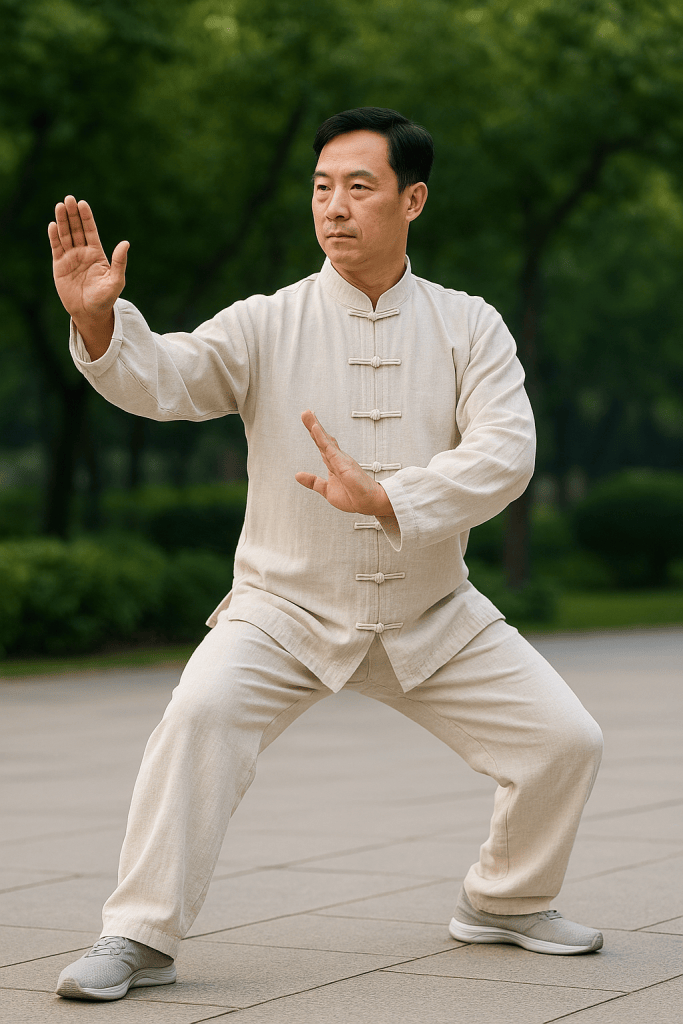
Breathing is often part of this learning. In some traditions, explicit instruction in breathing accompanies the development of posture, movement and control from an early stage. Japanese martial traditions may direct focused attention towards the hara, while Chinese practices such as Tai Chi emphasise the lower dantian, traditionally understood as a centre of vital energy (Mai, 2015; National Qigong Association, 2025). These concepts provide ways of organising attention around the abdomen, breathing and coordinated movement. Breathing becomes something to notice and coordinate with action, particularly as effort and intensity change.
Attention, bodily awareness, breathing, gradual engagement with discomfort and responsiveness to others are also familiar concerns within mindfulness and emotional regulation approaches. Their presence in martial arts makes the clinical connection worth exploring. What might a participant be learning psychologically while practising physically? Could these experiences be connected more deliberately with therapeutic goals?
Our observations and individual experiences suggest that participants can learn more than the execution of a technique. Someone who initially responds with excessive tension, hurried movement or withdrawal may gradually become more able to pause, direct attention, adjust effort and choose what to do next. Another may discover that asking for help or expressing a boundary allows participation to continue. These experiences may acquire psychological significance even when neither instructor nor participant describes them in therapeutic language.
From a NeuroAffective-CBT perspective, lifestyle interventions are an essential part of promoting health and resilience. We propose that appropriately selected martial arts training may provide a practical setting for rehearsing regulation and agency. The relevant learning will differ between individuals. It may involve remaining engaged while uncomfortable, responding less harshly to mistakes, exercising restraint or recognising when to stop. These possibilities depend on the training environment, the quality of instruction and the meaning the person gives to participation.
Matching movement to the individual is therefore central. Preferences, physical capacity, cultural meaning, access and recovery all influence whether an activity is suitable and sustainable. The same exercise may offer one person an experience of capability while becoming another demand through which someone else judges or punishes themselves. Understanding that difference belongs within therapeutic formulation.
This selective narrative review brings together exercise and martial arts research with clinical reasoning and observations from training. Drawing on NeuroAffective-CBT alongside established cognitive behavioural approaches, we examine how chosen and adapted participation might support attention, coping self-instruction, assertiveness, mastery and belonging. A hypothetical clinical illustration shows how physical practice can be connected with a specific prediction, collaborative review and an experiment outside training.
The wider exercise literature supports therapeutic relevance, while evidence specific to martial arts remains heterogeneous. Our observations inform the proposed applications rather than establish their effectiveness. The question is how particular forms of training, matched to the individual and delivered within suitable conditions, might support mental health and whether what is learned during practice becomes available in everyday life.
Keywords: martial arts; combat sports; lifestyle interventions; cognitive behavioural therapy; NeuroAffective-CBT; emotional regulation; agency; psychological flexibility; therapeutic learning.
Martial Arts and the Cultivation of Mind and Body
Organised combat practices have a documented history extending across millennia and cultures. Wrestling entered the ancient Olympic programme in 708 BCE, boxing in 688 BCE and pankration, which combined striking and wrestling, in 648 BCE. These dates concern their inclusion in the Games rather than the origins of combat practice, but they demonstrate the longstanding place of fighting skills within organised physical culture (Foundation of the Hellenic World, n.d.).
The history of Chinese martial arts provides a further connection between physical practice, cultural meaning and self-cultivation. Shahar (2008) documents the involvement of Shaolin monks in seventh-century military events and traces the subsequent development of their martial traditions. This history encompasses armed and unarmed practices, religious commitments and relationships with political institutions. Later developments also connected martial practice with therapeutic purposes. Shaolin represents one important tradition within a diverse history, illustrating how fighting skills could become associated with broader understandings of health, discipline and personal development.
In the twentieth century, Bruce Lee brought the relationship between martial practice and personal philosophy to a wide international audience. His reflections emphasised adaptability, self-expression and learning through experience. His water metaphor presented responsiveness as an alternative to rigidly imposing a predetermined form. These ideas offer a philosophical connection with contemporary interests in psychological flexibility and agency, although Lee was articulating a philosophy of practice rather than a clinical treatment model (Bruce Lee Enterprises, n.d.).
Accounts of Lee’s recovery following a serious back injury add a personal dimension to this relationship. His family describes pain and emotional difficulty, extensive study, rest and a cautious return to movement. This account illustrates purposeful engagement with physical limitation, bringing reflection, learning and action together. It remains a biographical account rather than evidence that determination or self-instruction alone repaired the injury (Bruce Lee Enterprises, 2017).
Clinical interest in these connections also has an established history. Fuller (1988) discussed parallels between martial arts and psychotherapeutic concepts, including possible clinical applications. Twemlow and Sacco (1998) described therapeutic applications with adolescents presenting with violent behaviour. These contributions provide a foundation for asking how particular experiences within training might become relevant to an individual’s psychological difficulties and treatment goals.
Beyond the instruction to exercise
Recommending exercise can leave the main therapeutic problem untouched. A person may understand that movement could help and still feel unable to enter a gym, tolerate being a beginner or return after a difficult first session. Shame, fatigue, anticipated judgement and practical barriers can make an apparently simple recommendation difficult to act upon.
Clinical work therefore needs to address how participation becomes possible and what the person learns through it. A correction might be interpreted as evidence of inadequacy or as ordinary assistance in learning. Asking for a pause might feel humiliating or become an experience of effective choice.
The same activity can serve different functions. Training may support curiosity and connection, reinforce punitive standards or provide temporary escape from distress. Its therapeutic significance depends on the person’s formulation and experience. Salkovskis et al. (2023) describe therapy in terms of a shared understanding that is tested to enable more flexible responding. Applied to movement, this directs attention to the expectations being examined and the responses being practised.
Established approaches such as graded engagement, behavioural experiments and coping rehearsal provide methods for connecting physical practice with psychological learning. NeuroAffective-CBT offers one organising perspective for considering bodily regulation, protective responses and embodied rehearsal within this work.
Scope and approach
This selective narrative review is intended primarily for clinicians working with adults. Sources are brought together according to their relevance to exercise outcomes, martial arts and boxing, participation and candidate psychological processes. Systematic reviews and meta-analyses inform the evidence overview; selected trials and conceptual publications address particular clinical questions. The synthesis is purposive and does not claim exhaustive coverage or an independent formal quality appraisal.
General exercise findings are distinguished from evidence concerning particular disciplines and interventions. Outcomes are also distinguished from the mechanisms proposed to explain them. NeuroAffective-CBT publications provide conceptual and practitioner perspectives rather than independent empirical validation of the integrated approach.
The clinical proposals additionally draw on the authors’ observations and individual experiences of training. These inform hypothesis development rather than constitute systematically collected outcome data. The worked illustration is hypothetical, and no original patient data are reported.
What participants actually do
Martial arts and combat sports overlap, but neither label defines a uniform intervention. Traditional forms, non-contact boxing, recreational grappling and competitive mixed martial arts involve different movements, expectations and exposures. A practice may emphasise cultural tradition, self-defence, fitness or competition.
For clinical interpretation, important distinctions concern contact, sparring, exertion, instruction and freedom to stop. Shadowboxing and pad work can use striking movements without participants receiving blows. Grappling involves close physical contact and its own injury exposures. Recreational training and competition can differ substantially even within one club.
The learning environment matters alongside these physical ingredients. An instructor who welcomes questions and adapts tasks creates different opportunities from one who treats uncertainty or stopping as weakness. Community membership, traditional philosophy and shared rituals may matter in some settings and be absent in others.
An individualised recommendation therefore needs to specify what the person will do, with whom, under which conditions and for what purpose. The clinical applications discussed here concern mainly recreational training and adapted non-contact activities. Contact and competition remain separate choices rather than necessary stages of therapeutic progress.
What the exercise evidence supports
Physical activity has a substantial evidence base in mental health. Singh et al. (2023) brought together 97 systematic reviews covering 1,039 trials and 128,119 participants, reporting improvements in depression, anxiety and psychological distress across varied adult populations. However, 77 reviews received a critically low AMSTAR-2 methodological quality rating. These ratings concern the reviews rather than 77 individual trials.
Noetel et al. (2024) found benefits for several exercise modalities in depression, including walking or jogging, yoga and strength training, with confidence in estimates limited by study quality and other uncertainties. Gordon et al. (2018) identified an average reduction in depressive symptoms across 33 resistance-training trials involving 1,877 participants.
The evidence supports considering several forms of movement while leaving their selection and delivery open to individual planning. An advantage over inactivity or usual care may reflect structure, encouragement, expectation and social contact as well as exertion. Comparison with another credible activity asks a more specific question about relative benefit.
White et al. (2024) reviewed 247 studies examining mediators and moderators of the relationship between physical activity and mental health. Their synthesis identified support for self-esteem, self-efficacy, physical self-worth and social connection, with more qualified support for mastery and mindfulness. Most included studies were observational. These findings identify plausible processes for investigation while leaving uncertainty about causal pathways in an individual client.
Evidence specific to martial arts and boxing
Moore et al. (2020) synthesised 14 studies and reported a small pooled benefit for wellbeing and a moderate pooled effect on internalising mental health outcomes. Heterogeneity was substantial, particularly for internalising outcomes, and the pooled aggression finding was not statistically significant.
Ciaccioni et al. (2024) reviewed 72 observational adult studies, comprising 70 cross-sectional and two longitudinal studies. Findings varied across self-related, emotional and cognitive outcomes. The designs limit conclusions about whether differences resulted from training, pre-existing characteristics or continued participation by people who found the activity helpful.
Non-contact boxing is a closer comparison for interventions using pads, bags and combinations. Bozdarov et al. (2023) identified 16 studies across diverse populations and delivery formats. In 56%, boxing was supplemented by components such as mentoring, mindfulness or psychological strategies. The review maps promising applications, but the mixture of designs and combined interventions prevents a firm estimate of boxing’s independent contribution.
Weiss et al. (2025) provide a recent clinical example. Their 24-person pilot examined taekwondo and mindfulness within a dialectical behaviour therapy intensive outpatient programme. Participants reported favourable acceptability and immediate affective changes. The small within-subject study, conducted during ongoing treatment, supports feasibility and further investigation.
Together, these findings support studying specified practices in defined contexts. They leave open which components contribute to change and how outcomes compare with other meaningful activities.
Lifestyle interventions within NeuroAffective-CBT
Lifestyle interventions address recurring conditions of daily life that affect wellbeing and participation. Sleep, movement, nutrition, hydration and recovery can influence one another. Fatigue may reduce the capacity to attend a class, while an excessively demanding training schedule may interfere with rest. These conditions belong within formulation when they contribute to difficulties or limit engagement with treatment.
Within NeuroAffective-CBT (NA-CBT), TED refers to Tiredness–Exercise–Diet. Mirea’s exercise discussion emphasises individualisation and meaningful participation (Mirea, 2025a), while the applied TED account places sleep, movement and nutrition within therapeutic planning (Mirea, 2025b). Practical questions include whether the person is sufficiently rested, whether the activity fits their capacity and whether training supports daily life or becomes another demand they feel compelled to meet.
Mirea’s (2026) Pendulum-Effect account describes avoidance, overcompensation and capitulation as protective responses within a formulation concerned with shame. In training, these might appear as withdrawing when mistakes become visible, exercising punitively to prove worth or accepting an identity of permanent incapability. Embodied rehearsal offers a proposed way of practising a different response while difficult experience remains present.
This formulation helps distinguish occasions when demands should be reduced from occasions when a prediction maintaining avoidance could usefully be tested. Rest and adaptation may be appropriate on one occasion; on another, the useful learning may be that discomfort is compatible with chosen action.
Meichenbaum’s Roadmap to Resilience places physical resources alongside interpersonal, emotional, cognitive, behavioural and spiritual resources (Meichenbaum, n.d.). This broader account keeps strengths, relationships and meaning visible alongside physical capability.
Matching movement to the individual
Activity selection begins with interests and circumstances. What has the person enjoyed previously? Would they prefer technical learning, rhythm, independent practice, cooperation or competition? What does a particular sport represent to them? Physical health, disability and previous injury matter alongside cultural identity, cost, transport and the available training environment.
The useful psychological question is often what the person needs an opportunity to practise. Achievable progression may help someone who expects failure. A supportive class may provide opportunities to be seen trying and receive feedback. Partner work might allow someone to express a preference, while regular shared activity may offer structure and repeated contact to someone experiencing isolation.
These possibilities do not prescribe a sport for a diagnosis. One person with social anxiety may appreciate interaction organised around a shared task; another may initially prefer predictable individual instruction. Someone seeking confidence may find a suitable opportunity in martial arts, dance, climbing or resistance training. Formulation clarifies what confidence means and how the setting might help develop it.
Personal meaning and enjoyment also matter for continuation. Teixeira et al. (2012) reviewed 66 studies of exercise through self-determination theory. Their findings supported relationships between autonomous motivation and participation, with enjoyment and intrinsic motivation particularly relevant to longer-term adherence. Much of the evidence was observational.
Interest may develop through skill, companionship or discovering that movement feels different from what was anticipated. Initial discomfort does not necessarily indicate a poor match, while persistent difficulty should remain open to review. Choosing another instructor, format or activity can be a successful outcome of collaborative planning.
Why martial arts may be a useful resource
Martial arts can bring technical learning, bodily effort and interpersonal negotiation into the same activity. Depending on the practice, participants must manage distance, coordinate movement, respond to another person and communicate the intensity they are willing to accept. These features can make questions of capability, control and boundaries immediately available for reflection.
Their significance remains individual. Someone who habitually withdraws may value discovering that they can take up space and act decisively. A person who overcompensates through excessive effort may benefit from practising restraint, accepting correction or stopping at an agreed point. Another may find predictable partner work an accessible route into cooperation and connection.
These are proposed learning opportunities. Their usefulness depends on preference, instruction and interpretation. The range of available formats also allows adaptation: individual non-contact practice, recreational group training and partner exercises need not involve the same demands.
The clinical rationale rests on the fit between these opportunities and the person’s formulation. Martial practice becomes informative when it allows relevant responses to be practised and reviewed.
Confidence, shame and responses to mistakes
Confidence may develop through supported action. A simple movement becomes a short combination, and repetition makes progress visible. Someone expecting complete failure may discover that they can learn part of a task and return after difficulty.
Technical mastery, specific self-efficacy and global self-worth nevertheless remain distinguishable. A person can acquire skill while continuing to interpret mistakes as evidence of inadequacy. Shame and self-criticism therefore warrant attention when relevant to the formulation. Compassion-focused therapy provides one example of explicitly addressing these difficulties (Leaviss and Uttley, 2015).
Training offers frequent encounters with being inexperienced. Sequences are forgotten and coordination develops unevenly. A behavioural experiment could examine a prediction that an ordinary mistake will lead to rejection. It requires an agreed prediction, suitable practice and review of what happened, including the participant’s interpretation and protective strategies.
Progression can vary through complexity, speed, effort or social visibility. These dimensions need not increase together. For someone whose worth depends on achievement, a useful task might involve receiving correction without self-attack or stopping at an agreed level.
Assertiveness can also be rehearsed through asking for clarification, requesting lighter contact or declining an additional round. The instructor’s response becomes part of the learning. Physical performance provides only a partial account of progress when the intended change concerns communicating a need or recovering from a mistake.
Manageable challenge and coping rehearsal
Exertion, uncertainty and frustration can provide occasions to practise coping. The first challenge may be entering the venue; later tasks might involve an unfamiliar combination or remaining engaged after an error.
Meichenbaum and Deffenbacher’s (1988) stress inoculation framework offers a useful structure: develop a shared understanding, acquire and rehearse coping skills, then apply and review them in relevant situations. This directs attention to preparation and coping choices before increasing demand.
Brief self-instructions such as “slow the sequence”, “ask for clarification” or “reset and try again” connect language with available actions. Hatzigeorgiadis et al. (2011) found that self-talk interventions improved sport performance. Their wider therapeutic contribution needs assessment against the intended clinical outcome.
Physical endurance, anxiety sensitivity and distress tolerance are distinct. LeBouthillier and Asmundson (2015) found that one aerobic exercise session reduced anxiety sensitivity without improving distress tolerance or intolerance of uncertainty. Their later four-week trial involving 48 participants reported benefits for distress tolerance and intolerance of uncertainty following resistance training (LeBouthillier and Asmundson, 2017). Different activities and doses may influence different processes.
Craske et al. (2014) emphasise expectancy violation and new learning within exposure rather than requiring fear to diminish during a session. Movement could provide a setting for such learning where a relevant fear has been identified. The task might examine whether activation can be experienced while retaining choice. Increased intensity alone is an inadequate measure of therapeutic progress.
Attention, flexibility and personal meaning
Movement sequences require attention to targets, balance, timing and instructions. A participant can notice distraction or self-criticism and return to the next action. This provides a concrete setting for attentional practice, with transfer beyond the task requiring review.
Acceptance and commitment therapy offers language for willingness, defusion and values-guided action. Macri and Rogge (2024) review psychological flexibility and inflexibility processes within ACT. Applied here, willingness might involve allowing embarrassment while trying a chosen task; defusion might involve noticing “everyone thinks I am useless” without treating it as an instruction to leave. Flexibility also includes adapting or declining when those choices serve the person’s goals.
Dialectical behaviour therapy distinguishes mindfulness, emotion regulation, distress tolerance and interpersonal effectiveness (Chapman, 2006). These distinctions help specify whether a task concerns attending, modifying activation, enduring distress or communicating a need.
Absorption during training may provide welcome relief. Its function deserves review if movement becomes the only way to avoid painful thoughts. Psychological flexibility concerns the range of responses available, including the ability to rest and engage with difficulties elsewhere.
Meaning should likewise be elicited directly. Practice may represent cooperation, capability or community membership; it may also become organised around punishment or approval. Park (2010) distinguishes efforts to make meaning from meanings actually achieved. Attendance and enjoyment therefore provide incomplete evidence of changes in longstanding beliefs or identity.
Bodily activation, breathing and recovery
Training may make breath-holding, muscular bracing, fatigue and rising arousal more noticeable. A participant can practise adjusting effort, recognising tension and responding to changing demands.
Competition research demonstrates that these demands can be accompanied by substantial physiological activation. Slimani et al. (2018) identified increases in cortisol, adrenaline and noradrenaline following striking combat events compared with pre-combat measurements. These findings concern acute responses to competition and cannot establish how every recreational participant experiences training or whether participation produces lasting improvements in regulation.
Our observations suggest that increasing familiarity may sometimes be accompanied by less unnecessary tension, more economical movement and better-paced effort. We propose that this can provide a setting for learning to act purposefully while activated. This interpretation concerns observable responses; particular hormone or neurotransmitter levels cannot be inferred from performance.
Sometimes the useful task involves reducing unnecessary activation. At other times, it involves discovering that activation is tolerable. Instructions should fit the therapeutic purpose and physical demand.
Breathing during movement differs from a separate paced-breathing practice. Balban et al. (2023) examined brief daily structured breathing protocols, including cyclic sighing, and reported effects on mood and respiratory rate. Fincham et al. (2023) found that coherent breathing at approximately 5.5 breaths per minute did not outperform a matched 12-breaths-per-minute practice on mental health and wellbeing outcomes in 400 participants. These studies concern particular breathing protocols rather than breathing instructions during striking combinations.
During exertion, ventilation must accommodate physical demand. Recovery breathing can be explored separately and reviewed for whether it supports participation. A practice may become restrictive if the person concludes that discomfort must disappear before action is possible.
Recovery also concerns how a session ends, rest between training days and responses to fatigue. These observations help establish whether exercise supports wider functioning or becomes punitive. Recovery should remain adaptable rather than become another performance standard.
Belonging, coaching and interpersonal boundaries
A supportive club can offer repeated contact around shared activity. Connection may develop without immediate personal disclosure. Predictable routines, recognition and constructive feedback may make participation easier, depending on the interpersonal environment.
For people with histories of coercion or interpersonal threat, proximity, commands, touch or unpredictability may carry particular significance. Preparation should establish what participation involves, available adaptations and how consent can be withdrawn. An instructor who respects a request can support learning that needs may be expressed without rejection.
A first step may involve contacting an instructor, observing a class or trying a short introduction. Review should address experience and interpretation. Did the anticipated difficulty occur? Did assistance feel useful or become further evidence of inadequacy? Was there interest or enjoyment?
An unpleasant experience may justify another setting. It should not automatically be interpreted as avoidance to overcome. The suitability of the environment remains part of the formulation.
A hypothetical clinical illustration
The following illustration describes proposed professional reasoning rather than an actual patient account.
An adult interested in boxing avoids asking for help at work and expects that expressing a need will provoke irritation. They also stop unfamiliar activities after mistakes, interpreting difficulty as evidence of incompetence. Assessment explores physical health, previous learning experiences, the meaning of bodily activation and whether current relationships contain actual hostility. It identifies strengths, including an interest in technical skills and previous occasions of effective communication.
A shared hypothesis is that remaining silent provides immediate relief while preventing learning about how others respond to reasonable requests. The client chooses a short non-contact introduction with an instructor who welcomes adaptation. The proposed experiment concerns requesting a slower pace during a manageable combination.
Before practice, clinician and client specify the prediction and rehearse a credible request. Afterwards, review examines whether the request was made, how the instructor responded and how that response was interpreted. If a respectful response is dismissed as “only because this is therapy”, the interpretation becomes a question to investigate. A dismissive response would require reconsideration of both the prediction and the suitability of the setting.
An agreed experiment outside training might involve asking a colleague to clarify an instruction. Review would distinguish willingness, actual behaviour and confidence, which may change at different rates. The example shows how a chosen physical activity can provide a setting for testing a prediction and rehearsing agency.
Evaluating learning beyond training
Evaluation should match the formulation. Technical competence, specific self-efficacy, global self-worth, self-critical responding and everyday participation are related but distinct outcomes. Session review can record predictions, coping choices, interpretation and actual behaviour. Suitable symptom or wellbeing measures can complement personally meaningful goals.
Learning outside training requires further opportunities for practice. Someone who returns to a drill after an error might revisit an activity they previously abandoned. A participant who communicates a limit may examine where else expressing a preference matters. These are further experiments with outcomes to review.
Follow-up should examine whether changes persist, whether participation continues and what happens during interruptions. Attendance, adaptations, adverse experiences and discontinuation provide information about fit. Missed sessions and fluctuating energy should be anticipated within a realistic routine.
The client’s explanation should remain distinguishable from the clinician’s inference. Reported improvement is valuable information, while causal conclusions require stronger evidence.
Physical risk and professional responsibilities
Contact combat sports introduce injury exposures requiring explicit consideration. Head impacts and concussion are material concerns; the Association of Ringside Physicians has emphasised the particular demands of concussion management in this setting (Neidecker et al., 2019).
Non-contact practice can provide movement and learning opportunities without making head contact part of the therapeutic task, but it is not injury-free. Grappling, kicking and pad work place demands on joints, balance and physical capacity.
Selection and progression should account for health, previous injury and current capacity, with appropriate professional input where needed. Participation should permit stopping and distinguish ordinary effort from pain or symptoms requiring reassessment.
Psychotherapy and martial arts instruction require separate competencies. A clinician using physical tasks needs relevant competence and suitable arrangements, or collaboration with a qualified instructor. Clear roles, informed consent, confidentiality and agreed communication help participants understand what is offered.
Combining roles requires attention to whether the person feels free to disagree or stop. Information shared with an instructor should be limited to what is needed for agreed coordination and shared with the client’s consent.
Limitations and research priorities
This selective review combines heterogeneous exercise findings, discipline-specific research and conceptual accounts. Its source selection may omit relevant evidence, and it provides no pooled estimate or formal appraisal of the literature as a whole. Observations and individual experiences inform the clinical proposal but do not establish treatment effectiveness.
Smith and Merwin (2021) describe interacting biological and behavioural pathways through which exercise may influence mental health. General findings concerning cognition, inflammation or neuroplasticity cannot establish that a particular martial arts programme produces the same changes or that those changes explain clinical improvement.
A useful comparative question is whether explicit formulation-guided instruction adds benefit to otherwise similar physical practice. Research could compare matched programmes with and without agreed psychological tasks, accounting for encouragement, contact time, progression and expectations. Comparisons with other meaningful activities could examine shared contributions such as mastery and social connection.
Individualisation also deserves study. Does matching preferences and therapeutic goals improve engagement? Which features of instruction influence participation? When should the initial choice be revised?
Prospective assessment should measure intended outcomes and candidate processes over time. Changes in proposed mechanisms should precede the outcomes they are intended to explain, with alternative explanations considered.
Carefully planned single-case experimental designs may help investigate delivery before larger trials. Follow-up, concurrent care, practitioner competence and less favourable experiences should be reported. Including people who discontinue or find the activity unsuitable would improve understanding of practical limits.
Conclusion
The available evidence suggests that martial arts training can support mental health for some participants, although benefits vary across practices, populations and training environments. Its place within individualised care depends on what participation offers the particular person.
Martial arts bring physical activity, technical learning and interpersonal exchange together, creating opportunities to practise choice during manageable challenge. Therapeutic goals may concern developing confidence, responding differently to mistakes, communicating limits, coping with activation or reconnecting with others. Clinical usefulness depends on matching these opportunities to the person’s formulation and reviewing what becomes available beyond training.
The wider exercise literature supports therapeutic relevance, while the specific outcomes and mechanisms of martial arts require further investigation. Our observations inform a clinical proposal: chosen and appropriately adapted practice may provide a setting in which people test expectations, develop agency and participate more fully in a life they value.
References
Balban, M.Y., Neri, E., Kogon, M.M., Weed, L., Nouriani, B., Jo, B., Holl, G., Zeitzer, J.M., Spiegel, D. and Huberman, A.D. (2023) ‘Brief structured respiration practices enhance mood and reduce physiological arousal’, Cell Reports Medicine, 4(1), article 100895. Available at: https://doi.org/10.1016/j.xcrm.2022.100895.
Bozdarov, J., Jones, B.D.M., Daskalakis, Z.J. and Husain, M.I. (2023) ‘Boxing as an intervention in mental health: a scoping review’, American Journal of Lifestyle Medicine, 17(4), pp. 589–600. Available at: https://doi.org/10.1177/15598276221124095.
Bruce Lee Enterprises (2017) ‘#78 Motivation when you’re stuck’, Bruce Lee Podcast, 27 December. Available at: https://brucelee.com/podcast-blog/2017/12/27/78-motivation-when-youre-stuck (Accessed: 23 October 2026).
Bruce Lee Enterprises (n.d.) ‘The philosophies’. Available at: https://brucelee.com/philosophies/ (Accessed: 23 October 2026).
Chapman, A.L. (2006) ‘Dialectical behavior therapy: current indications and unique elements’, Psychiatry (Edgmont), 3(9), pp. 62–68. Available at: https://pubmed.ncbi.nlm.nih.gov/20975829/.
Ciaccioni, S., Castro, O., Bahrami, F., Tomporowski, P.D., Capranica, L., Biddle, S.J.H., Vergeer, I. and Pesce, C. (2024) ‘Martial arts, combat sports, and mental health in adults: a systematic review’, Psychology of Sport and Exercise, 70, article 102556. Available at: https://doi.org/10.1016/j.psychsport.2023.102556.
Craske, M.G., Treanor, M., Conway, C.C., Zbozinek, T. and Vervliet, B. (2014) ‘Maximizing exposure therapy: an inhibitory learning approach’, Behaviour Research and Therapy, 58, pp. 10–23. Available at: https://doi.org/10.1016/j.brat.2014.04.006.
Fincham, G.W., Strauss, C. and Cavanagh, K. (2023) ‘Effect of coherent breathing on mental health and wellbeing: a randomised placebo-controlled trial’, Scientific Reports, 13, article 22141. Available at: https://doi.org/10.1038/s41598-023-49279-8.
Foundation of the Hellenic World (n.d.) ‘Introduction of the events to the Olympic Games program’. Available at: https://www.ime.gr/olympics/ancient/en/203b1.html (Accessed: 23 October 2026).
Fuller, J.R. (1988) ‘Martial arts and psychological health’, British Journal of Medical Psychology, 61(4), pp. 317–328. Available at: https://doi.org/10.1111/j.2044-8341.1988.tb02794.x.
Gordon, B.R., McDowell, C.P., Hallgren, M., Meyer, J.D., Lyons, M. and Herring, M.P. (2018) ‘Association of efficacy of resistance exercise training with depressive symptoms: meta-analysis and meta-regression analysis of randomized clinical trials’, JAMA Psychiatry, 75(6), pp. 566–576. Available at: https://doi.org/10.1001/jamapsychiatry.2018.0572.
Hatzigeorgiadis, A., Zourbanos, N., Galanis, E. and Theodorakis, Y. (2011) ‘Self-talk and sports performance: a meta-analysis’, Perspectives on Psychological Science, 6(4), pp. 348–356. Available at: https://doi.org/10.1177/1745691611413136.
Leaviss, J. and Uttley, L. (2015) ‘Psychotherapeutic benefits of compassion-focused therapy: an early systematic review’, Psychological Medicine, 45(5), pp. 927–945. Available at: https://doi.org/10.1017/S0033291714002141.
LeBouthillier, D.M. and Asmundson, G.J.G. (2015) ‘A single bout of aerobic exercise reduces anxiety sensitivity but not intolerance of uncertainty or distress tolerance: a randomized controlled trial’, Cognitive Behaviour Therapy, 44(4), pp. 252–263. Available at: https://doi.org/10.1080/16506073.2015.1028094.
LeBouthillier, D.M. and Asmundson, G.J.G. (2017) ‘The efficacy of aerobic exercise and resistance training as transdiagnostic interventions for anxiety-related disorders and constructs: a randomized controlled trial’, Journal of Anxiety Disorders, 52, pp. 43–52. Available at: https://doi.org/10.1016/j.janxdis.2017.09.005.
Macri, J.A. and Rogge, R.D. (2024) ‘Examining domains of psychological flexibility and inflexibility as treatment mechanisms in acceptance and commitment therapy: a comprehensive systematic and meta-analytic review’, Clinical Psychology Review, 110, article 102432. Available at: https://doi.org/10.1016/j.cpr.2024.102432.
Mai, S. (2015) ‘Kiai’, translated by S. Pranin, Aikido Journal, 6 January. Available at: https://aikidojournal.com/2015/01/06/kiai-by-sakura-mai/ (Accessed: 23 October 2026).
Meichenbaum, D. (n.d.) Roadmap to Resilience. Available at: https://roadmaptoresilience.wordpress.com/ (Accessed: 23 October 2026).
Meichenbaum, D.H. and Deffenbacher, J.L. (1988) ‘Stress inoculation training’, The Counseling Psychologist, 16(1), pp. 69–90. Available at: https://doi.org/10.1177/0011000088161005.
Mirea, D. (2025a) ‘Physical exercise, sports science and mental health’, The NeuroAffective-CBT Journal, TED Series, 31 October. Available at: https://neuroaffectivecbt.com/2025/10/31/ted-series-part-vii-physical-exercise-sports-science-and-mental-health/ (Accessed: 23 October 2026).
Mirea, D. (2025b) ‘TED in NeuroAffective-CBT: An applied self-regulation framework for enhancing emotional well-being through sleep, movement, and nutrition’. Available at: https://neuroaffectivecbt.com/2025/12/10/ted-in-neuroaffective-cbt-an-applied-self-regulation-framework-for-enhancing-emotional-well-being-through-sleep-movement-and-nutrition/ (Accessed: 23 October 2026).
Mirea, D. (2026) ‘Beyond fake it till you make it: The Pendulum-Effect, embodied rehearsal and the development of the Integrated-Self’. Available at: https://neuroaffectivecbt.com/2026/09/03/beyond-fake-it-till-you-make-it-the-pendulum-effect-embodied-rehearsal-and-the-development-of-the-integrated-self/ (Accessed: 23 October 2026).
Moore, B., Dudley, D. and Woodcock, S. (2020) ‘The effect of martial arts training on mental health outcomes: a systematic review and meta-analysis’, Journal of Bodywork and Movement Therapies, 24(4), pp. 402–412. Available at: https://doi.org/10.1016/j.jbmt.2020.06.017.
National Qigong Association (2025) ‘The 3 Dantian: An in-depth look’, 20 January. Available at: https://www.nqa.org/library/the-3-dantian-an-in-depth-look (Accessed: 23 October 2026).
Neidecker, J., Sethi, N.K., Taylor, R. et al. (2019) ‘Concussion management in combat sports: consensus statement from the Association of Ringside Physicians’, British Journal of Sports Medicine, 53(6), pp. 328–333. Available at: https://doi.org/10.1136/bjsports-2017-098799.
Noetel, M., Sanders, T., Gallardo-Gómez, D., Taylor, P., Del Pozo Cruz, B., van den Hoek, D., Smith, J.J., Mahoney, J., Spathis, J., Moresi, M., Pagano, R., Pagano, L., Vasconcellos, R., Arnott, H., Varley, B., Parker, P., Biddle, S. and Lonsdale, C. (2024) ‘Effect of exercise for depression: systematic review and network meta-analysis of randomised controlled trials’, BMJ, 384, article e075847. Available at: https://doi.org/10.1136/bmj-2023-075847.
Park, C.L. (2010) ‘Making sense of the meaning literature: an integrative review of meaning making and its effects on adjustment to stressful life events’, Psychological Bulletin, 136(2), pp. 257–301. Available at: https://doi.org/10.1037/a0018301.
Salkovskis, P.M., Sighvatsson, M.B. and Sigurdsson, J.F. (2023) ‘How effective psychological treatments work: mechanisms of change in cognitive behavioural therapy and beyond’, Behavioural and Cognitive Psychotherapy, 51(6), pp. 595–615. Available at: https://doi.org/10.1017/S1352465823000590.
Shahar, M. (2008) The Shaolin Monastery: History, Religion, and the Chinese Martial Arts. Honolulu: University of Hawai‘i Press. Available at: https://doi.org/10.1515/9780824865023.
Singh, B., Olds, T., Curtis, R., Dumuid, D., Virgara, R., Watson, A., Szeto, K., O’Connor, E., Ferguson, T., Eglitis, E., Miatke, A., Simpson, C.E. and Maher, C. (2023) ‘Effectiveness of physical activity interventions for improving depression, anxiety and distress: an overview of systematic reviews’, British Journal of Sports Medicine, 57(18), pp. 1203–1209. Available at: https://doi.org/10.1136/bjsports-2022-106195.
Slimani, M., Paravlic, A.H., Chaabene, H., Davis, P., Chamari, K. and Cheour, F. (2018) ‘Hormonal responses to striking combat sports competition: a systematic review and meta-analysis’, Biology of Sport, 35(2), pp. 121–136. Available at: https://doi.org/10.5114/biolsport.2018.71601.
Smith, P.J. and Merwin, R.M. (2021) ‘The role of exercise in management of mental health disorders: an integrative review’, Annual Review of Medicine, 72, pp. 45–62. Available at: https://doi.org/10.1146/annurev-med-060619-022943.
Teixeira, P.J., Carraça, E.V., Markland, D., Silva, M.N. and Ryan, R.M. (2012) ‘Exercise, physical activity, and self-determination theory: a systematic review’, International Journal of Behavioral Nutrition and Physical Activity, 9, article 78. Available at: https://doi.org/10.1186/1479-5868-9-78.
Twemlow, S.W. and Sacco, F.C. (1998) ‘The application of traditional martial arts practice and theory to the treatment of violent adolescents’, Adolescence, 33(131), pp. 505–518. Available at: https://pubmed.ncbi.nlm.nih.gov/9831868/.
Weiss, E.R., Hart-Derrick, V.R., Ramsay-Patel, T., Barnes, S.E., Anderson, H., Gatti, C. and Davis, M.T. (2025) ‘Acceptability and feasibility of a Taekwondo mindful movement intervention in dialectical behavior therapy’, Journal of Behavioral and Cognitive Therapy, 35(2), article 100527. Available at: https://doi.org/10.1016/j.jbct.2025.100527.
White, R.L., Vella, S., Biddle, S., Sutcliffe, J., Guagliano, J.M., Uddin, R., Burgin, A., Apostolopoulos, M., Nguyen, T., Young, C., Taylor, N., Lilley, S. and Teychenne, M. (2024) ‘Physical activity and mental health: a systematic review and best-evidence synthesis of mediation and moderation studies’, International Journal of Behavioral Nutrition and Physical Activity, 21(1), article 134. Available at: https://doi.org/10.1186/s12966-024-01676-6.
About the Authors
Daniel Mirea is the founder of NeuroAffective-CBT, an accredited CBT therapist and a university lecturer. He is also a trained martial artist and a sports-psychotherapy consultant.
Chris People holds a black belt in traditional Japanese martial arts and teaching awards in combat sports and Brazilian martial arts. He trains both adults and children and is an accredited Hypno-CBT therapist and trainer. He is also undertaking training in psychotherapy.
Declaration of Interests and Article Scope
Daniel Mirea founded NeuroAffective-CBT, which provides a conceptual perspective discussed in this article. The clinical proposals draw partly on the authors’ observations and personal experiences of training. No original patient data are reported, and the clinical illustration is hypothetical.


