A NeuroAffective-CBT Perspective on Perimenopause: Multi-System Recalibration of Brain, Body, and Behaviour

Defining Perimenopause and Menopause

Perimenopause is often approached primarily as a hormonal issue and is typically managed within general medical practice. While this is appropriate, it may underrepresent the broader impact of this transition across neural, behavioural, and regulatory systems. As a result, the condition is not consistently addressed within the field of psychotherapy. From a NeuroAffective-CBT perspective, perimenopause can be understood as a multi-system recalibration involving the brain, body, and behaviour, with direct implications for clinical formulation and support.

Perimenopause refers to the transitional period leading up to menopause, during which ovarian hormone production becomes increasingly variable. This phase may begin several years before the final menstrual period and is characterised by fluctuations in estrogen and progesterone levels, often accompanied by changes in menstrual regularity, sleep, mood, and physiological stability.

Menopause is clinically defined as the point at which menstruation has ceased for twelve consecutive months, marking the end of reproductive function (National Institute for Health and Care Excellence, 2024). Postmenopause refers to the phase following this transition, during which hormone levels stabilise at a lower baseline.

From a physiological perspective, perimenopause represents a continuous process of endocrine adjustment rather than a discrete event. It is characterised by fluctuating hormone levels and associated changes in sleep, mood, and cognitive function (National Institute for Health and Care Excellence, 2024). From a NeuroAffective-CBT perspective, this transition can be understood as a biopsychophysiological process in which these changes increase regulatory load across multiple interacting systems.

The transition from the reproductive years into this phase involves a significant endocrine shift, characterised primarily by declining estrogen and progesterone levels (Mirea and Popa, 2026). These hormonal changes do not affect a single system in isolation. Estrogen receptors are widely distributed across the brain, cardiovascular tissue, skeletal muscle, bone, and immune structures, meaning that changes in estrogen signalling influence multiple interconnected physiological systems simultaneously (Strasser, 2015; Mennitti et al., 2024).


Brain and Neurochemical Regulation

The central nervous system is directly involved in this transition. Estrogen crosses the bloodโ€“brain barrier and modulates neural function through its effects on receptor expression, synaptic plasticity, and neurotransmitter dynamics. In particular, estrogen interacts with serotonergic pathways, influencing serotonin synthesis, receptor sensitivity, and reuptake processes.

Fluctuations or sustained reductions in estrogen during perimenopause and menopause have been associated with changes in mood stability, increased vulnerability to anxiety, reduced cognitive clarity, and the commonly reported experience of โ€œbrain fog.โ€ These outcomes are multifactorial; however, altered stress responsivity and changes in neuroplastic processes are recognised contributors to emotional and cognitive shifts (Davidson and McEwen, 2012; Deslandes, 2014).


Gutโ€“Brainโ€“Immune Interactions

Serotonin regulation is not confined to the brain. Approximately 90% of serotonin is synthesised in the gastrointestinal tract. Although peripheral serotonin does not directly cross the bloodโ€“brain barrier, the gut microbiome influences central nervous system function through immune signalling, vagal pathways, and metabolite production, a bidirectional system often described as the gutโ€“brain axis.

Emerging evidence suggests further interaction between estrogen metabolism and the gut microbiome via the estrobolome, the collection of microbial genes capable of metabolising estrogens (Plottel and Blaser, 2011). After hepatic processing, conjugated estrogens enter the intestinal tract, where microbial enzymes may influence their reactivation and recirculation.

In parallel, short-chain fatty acids (SCFAs), produced by specific bacterial populations, contribute to gut barrier integrity, immune modulation, and metabolic regulation. During perimenopause, shifts in estrogen levels may coincide with changes in microbiome composition, with potential downstream effects on inflammatory tone and stress-related physiology (Gleeson et al., 2011; Nieman, 2018).


A System in Ongoing Dialogue

Taken together, endocrine, neural, immune, and microbial systems operate in continuous interaction. When estrogen signalling declines, the balance of regulatory processes across these systems may shift, influencing metabolic health, mood stability, energy regulation, and cognitive clarity.

From this perspective, the experience of perimenopause is not reducible to a single mechanism. Rather, it reflects the convergence of multiple regulatory changes occurring simultaneously across the organism.


NA-CBT Implications: Supporting Regulation During Transition

The day-to-day manifestations of this recalibration are both physiological and psychological. Changes in sleep quality, stress tolerance, digestion, appetite, mood stability, and cognitive function may reflect underlying shifts in hormonal, neural, and gutโ€“brain signalling; presenting complaints are common across a range of psychiatric conditions therefore diagnosis and mental health assessment is difficult.

Within the NA-CBT framework, these changes are understood not simply as symptoms to be eliminated, but as indicators of altered regulatory load within the system.

This perspective reinforces the importance of stabilising core regulatory domains:

  • Sleep: maintaining consistent timing and protecting recovery
  • Exercise: particularly resistance training, to support neuromuscular and metabolic stability
  • Nutrition: ensuring adequate protein, fibre, alcohol reduction and energy availability
  • Stress regulation: supporting transitions between activation and recovery

These are not quick fixes. They function as foundational supports for a system undergoing biological recalibration.


The Bodyโ€“Brainโ€“Affect Relationship

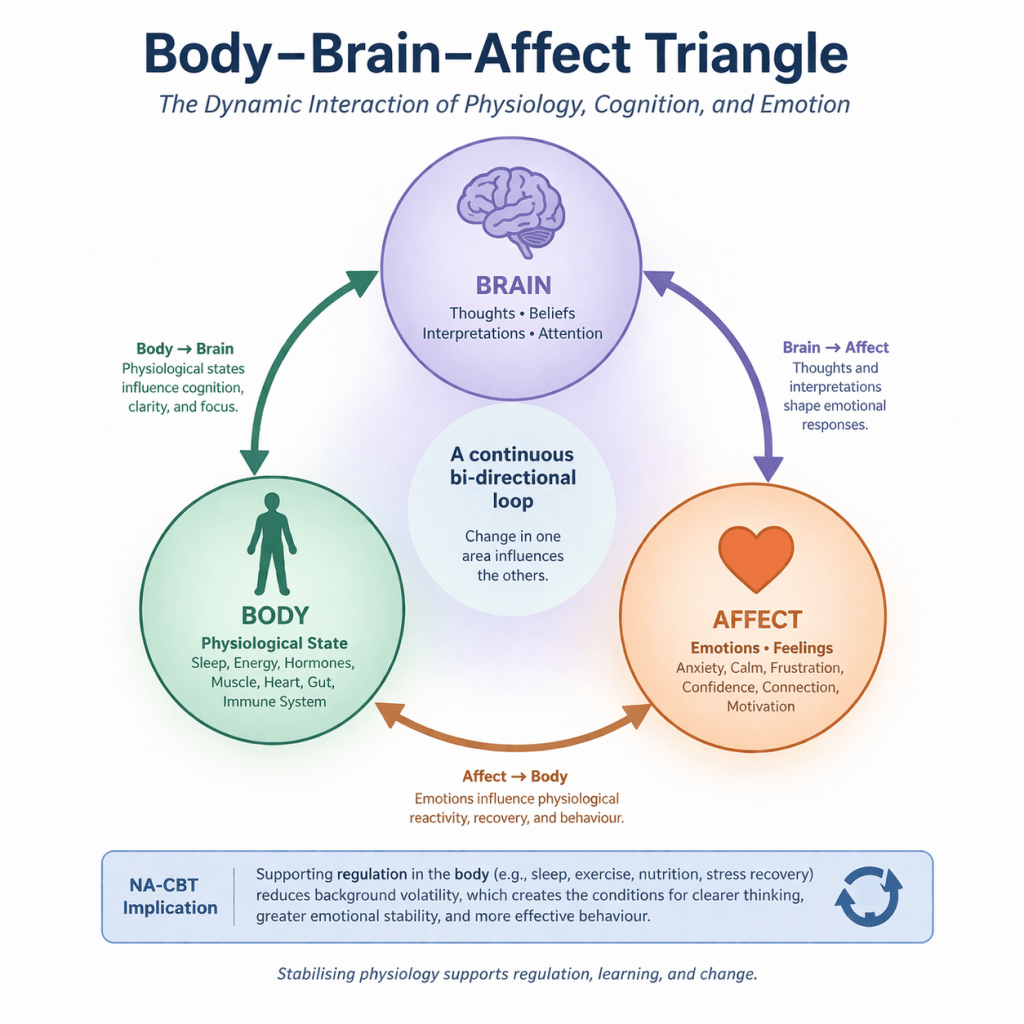
As outlined above, the bodyโ€“brainโ€“affect connection is central to how the organism functions as an integrated system. Early work by Charles Darwin (1872) recognised that affective expression is a core feature of emotional states and contributes to subjective experience. More recent research, including work by David J. Anderson (2014 and 2016), has further explored the neural circuits underlying behavioural responses, demonstrating how hormones and neuromodulators shape contextual affective states through signals experienced as feelings, imagery, and automatic behavioural tendencies.

From this perspective, the perimenopausal transition can be understood as a complex interaction of hormonal change, affective fluctuation, and behavioural shifts. Translating these processes into psychotherapy highlights the importance of understanding how to support exposure, regulation, and recovery in a safe and compassionate manner, with the aim of improving quality of life.

As illustrated in the Bodyโ€“Brainโ€“Affect model, this relationship provides a clinically useful framework for formulation:

  • Physiological states shape emotional and cognitive processes
  • Emotions influence thoughts and behaviour
  • Thoughts and behaviours, in turn, reshape physiology

Within this system, the TED model (Tired โ€“ Exercise โ€“ Diet) functions as the physiological regulation arm of NA-CBT, reducing background volatility so that deeper psychological learning can occur.

A central therapeutic aim is supporting clients in distinguishing between:

  • Raw affect โ€” the bodyโ€™s immediate signal of threat or discomfort
  • Interpretation โ€” the meaning the mind assigns to that signal

When these become fused, emotions may be experienced as overwhelming, self-defining, or difficult to regulate. Stabilising physiological state first helps create the conditions for more flexible interpretation and response.


Why Lifestyle Interventions Belong Inside Psychotherapy

When sleep is disrupted, movement is limited, or metabolic stability is compromised, individuals often experience:

  • heightened anxiety or irritability
  • increased emotional reactivity and rumination
  • intensified self-criticism or shame
  • reduced tolerance for uncertainty, stress, or interpersonal challenge

From an NA-CBT perspective, these are not failures of insight or willpower. They reflect a system operating under strain and psychotherapeutic intervention without emotional recalibration is difficult. The TED model aims for sufficiency rather than optimisation. The goal is not perfect habits, but a stable internal environment that reduces threat sensitivity and supports emotional regulation.


Illustrative Case Example

A 47-year-old woman presented with anxiety and work-related stress, without initial awareness of potential perimenopausal influences. A previous contact with mental health services had led to a referral for attention-deficit/hyperactivity disorder (ADHD), which was not subsequently supported. During assessment, she noted that her most intense episodes of worry occurred in the late morning, typically following poor sleep, skipped breakfast, and increased caffeine and sugar intake.

Using a TED-informed framework, these episodes were reformulated as reflecting not only psychological stress but also fatigue and metabolic instability. Initial intervention focused on stabilising these domains: sleep training, reducing caffeine and sugar intake, improving nutritional adequacy (including micronutrient support where indicated), and introducing a consistent routine of exercise, relaxation, and recovery practices.

As physiological stability improved, the client was better able to engage in psychological work, including exploring beliefs related to menopause, health, and identity. Subsequent consultation with her GP led to the initiation of hormone replacement therapy (HRT), which further contributed to improvements in overall quality of life. What initially felt overwhelming became more manageable as the underlying regulatory load was reduced. This case illustrates how addressing physiological load may facilitate engagement with psychological processes during the perimenopausal transition


Common Negative Beliefs and Associated Behavioural Patterns

The menopausal transition is often accompanied by shifts in the interpretation of internal states and significant alterations to self-image. A long history of mental illness complicates the picture even more. The following beliefโ€“affectโ€“behaviour patterns are commonly observed:

  1. โ€œSomething is wrong with meโ€
    Affect: anxiety, confusion, hypervigilance
    Behaviour: symptom checking, excessive reassurance seeking, or avoidance of medical consultation
  2. โ€œIโ€™m losing control of my body and mindโ€
    Affect: fear, helplessness
    Behaviour: withdrawal from demands, reduced decision-making, disengagement from responsibilities
  3. โ€œI canโ€™t cope like I used to. This is embarrassing; Sex is not the same. I will end up aloneโ€
    Affect: shame, frustration
    Behaviour: avoidance of challenge, argumentative, over-reliance on others, reduced role engagement
  4. โ€œThis is permanent and will only get worseโ€
    Affect: hopelessness
    Behaviour: reduced help-seeking, disengagement from treatment or behavioural change
  5. โ€œIโ€™m becoming less capableโ€
    Affect: self-doubt, embarrassment
    Behaviour: avoidance of cognitively demanding or evaluative situations
  6. โ€œIโ€™m not myself anymoreโ€
    Affect: identity disturbance, grief
    Behaviour: social withdrawal, loss of engagement in valued activities
  7. โ€œOther people will notice and judge meโ€
    Affect: social anxiety
    Behaviour: avoidance of visibility (meetings, presentations, social interaction)
  8. โ€œExercise will make things worse. Iโ€™m too exhaustedโ€
    Affect: fatigue, apprehension
    Behaviour: inactivity, loss of routine, reduced exposure to beneficial physiological stress
  9. โ€œI just need to push through thisโ€
    Affect: internal pressure
    Behaviour: paradoxical avoidance of rest and recovery, leading to further dysregulation
  10. โ€œI should be able to handle this on my ownโ€
    Affect: isolation, self-criticism
    Behaviour: reduced help-seeking (medical, psychological, or social)

NA-CBT Formulation

From a NeuroAffective-CBT perspective, these patterns often emerge when physiological signals (raw affect) become fused with cognitive interpretation.

For example:

Physiological load โ†’
Fatigue and hormonal fluctuation โ†’
Increased limbic (amygdala) reactivity โ†’
Threat-focused attention and cognitive interpretation (โ€œIโ€™m losing controlโ€) โ†’
Avoidance / compensatory / capitulatory behaviours โ†’
Reduced regulatory capacity โ†’
Increased instability โ†’
Increased physiological load

This sequence operates as a self-reinforcing loop. Behavioural responses such as avoidance, overcompensation, or capitulation may reduce distress in the short term, but they contribute to the maintenance of the problem through several interacting mechanisms.

First, they reinforce threat perception and amplify raw affect. When internal states are repeatedly interpreted as dangerous or unmanageable, the nervous system becomes increasingly sensitised, heightening vigilance toward bodily sensations and emotional shifts.

Second, they reduce exposure to corrective experiences. Avoiding situations, sensations, or demands limits opportunities to learn that these internal states are tolerable, transient, and manageable. As a result, threat-based interpretations remain unchallenged.

Third, these behaviours constrain opportunities for physiological regulation. Reduced movement, disrupted routines, poor sleep, and inconsistent nutrition can increase physiological load, narrowing the systemโ€™s capacity to recover from activation.

Over time, these processes interact to maintain both physiological and psychological dysregulation. Increased instability feeds back into elevated physiological load, perpetuating the cycle and increasing the likelihood that future internal states will again be interpreted as threatening.

Intervention within this framework focuses on interrupting this loop by stabilising physiological load, modifying threat-based interpretation, and reintroducing corrective behavioural experience.


Clinical Implications

The therapeutic aim is not the immediate elimination of these beliefs, but the creation of conditions in which they can be re-evaluated more flexibly.

This involves:

  • differentiating physiological state from interpretation
  • stabilising underlying regulatory systems (TED: sleep, exercise, nutrition)
  • gradually reintroducing avoided or restricted behaviours

As regulatory stability improves, interpretation becomes less rigid and more context-sensitive. This supports a shift from:

โ€œSomething is wrong with meโ€
to
โ€œMy system is under load, and can be supportedโ€


Plain-Language Summary

Perimenopause is not just hormonal; it affects the whole system โ€” brain, body, and behaviour.

Hormonal changes influence mood, sleep, stress sensitivity, and cognitive clarity. At the same time, the brain, immune system, and gut interact in ways that shape how these changes are experienced.

From a NeuroAffective-CBT perspective, these are not simply โ€œsymptomsโ€, but signals that the system is operating under increased regulatory load. By supporting sleep, movement, and nutrition, individuals can reduce this load and improve emotional regulation. These lifestyle interventions can then be complemented by targeted cognitive and behavioural strategies.

Rather than being only a period of disruption, perimenopause can also represent an opportunity to develop more stable and adaptive patterns of functioning, adjust expectations, and strengthen coping and self-efficacy in preparation for the next stage of transition.


Conclusion

Perimenopause can be understood as a period of multi-system adjustment involving endocrine, neural, immune, and metabolic processes. The variability in individual experience reflects the complexity of these interacting systems rather than a single causal pathway.

From a NeuroAffective-CBT perspective, this transition highlights the importance of integrating physiological regulation into psychological formulation. Changes in mood, cognition, and behaviour are not solely psychological in origin, but often reflect shifts in underlying regulatory systems operating under increased load.

This perspective has practical implications. Interventions that stabilise sleep, support nutritional adequacy, and maintain appropriate levels of physical activity may help reduce background physiological volatility, creating conditions in which emotional regulation and cognitive flexibility can be more effectively supported.

Within this framework, the aim is not to eliminate distress, but to improve the systemโ€™s capacity to move between states of activation and recovery with greater stability and predictability. As regulatory capacity improves, individuals are better able to differentiate between physiological signals and their interpretation, reducing the likelihood that transient internal states are experienced as overwhelming or self-defining.

In this way, perimenopause can be understood not only as a period of challenge, but also as an opportunity for recalibration. When supported appropriately, this transition may facilitate the development of more stable regulatory patterns across physiological and psychological domains, contributing to long-term resilience and adaptive functioning.

Perimenopause is not merely an endocrine event but a biopsychophysiological transition with implications for affect regulation, cognition, sleep, and behaviour. A NeuroAffective-CBT formulation may be clinically useful insofar as it integrates physiological state, emotional processing, and behavioural adaptation. Within this framework, interventions targeting sleep regularity, movement, nutrition, stress recovery, and cognitive appraisal may help reduce regulatory load and support more flexible functioning during the menopausal transition. However, the specific contribution of NA-CBT remains a clinical formulation model rather than an established evidence-based treatment protocol for perimenopausal distress.


Glossary of Key Terms

Perimenopause
The transitional phase before menopause, characterised by fluctuating levels of estrogen and progesterone, often accompanied by changes in mood, sleep, and physiological stability.

Menopause
The point at which menstruation has ceased for twelve consecutive months, marking the end of reproductive function.

Estrogen
A primary female sex hormone involved in reproductive function, but also influencing brain activity, mood regulation, bone health, and metabolic processes.

Serotonergic signalling
The activity of serotonin (a neurotransmitter) in the brain, involved in mood, emotional regulation, sleep, and cognition.

Synaptic plasticity
The brainโ€™s ability to change and adapt by strengthening or weakening connections between neurons, supporting learning, memory, and emotional regulation.

Stress responsivity
The way the body and brain respond to stress, including activation of hormonal and nervous system pathways.

Gutโ€“brain axis
The bidirectional communication system between the gastrointestinal tract and the brain, involving neural, immune, and metabolic pathways.

Estrobolome
The collection of gut bacteria capable of metabolising estrogen, influencing how estrogen is processed and recirculated in the body.

Short-chain fatty acids (SCFAs)
Metabolic by-products produced by gut bacteria that support immune function, gut integrity, and metabolic regulation.

Physiological load
The overall burden placed on the bodyโ€™s regulatory systems, influenced by factors such as sleep, stress, nutrition, hormonal changes, and physical activity.

Raw affect
Immediate, pre-cognitive bodily signals of emotional or physiological states (e.g., tension, fatigue, heat, agitation).

Cognitive interpretation
The meaning or explanation the mind assigns to internal or external experiences (e.g., โ€œsomething is wrong with meโ€).

Limbic (amygdala) reactivity
Increased activity in brain regions involved in threat detection and emotional processing, particularly the amygdala.

Threat-focused attention
A cognitive bias in which attention is directed toward perceived threats, including bodily sensations or emotional states.

Avoidance behaviours
Actions aimed at reducing distress by withdrawing from or avoiding perceived threats, often maintaining anxiety over time.

Compensatory behaviours
Actions intended to counteract or control perceived problems (e.g., overworking, excessive reassurance seeking), which may inadvertently maintain distress.

Capitulatory behaviours
Patterns of giving up or disengaging in response to perceived inability to cope, often associated with withdrawal or reduced functioning.

Regulatory capacity
The ability of the body and mind to return to a stable baseline following stress or activation.

Autonomic flexibility
The capacity of the nervous system to shift effectively between states of activation (stress) and recovery (rest).

Neuroplasticity
The brainโ€™s ability to reorganise and adapt in response to experience, learning, and environmental demands.

NeuroAffective-CBT (NA-CBT)
An integrative cognitive-behavioural framework that incorporates physiological regulation (sleep, exercise, nutrition) into psychological formulation and intervention.

TED Framework (Tiredโ€“Exerciseโ€“Diet)
A model within NA-CBT focusing on three core regulatory domains: sleep/fatigue, physical activity, and nutrition.

Regulatory load
The cumulative demand placed on physiological and psychological systems, influencing emotional stability and cognitive function.


References

Anderson, D.J. (2016) Circuit modules linking internal states and social behaviour in flies and mice. Nature Reviews Neuroscience, 17(11), pp. 692โ€“704.

Anderson, D.J. and Adolphs, R. (2014) A framework for studying emotions across species, Cell, 157(1), pp. 187โ€“200.

Cortez, M. and Mirea, D. (2026) The transdiagnostic application of NeuroAffective-CBT: A case study of chronic stress and burnout. NeuroAffective-CBTยฎ, London. Available at: ResearchGate.

Darwin, C. (1872) The expression of the emotions in man and animals. London: John Murray.

Dulcu, I. and Mirea, D. (2026) Treating panic disorder with vomiting-related safety behaviours using NeuroAffective-CBT: A case study of interoceptive threat and shame. NeuroAffective-CBTยฎ, London. Available at: Academia.edu.

Gleeson, M., Bishop, N.C., Stensel, D.J., Lindley, M.R., Mastana, S.S. and Nimmo, M.A. (2011) โ€˜The anti-inflammatory effects of exercise: mechanisms and implications for the prevention and treatment of diseaseโ€™, Nature Reviews Immunology, 11(9), pp. 607โ€“615.

Mennitti, C. et al. (2024). How does physical activity modulate hormone responses? Biomolecules, 14(11), p. 1418.

Mirea, D. (2025) The use of lifestyle interventions in psychotherapy, NeuroAffective-CBTยฎ [Online]. Available at: https://neuroaffectivecbt.com/2025/12/17/the-use-of-lifestyle-interventions-in-psychotherapy/ (Accessed: 14 April 2026).

National Institute for Health and Care Excellence (2024) Menopause: diagnosis and management (NG23). London: NICE. Available at: https://www.nice.org.uk/guidance/ng23 (Accessed: 15 April 2026).

Nieman, D.C. (2018) The compelling link between physical activity and the bodyโ€™s defence system, British Journal of Sports Medicine, 52(13), pp. 789โ€“790.

Popa, I. and Mirea, D. (2026) Physical Strength, Muscle Growth and Mental Health: Mechanisms linking resistance training to emotional regulation, neuroplasticity and immune function [Online]. Academia.edu. Available at: https://www.academia.edu/164833161/Physical_Strength_Muscle_Growth_and_Mental_Health_Mechanisms_linking_resistance_training_to_emotional_regulation_neuroplasticity_and_immune_function (Accessed: 14 April 2026)

Plottel, C.S. and Blaser, M.J. (2011) Microbiome and malignancy: the estrogen connection, Cell Host & Microbe, 10(4), pp. 324โ€“335.

Strasser, B. (2015) โ€˜Role of physical activity and diet on mood, behaviour, and cognitionโ€™, Neuroscience & Biobehavioral Reviews, 57, pp. 107โ€“123.

Related studies:

Pedersen, B.K. (2007) โ€˜Role of myokines in exercise and metabolismโ€™, Journal of Applied Physiology, 103(3), pp. 1093โ€“1098.

Peluso, M.A.M. and Guerra de Andrade, L.H.S. (2005) โ€˜Physical activity and mental health: the association between exercise and moodโ€™, Clinics, 60(1), pp. 61โ€“70.

Petersen, A.M.W. and Pedersen, B.K. (2005) โ€˜The anti-inflammatory effect of exerciseโ€™, Journal of Applied Physiology, 98(4), pp. 1154โ€“1162.

Porges, S.W. (2011) The polyvagal theory: neurophysiological foundations of emotions, attachment, communication, and self-regulation. New York: W.W. Norton.

Ratey, J.J. and Loehr, J.E. (2011) โ€˜The positive impact of physical activity on cognition and brain functionโ€™, Journal of Applied Sport Psychology, 23(4), pp. 373โ€“394.

Salmon, P. (2001) โ€˜Effects of physical exercise on anxiety, depression, and sensitivity to stressโ€™, Clinical Psychology Review, 21(1), pp. 33โ€“61.

Schuch, F.B., Vancampfort, D., Firth, J., Rosenbaum, S., Ward, P.B., Silva, E.S., Hallgren, M., Ponce De Leon, A., Dunn, A.L., Deslandes, A.C., Fleck, M.P. and Stubbs, B. (2018) โ€˜Physical activity and incident depression: a meta-analysis of prospective cohort studiesโ€™, American Journal of Psychiatry, 175(7), pp. 631โ€“648.

Stonerock, G.L. et al. (2015) โ€˜Exercise as treatment for anxietyโ€™, Annals of Behavioral Medicine, 49(4), pp. 542โ€“556.

Physical Strength, Muscle Growth and Mental Health

co-author: Iulia Popa – Strength and Nutrition Consultant

Abstract

Growing evidence indicates that resistance training influences not only muscular strength and morphology, but also neural, endocrine, and immune processes relevant to mental health. This narrative review synthesises mechanistic and clinical findings linking progressive resistance exercise to emotional regulation, neuroplasticity, and immune modulation. Resistance training induces central neural adaptations (e.g., enhanced motor unit recruitment and intermuscular coordination), supports neurotrophic signalling, including brain-derived neurotrophic factor (BDNF), and modulates inflammatory tone through exercise-induced myokine release and context-dependent cytokine responses such as interleukin-6 (IL-6). Collectively, these adaptations are associated with improved mood, cognitive function, and stress resilience across the lifespan (Deslandes, 2014; Salmon, 2001; Stonerock et al., 2015). Meta-analytic evidence further indicates that resistance exercise is associated with reductions in depressive and anxiety symptoms across diverse populations (Gordon et al., 2018; Gordon et al., 2017).

Consistent with these mechanisms, a practice-informed translation is outlined within the NeuroAffective-CBTยฎ (NA-CBT) framework, conceptualising progressive strengthening alongside sleep, nutrition, and recovery as foundational supports for psychological flexibility and adaptive stress regulation (Mirea, 2025). The templates presented are not validated treatment protocols, but structured applications grounded in neurophysiological principles and existing evidence.

Keywords: NeuroAffective-CBT; resistance training; emotional regulation; stress; neuroplasticity; inflammation; lifestyle interventions


Reader Guide

This article has two parts:

(1) a narrative review of mechanisms linking resistance training to emotional regulation and mental health

(2) practice-informed templates translating these mechanisms into structured behavioural supports, consistent with NA-CBTโ€™s TED model.

Readers seeking practical application may proceed directly to the practice templates:

  • Practice Template 1: Structured Exercise-Supported Emotional Regulation (6-Week Starter Framework)
  • Practice Template 2: Nervous-Systemโ€“Informed Programming for High-Load Athletes (12-Week Rolling Framework)

Introduction: The Brain Is Not Separate From the Body

In popular discourse, the brain is sometimes imagined as an autonomous control centre, detached from the rest of the organism. Contemporary neuroscience supports a more integrated view: brain function is deeply embedded in bodily physiology, and substantial cortical and subcortical networks are devoted to movement, effort, and sensorimotor coordination (Ratey and Loehr, 2011; Strasser, 2015).

Metaphorically, the brain may be described as the organismโ€™s central executive, coordinating the activity of trillions of cells through complex neural and hormonal signalling. This coordination, however, is not unidirectional. Brainโ€“body communication unfolds through dynamic feedback loops in which peripheral tissues, including skeletal muscle, influence central processes. This perspective underscores a central premise of this review: mental health is inseparable from the physiological systems through which the brain and body continuously regulate one another.

Resistance training is therefore not solely a muscle event. Increasing load demands greater neural drive, reflected in enhanced motor unit recruitment, increased firing frequency, and coordinated activation across the motor cortex, spinal pathways, and skeletal muscle fibres. Repeated exposure to progressively challenging loads produces adaptations in neural efficiency and motor control that may generalise to broader domains relevant to mental health, including stress tolerance and affect regulation (Salmon, 2001; Stonerock et al., 2015).

Beyond mechanical contraction, skeletal muscle functions as an endocrine organ. Contracting muscle fibres release signalling molecules known as myokines, which enter systemic circulation and communicate with distant tissues, including the brain (Pedersen, 2007; Petersen and Pedersen, 2005). This muscleโ€“brain cross-talk provides a biologically plausible pathway through which resistance training may influence neural plasticity, immune function, and psychological resilience.


Exercise Intensity and Physiological Demand

In addition to the type of exercise performed, the intensity of effort plays a critical role in determining the nature of the underlying physiological and psychological adaptations. Rather than distinguishing strictly between resistance training and cardiovascular exercise, it is often more useful to conceptualise exercise along a continuum of intensity, broadly divided into three categories: sprint interval training (SIT), high-intensity interval training (HIIT), and moderate-intensity continuous training (MICT).

Sprint Interval Training (SIT) represents the highest level of intensity and involves brief, maximal efforts that exceed typical aerobic capacity. In practical terms, this might involve sprinting as fast as possible for 10โ€“30 seconds, followed by a period of slow walking or complete rest before repeating. The effort is unsustainable beyond short durations and produces rapid activation of the nervous system, significant metabolic stress, and a strong stressโ€“recovery signal.

High-Intensity Interval Training (HIIT) involves slightly longer bouts of submaximal but still demanding effort, typically lasting between one and four minutes. For example, an individual might run, cycle, or perform bodyweight exercises at a challenging pace for 60โ€“120 seconds, followed by a brief recovery period before repeating. During this type of activity, conversation becomes difficult, and the individual is aware that the effort can only be maintained for a limited time. HIIT occupies a middle ground, combining substantial physiological strain with repeated exposure to controlled stress.

Moderate-Intensity Continuous Training (MICT), often referred to as โ€œZone 2โ€ activity, involves sustained, steady effort over longer durations, typically 20โ€“60 minutes or more. Examples include brisk walking, light jogging, cycling, or swimming at a pace where speaking is still possible, albeit with some effort. Unlike SIT and HIIT, this form of exercise does not rely on repeated maximal exertion, but instead promotes endurance, metabolic efficiency, and sustained regulation of physiological systems.

Taken together, these three levels of intensity reflect distinct but complementary pathways through which exercise influences neural, metabolic, and emotional regulation processes. Each engages the organism differently, and their effects may vary depending on duration, frequency, and individual capacity.

Resistance Training and the Nervous System: Strength Is Neural Before It Is Muscular

Among the different forms of exercise described above, resistance training and high-intensity efforts place particularly strong demands on the nervous system. In the early stages of training, increases in strength are driven less by changes in muscle size and more by neural adaptation.

A common misconception is that resistance training improves strength primarily through hypertrophy (muscle growth). In untrained individuals especially, early strength gains are largely neural in origin. These improvements reflect enhanced motor unit recruitment, increased firing frequency, reduced antagonist co-activation, and improved coordination across cortical, spinal, and muscular systems (Galpin et al., 2012).

Heavier external loads require greater neural drive, necessitating more efficient recruitment and synchronisation of available motor units. As training progresses, the nervous system becomes increasingly effective at generating and transmitting force-producing signals, improving performance even before measurable changes in muscle cross-sectional area occur. In practical terms, the body learns to recruit a greater proportion of available muscle fibres more efficiently.

With continued training, structural adaptations within skeletal muscle become more prominent. Mechanical tension and metabolic stress activate satellite cellsโ€”muscle-resident stem cells involved in repair, hypertrophy, and tissue remodelling. Although these processes are mediated through local and systemic signalling rather than direct cortical control, they are initiated by the physiological demands imposed through progressively increasing loads.

Over time, performance reflects the integrated contribution of neural efficiency and muscular adaptation. The relative balance depends on training status, programme duration, and stimulus characteristics, but progressive overload and sufficient effort remain central drivers of change (Weinberg and Gould, 2019).

Importantly, these adaptations extend beyond force production. Improvements in neuromuscular coordination are associated with refinements in neural efficiency and synaptic plasticity across distributed brain networks. While the relationship is indirect, resistance training repeatedly exposes the organism to manageable physiological stress, requiring coordinated activation, effortful control, and recovery.

From a regulatory perspective, this process may contribute to improved stress responsivity and behavioural regulation. Repeated engagement with controlled physical challenge can be conceptualised as a form of embodied practice in effort, tolerance, and recoveryโ€”processes that are central to emotional regulation.

Applied Note: Programming for Neural Strength Adaptation

To translate neural adaptation principles into practice, resistance training can be structured to prioritise high-force output and efficient motor unit recruitment rather than metabolic fatigue.

Primary loading parameters typically include:

  • Low repetition ranges (approximately 1โ€“5 repetitions per set)
  • Moderate-to-high intensity (approximately 80โ€“90% of one-repetition maximum)
  • A small number of working sets (typically 2โ€“4 per exercise, adjusted for training status)
  • Emphasis on movement quality, force production, and technical consistency
  • Longer rest intervals (approximately 2โ€“4 minutes) to preserve force output across sets and limit fatigue-related reductions in neural drive

To support safe and effective exposure to higher loads, a progressive warm-up is recommended. This allows gradual increases in neural drive while reducing injury risk and improving movement efficiency.

A typical warm-up progression may include:

  • ~10 repetitions at ~50% of working load
  • ~8 repetitions at ~60%
  • ~6โ€“8 repetitions at ~70%
  • ~4โ€“5 repetitions at ~75%

Working sets are then performed at the target intensity.

From a physiological perspective, this structure prioritises neural signalling by exposing the system to high-force demands while limiting cumulative fatigue. The objective is not maximal exhaustion, but repeated exposure to high-quality force production under controlled conditions, preserving the clarity of the neural training signal.

Conversely, physical inactivity is associated with reduced muscular capacity, impaired mood regulation, heightened stress sensitivity, and increased risk of anxiety and depression (Salmon, 2001; Stonerock et al., 2015). Reduced exposure to manageable physical stress may limit opportunities for adaptive autonomic recalibration and recovery learning, mechanisms proposed to support emotional flexibility (Mirea, 2025). In this sense, resistance training does not merely build strength, but may also support the organismโ€™s capacity to engage with, tolerate, and recover from stress.


Mental Health Outcomes: What the Clinical Evidence Suggests

Mechanistic pathways (neural adaptation, neurotrophic signalling, myokines, immune modulation) align with clinical findings linking exercise to improved mood, reduced anxiety, and enhanced cognitive functioning (Deslandes, 2014; Salmon, 2001; Stonerock et al., 2015). Resistance training specifically has growing evidence as a mental health intervention.

Beyond resistance training alone, broader physical activity research provides convergent support. Even a single session of moderate-to-vigorous physical activity has been associated with acute improvements in blood pressure, insulin sensitivity, sleep quality, anxiety symptoms, and aspects of cognitive functioning (U.S. Department of Health and Human Services, 2018). With regular participation over weeks, additional benefits emerge, including improved cardiorespiratory fitness, reductions in depressive symptoms, and enhanced psychological well-being (Schuch et al., 2018; Peluso and Guerra de Andrade, 2005).

Prospective cohort data further suggest that individuals with lower levels of physical activity are at significantly increased risk for developing depressive disorders compared to those who engage in regular activity (Schuch et al., 2018). Regular physical activity has also been associated with reductions in anxiety symptoms across adult and older adult populations and may contribute to both prevention and adjunctive treatment effects.

Meta-analytic evidence specific to resistance exercise indicates reductions in depressive symptoms (Gordon et al., 2018) and improvements in anxiety symptoms (Gordon et al., 2017), often independent of measurable strength gains.

These findings do not imply that resistance training replaces psychotherapy or pharmacotherapy when clinically indicated. Rather, they position structured strengthening as a biologically grounded adjunct capable of influencing multiple regulatory systems simultaneously.

Taken together, the clinical literature supports the view that repeated, structured physical loading, particularly when paired with recovery, can alter how individuals experience stress, mood fluctuation, and cognitive clarity in daily life. The following section translates these findings into practice-informed behavioural supports within the NA-CBT framework.


Plain-Language Summary

When you lift weights regularly, more happens than just muscle growth.

Your nervous system becomes better at producing controlled effort.
Your brain increases signals that support learning and adaptability.
Your muscles release chemical messengers that communicate with the brain.
Your immune system shifts toward a more balanced state.

These changes donโ€™t stay in the gym.

Over time, people often experience:

โ€ข More stable mood
โ€ข Better stress tolerance
โ€ข Clearer thinking
โ€ข Improved energy regulation

Resistance training works like a structured stress rehearsal. You challenge your body, then recover. Repeating this cycle helps the nervous system learn that activation can rise and fall safely.

In simple terms: strength training can help the body and brain become more adaptable.

Resistance Training as Practice of Emotional Regulation

Effective emotional regulation is not the absence of arousal, but the capacity to enter activation and return to baseline reliably. Resistance training follows a comparable physiological sequence. Each set involves anticipatory activation, sympathetic arousal, muscular tension, metabolic stress, and subsequent recovery, paralleling core components of the emotional cycle: activation, coping effort, discharge, and return to regulation (Salmon, 2001; Linehan, 2014).

Repeated exposure to manageable physical stress leads to adaptive recalibration within the nervous system (Mirea, 2025). With progressive training, the brain becomes more efficient at interpreting load as tolerable rather than threatening. Effort that initially feels destabilising becomes metabolically organised and neurologically familiar.

This adaptive process depends on structured progression. Biological systems require calibrated challenge; when stimulus remains static, efficiency increases but adaptation plateaus. Periodisation therefore serves not only performance goals, but regulatory ones, ensuring continued stimulation without overwhelming the system.

Across cycles of activation and recovery, neural pathways supporting autonomic flexibility and recovery learning may be reinforced. At a physiological level, individuals rehearse entering high-effort states and exiting them safely. Within NA-CBT, structured strength training can thus function as a behavioural and biological rehearsal of adaptive stress regulation (Mirea and Cortez, 2026).


Sedentary Behaviour, Fitness, and Stress Systems

Modern lifestyles create a sedentary paradox: people may complete brief workouts yet remain sedentary for most of the day. Prolonged sedentary behaviour is independently associated with cardiometabolic risk, even among those meeting minimum exercise guidelines (Bull et al., 2020; World Health Organization, 2024).

Cardiorespiratory fitness is also associated with cognitive performance, emotional stability, and reduced neurodegenerative risk (Ratey and Loehr, 2011; Deslandes, 2014). Although this review focuses on resistance training, the broader evidence supports a combined model: strength training for neuromuscular and endocrine benefits alongside rhythmic aerobic movement for autonomic stability and recovery capacity.

Regular physical activity also influences hormonal systems involved in stress and recovery, including cortisol and anabolic signalling (Strasser, 2015; Mennitti et al., 2024). Adaptive change requires both adequate stimulus and adequate recovery; chronic overload without recovery may undermine mood stability, immune function, and performance.


Nutrition, Recovery, and Sex-Specific Adaptation

Adaptive recovery following resistance exercise depends on adequate nutritional and restorative support. Exercise functions as a physiological stressor that can be translated into positive adaptation only when sufficient macronutrients, energy availability, and sleep are present. Dietary energy and amino acids provide the substrate for muscle repair, neurotransmitter synthesis, and neuroplastic adaptation, while restorative sleep supports hormonal regulation, tissue recovery, and cognitive-emotional stability. These recovery processes are relevant across populations, although age, hormonal status, and sex-specific physiology may influence how adaptation unfolds and how support should be calibrated.

Sex-specific factors influence these adaptive processes. During the reproductive years, hormonal fluctuations across the menstrual cycle may alter substrate utilisation, perceived exertion, and caloric needs. Some evidence suggests energy expenditure can increase modestly during the luteal phase, potentially influencing appetite and recovery demands.

During perimenopause and post-menopause, reduced estrogen levels may contribute to anabolic resistance, the diminished efficiency of muscle protein synthesis in response to dietary protein. As a result, maintaining muscle mass and strength may require relatively higher protein intake distributed consistently across the day to ensure sufficient circulating amino acids.

Post-exercise nutrition supports muscle protein synthesis in both sexes. While older models emphasised a narrow anabolic window, contemporary evidence suggests total daily protein intake and appropriate distribution across meals are more important than strict timing within a short post-exercise interval. Nevertheless, consuming protein within a few hours after training remains a practical strategy to support recovery and adaptation.

Taken together, resistance training, adequate protein intake, sleep, and metabolic stability operate synergistically to support both physical adaptation and psychological regulation. These interdependent processes provide a physiological foundation through which behavioural and psychological interventions may exert their effects. The following section outlines how these mechanisms are integrated within the NeuroAffective-CBT framework.

From Mechanisms to Practice: NeuroAffective-CBT and the TED Model as a Regulatory Framework

NeuroAffective-CBT is an integrative cognitive behavioural framework that explicitly incorporates state regulation (sleep, exercise, and nutrition) into case formulation and the sequencing of interventions (Mirea, 2018). In traditional Cognitive Behavioural Therapy (CBT), originally articulated by Beck (1976), affective distress is primarily conceptualised through cognitionโ€“behaviour links, including maladaptive appraisals, predictions, avoidance patterns, and safety behaviours. Exercise may be recommended within CBT as a form of behavioural activation, particularly in the treatment of depressive disorders, where increased engagement in reinforcing activity is associated with mood improvement.

NA-CBT adopts a different emphasis. Rather than prescribing exercise for its mood-enhancing effects alone, NA-CBT specifies the regulatory mechanisms through which physiological interventions exert influence and matches them to the function identified in formulation. Lifestyle variables are therefore treated as mechanism-level components of treatment rather than adjunctive wellness advice (Mirea, 2025).

Examples of function-based prescribing include:

  • Resistance training as controlled activation followed by deliberate recovery rehearsal, strengthening autonomic flexibility and recovery learning.
  • Rhythmic aerobic work as parasympathetic support, enhancing baseline stability and recovery kinetics.
  • Protein and energy adequacy as substrate support for tissue repair, neurotransmitter synthesis, sleep architecture, and neuroplastic adaptation.
  • Sleep stabilisation as threat-system attenuation, reducing irritability and improving inhibitory control.

Within this framework, the TED model (Tired โ€“ Exercise โ€“ Diet) functions as a treatment mechanism map rather than generic health guidance. Structured strengthening is not conceptualised as an isolated intervention but embedded within this broader regulatory platform:

  • T โ€” Sleep and fatigue regulation
  • E โ€” Exercise
  • D โ€” Diet and hydration

These domains are interdependent. Inadequate sleep alters hormonal and autonomic regulation; insufficient nutritional intake limits recovery and substrate availability; insufficient movement reduces metabolic flexibility and stress modulation (Strasser, 2015; Mennitti et al., 2024; Mirea 2023).

Crucially, NA-CBT integrates these domains into case formulation. Difficulties in emotional regulation are evaluated not only as cognitive distortions or behavioural avoidance patterns, but also as potential manifestations of dysregulated physiological load. This distinction enables clinicians to differentiate between skill deficits and state-dependent interference, thereby guiding intervention sequencing and treatment planning.

From an evolutionary perspective, human physiology developed under conditions of regular movement and fluctuating energy demand. Contemporary sedentary environments represent a regulatory mismatch (Ratey and Loehr, 2011; Mahindru, 2023). Within the TED model, exercise functions not only as a biological stabiliser but also as a behavioural regulator, training persistence, recovery, and stress tolerance simultaneously (Mirea, 2023; Mirea, 2025).


Important note on scope:

The templates that follow are practice-informed behavioural prescriptions grounded in the mechanisms reviewed and consistent with contemporary exercise and lifestyle medicine principles. They are not presented as validated NA-CBT treatment protocols and should be individualised according to age, sex, training history, health status, and clinical context.


Practice Template 1: Structured Exercise-Supported Emotional Regulation (6-Week Starter Framework)

Primary Aim: Increase the capacity to enter states of stress and return to baseline more quickly, more reliably, and with fewer secondary behaviours.

Clinical indications: Anxiety, irritability, low mood, overwhelm, panic physiology, dissociation/shutdown patterns, rumination, sleep disturbance, or the experience of โ€œI know the skills, but my body wonโ€™t cooperate.โ€

Conceptual Basis: Emotional regulation strengthens through repeated cycles of activation followed by deliberate physiological recovery. Structured resistance and aerobic training create controlled sympathetic arousal paired with intentional downregulation, reinforcing autonomic flexibility and recovery learning.


Programme Structure:

Movement-Based Regulation (4โ€“6 days per week)

โ€ข Resistance Training (3 days per week; 30โ€“45 minutes)

  • Emphasise compound patterns: push, pull, hinge, squat, carry.
  • Train at moderate intensity (approximately 6โ€“8/10 perceived exertion).
  • Perform 2โ€“4 sets of 6โ€“10 repetitions per movement with controlled technique.
  • Aim for local muscular fatigue without systemic exhaustion.

โ€ข Rhythmic Aerobic Activity (2โ€“3 days per week; 20โ€“40 minutes)

  • Walking, cycling, or swimming at conversational pace (approximately 4โ€“6/10 perceived exertion; Zone 2 equivalent).
  • Steady breathing; effort is sustainable and speech remains comfortable.
  • Objective: reinforce cardiovascular base fitness and recovery capacity โ€” not maximise output.

Post-Session Downregulation

(After every session; 3โ€“8 minutes)

Deliberate physiological downshift to consolidate recovery learning:

  • Nasal breathing with extended exhalation (exhale longer than inhale)
  • Low-intensity walking until heart rate visibly decreases
  • Gentle mobility performed with slow, controlled breathing

The downregulation phase is a required component โ€” not an optional add-on.


Daily Micro-Regulation

(Select two; consistency > intensity)

  • Extended-exhale breathing or physiological sigh (1โ€“3 minutes during activation)
  • Brief Progressive Muscle Relaxation/ PMR (tenseโ€“release across 3โ€“4 muscle groups)
  • Paced breathing (e.g., 4โ€“4โ€“6โ€“2 cadence)
  • Brief cognitive labelling: identify current state + immediate need (one sentence each)

Behavioural Stabilisation Parameters

  • Maintain consistent sleep timing; treat sleep as a therapeutic variable.
  • Interrupt prolonged sitting at least hourly with 1โ€“2 minutes of movement.
  • Adjust caffeine timing and dose if anxiety or sleep disruption is present.
  • Avoid alcohol as a primary regulation strategy (sleep and mood destabilisation accumulate).
  • Pre-load regulation before predictable stress exposure (e.g., 5 minutes walking or breathing).

Monitoring

Daily brief self-report (0โ€“10 scale):

  • Arousal intensity
  • Speed of recovery
  • Sleep quality

Progress is not the absence of activation.

Progress is: Activation โ†’ Faster return to baseline โ†’ Fewer secondary behaviours (irritability, rumination, withdrawal).


Escalation Criteria

If presentation includes persistent panic, major depressive symptoms, suicidal ideation, trauma re-experiencing, disordered eating, substance dependence, or severe sleep disruption, this framework should function as adjunctive support alongside appropriate clinical intervention.


Why This Matters

The nervous system learns regulation through repetition, not insight alone. Structured resistance and aerobic training create controlled cycles of activation followed by deliberate recovery, teaching the body that arousal can rise and fall safely. Over time, this can strengthen autonomic flexibility, shorten recovery time, and reduce stress spillover into irritability, rumination, or shutdown.


Practice Template 2: Nervous-Systemโ€“Informed Programming for High-Load Athletes (12-Week Rolling Framework)

Primary Aim: Optimise performance while protecting nervous system stability, recovery capacity, mood regulation, and immune resilience.

Clinical indications: High cumulative training loads, travel demands, sleep disruption, irritability or mood flattening, HRV suppression, recurrent illness, or plateaued performance.

Conceptual Basis: Adaptive performance depends on coordinated stress exposure and recovery. Repeated high-intensity loading without sufficient parasympathetic restoration may impair mood, immune function, and long-term adaptation.


Programme Structure:

Strength Training (2โ€“3 sessions per week)

Primary Structure
Multi-joint compound lifts (squat or hinge pattern; horizontal or vertical push and pull), supplemented with unilateral stability and trunk control work.

Neural Exposure Sessions (1โ€“2 per week)
โ€ข 3โ€“5 repetitions per set at ~80โ€“90% estimated 1RM
โ€ข Full rest intervals (2โ€“4 minutes)
โ€ข Emphasis on force intent and motor unit recruitment, not metabolic fatigue

Tissue-Capacity Session (1 per week)
โ€ข 6โ€“10 repetitions per set at ~65โ€“75% estimated 1RM
โ€ข Controlled eccentric tempo (2โ€“3 seconds lowering phase)
โ€ข Objective: maintain structural robustness and hypertrophic stimulus with moderated sympathetic load

Avoid simultaneous escalation of volume and intensity.


Aerobic Base (2 sessions per week)

30โ€“60 minutes at low-to-moderate intensity (4โ€“6/10 perceived exertion; Zone 2 equivalent).
Steady breathing, sustainable effort.

Objective: support cardiovascular efficiency, recovery kinetics, and autonomic balance.


High-Intensity Conditioning (0โ€“1 session per week; often reduced in-season)

Short, targeted intervals or sport-specific repeat efforts.
Total weekly high-intensity minutes kept deliberate and constrained to avoid cumulative sympathetic overload.


Daily Movement Hygiene

10โ€“15 minutes of mobility, tissue preparation, and positional variability โ€” particularly following travel or prolonged sitting.


Progression Parameters

Increase only one variable at a time (load, volume, or frequency).

Do not escalate training load when:
โ€ข Sleep quality is reduced
โ€ข Resting heart rate is elevated above baseline
โ€ข HRV is suppressed
โ€ข Mood disturbance persists


Recovery Prescription

Sleep

Maintain a consistent sleepโ€“wake window.
Target โ‰ฅ8 hours time in bed during high-load phases.
Protect the final 60โ€“90 minutes pre-sleep (low light, low stimulation).

During travel: anchor wake time, use light exposure strategically, incorporate short naps (20โ€“30 minutes if needed).

Nutrition and Hydration

โ€ข Protein distributed across meals (~0.3โ€“0.5 g/kg per meal)
โ€ข Protein-containing meal within several hours post-training
โ€ข Carbohydrate periodised around higher-intensity sessions
โ€ข Avoid chronic under-fuelling
โ€ข Hydration guided by body mass trends and urine colour; add electrolytes during high sweat loss


Structured Downregulation (3โ€“6 sessions per week)

โ€ข 5 minutes extended-exhale nasal breathing
or
โ€ข Low-intensity spin/walk immediately following high-load sessions

Purpose: facilitate parasympathetic re-engagement and reinforce clean recovery transitions.


Monitoring

Track daily or near-daily:
โ€ข Sleep quality
โ€ข Resting heart rate and/or HRV
โ€ข Mood / irritability
โ€ข Perceived exertion


Action Threshold

If two or more markers decline for โ‰ฅ3 consecutive days (e.g., poor sleep + irritability + HRV suppression):

โ€ข Reduce training volume by 20โ€“40% for 3โ€“5 days
โ€ข Temporarily remove high-intensity conditioning
โ€ข Prioritise aerobic base and sleep restoration


Psychological Integration

Weekly check-in: โ€œWhat is my system doing under load?โ€

Watch for:

โ€ข Emotional blunting
โ€ข Aggression spikes
โ€ข Persistent rumination
โ€ข Appetite loss
โ€ข Recurrent minor injuries
โ€ข โ€œI canโ€™t switch offโ€
โ€ข Dread of training

These indicators are treated as regulatory signals, not motivational deficits.


Why This Matters

Performance is built through stress, but sustained through recovery. When sympathetic activation accumulates without adequate restoration, output, mood, and resilience decline. This template preserves adaptation by treating nervous system regulation as a performance variable, not an afterthought.


Limitations

This article is a narrative review, not a formal systematic review or meta-analysis. The mechanisms discussed are based on converging research from multiple disciplines, but studies vary in design, populations, and exercise protocols. As such, the relationships described should be understood as biologically plausible and clinically suggestive rather than definitive causal claims. Individual responses to training may differ, and structured exercise should be adapted to personal health status and professional guidance.


Conclusion

This review had two aims. First, to synthesise mechanistic and clinical evidence linking progressive resistance training to neural adaptation, neuroplasticity, immune modulation, and emotional regulation. Second, to translate these mechanisms into structured behavioural supports within the NeuroAffective-CBT (NA-CBT) framework.

The evidence reviewed suggests that resistance training is not solely a musculoskeletal intervention. Progressive loading engages neural systems, influences neurotrophic signalling, modulates inflammatory tone, and contributes to autonomic recalibration. These physiological adaptations converge with clinical findings indicating that resistance exercise is associated with reductions in depressive and anxiety symptoms across diverse populations (Gordon et al., 2018; Gordon et al., 2017).

While broader physical activity research reinforces the mental health relevance of movement more generally, resistance training offers a uniquely structured form of graded stress exposure paired with recovery. This repeated cycle of activation and downregulation provides a biologically plausible pathway through which emotional regulation capacity may be strengthened over time.

Within NA-CBT, these findings support the integration of progressive strengthening alongside sleep, nutrition, and recovery as mechanism-level components of care. Resistance training, appropriately dosed and contextualised, may function not as ancillary wellness advice but as a regulatory scaffold that supports psychological flexibility and adaptive stress responding.

Future research should continue to clarify doseโ€“response relationships, population-specific adaptations, and optimal integration with psychotherapeutic approaches. Nevertheless, the convergence of mechanistic, clinical, and translational evidence supports progressive resistance training as a credible adjunct within resilience-oriented, systems-informed mental health practice.


Disclaimer: This article is intended for educational and professional discussion purposes only and does not constitute medical, psychological, or individualised treatment advice. Readers should consult a qualified healthcare professional before making changes to exercise, nutrition, or mental health care plans.


Glossary of Key Terms

Anabolic Resistance
A reduced efficiency of muscle protein synthesis in response to dietary protein or resistance exercise, commonly observed with ageing or hormonal transition.

Autonomic Flexibility
The capacity of the autonomic nervous system to adaptively shift between sympathetic activation and parasympathetic recovery in response to changing demands.

Brainโ€“Muscle Axis
Bidirectional communication between skeletal muscle and the central nervous system mediated through neural signalling, endocrine pathways, and exercise-induced molecular messengers.

Brain-Derived Neurotrophic Factor (BDNF)
A neurotrophic protein involved in neuronal survival, synaptic plasticity, learning, and emotional regulation; exercise is associated with increased BDNF signalling.

Conversational Pace (Talk Test)
A practical method for estimating aerobic intensity. Exercise is performed at an intensity that allows comfortable conversation in full sentences without gasping for air, typically corresponding to low-to-moderate intensity (Zone 2; ~4โ€“6/10 perceived exertion).

Heart Rate Variability (HRV)
The variation in time between consecutive heartbeats; commonly used as a non-invasive marker of autonomic nervous system balance and recovery status.

HRV Suppression
A noticeable drop in heart rate variability (HRV), often signalling that the nervous system is under strain and recovery may be insufficient. Persistent suppression can reflect accumulated stress from training, poor sleep, illness, or psychological load.

Interleukin-6 (IL-6)
A cytokine with context-dependent effects. During infection or chronic inflammation it may act pro-inflammatory; during acute exercise it can initiate anti-inflammatory cascades.

Motor Unit Recruitment
The activation of motor neurons and their associated muscle fibres to produce force; increased recruitment and firing frequency contribute to early strength gains.

Myokines
Signalling molecules released by contracting skeletal muscle that influence metabolic, immune, and neural processes throughout the body.

Neuroplasticity
The capacity of the nervous system to reorganise structure and function in response to experience, learning, or environmental demands.

Neurotrophic Signalling
Communication pathways involving neurotrophins (e.g., brain-derived neurotrophic factor, BDNF) that support neuronal survival, synaptic plasticity, and learning-related brain adaptation. Exercise is associated with modulation of neurotrophic signalling, which is relevant to mood regulation and cognitive function.

Perceived Exertion (RPE)
A subjective rating of effort during physical activity, commonly expressed on a 0โ€“10 scale, used to guide training intensity.

Psychological Flexibility
The ability to adapt behaviour in accordance with values and situational demands, even in the presence of difficult thoughts or emotions.

Recovery Learning
The process by which repeated exposure to manageable stress followed by successful physiological downregulation reinforces the capacity to return to baseline efficiently.

Zone 2 Intensity
Low-to-moderate aerobic intensity characterised by sustainable effort, steady breathing, and the ability to speak comfortably in full sentences (often approximated as ~4โ€“6/10 perceived exertion).

1RM (One-Repetition Maximum)
The maximum amount of weight an individual can lift for one complete repetition of a given exercise with proper technique. Often used as a reference point for prescribing training intensity (e.g., 80% of 1RM).


References

Beck, A.T. (1976) Cognitive therapy and the emotional disorders. New York: International Universities Press.

Biddle, S.J.H. and Asare, M. (2011) โ€˜Physical activity and mental health in children and adolescents: a review of reviewsโ€™, British Journal of Sports Medicine, 45(11), pp. 886โ€“895.

Blumenthal, J.A. et al. (2012) โ€˜Exercise and mental health: integrating behavioural medicine into clinical psychologyโ€™, Annual Review of Clinical Psychology, 8, pp. 545โ€“569.

Bull, F.C. et al. (2020) โ€˜World Health Organization 2020 guidelines on physical activity and sedentary behaviourโ€™, British Journal of Sports Medicine, 54(24), pp. 1451โ€“1462.

Chadwick, P., Birchwood, M. and Trower, P. (1996) Cognitive therapy for delusions, voices and paranoia. Chichester: Wiley.

Cornelissen, V.A. and Smart, N.A. (2013) โ€˜Exercise training for blood pressure: a systematic review and meta-analysisโ€™, Journal of the American Heart Association, 2(1), e004473.

Damasio, A. (1999) The feeling of what happens: body and emotion in the making of consciousness. London: Heinemann.

Davidson, R.J. and McEwen, B.S. (2012) โ€˜Social influences on neuroplasticity: stress and interventions to promote well-beingโ€™, Nature Neuroscience, 15(5), pp. 689โ€“695.

Deci, E.L. and Ryan, R.M. (2000) โ€˜The โ€œwhatโ€ and โ€œwhyโ€ of goal pursuits: human needs and the self-determination of behaviourโ€™, Psychological Inquiry, 11(4), pp. 227โ€“268.

Deslandes, A.C. (2014) โ€˜Exercise and mental health: what did we learn?โ€™, Frontiers in Psychiatry, 5, Article 66.

Engelkamp, J. (1998) โ€˜Memory for actionsโ€™, Psychology of Learning and Motivation, 38, pp. 1โ€“40.

Erickson, K.I. et al. (2011) โ€˜Exercise training increases size of hippocampus and improves memoryโ€™, Proceedings of the National Academy of Sciences, 108(7), pp. 3017โ€“3022.

Erten, M.M. et al. (2018) โ€˜Memory Specificity Training for Depression and Posttraumatic Stress Disorderโ€™, European Journal of Psychotraumatology, 9(1), 1432007.

Galpin, A.J., Raue, U., Perissiou, M., Trappe, T.A. and Trappe, S. (2012) โ€˜Single-fiber contractile properties in young and older men following different resistance training programsโ€™, Journal of Applied Physiology, 113(8), pp. 1237โ€“1245.

Gordon, B.R. et al. (2017) โ€˜The Effects of Resistance Exercise Training on Anxiety: A Meta-Analysis and Meta-Regression Analysis of Randomized Controlled Trialsโ€™, Sports Medicine, 47, pp. 2521โ€“2532.

Gordon, B.R. et al. (2018) โ€˜Association of Efficacy of Resistance Exercise Training With Depressive Symptoms: Meta-analysis and Meta-regression Analysis of Randomized Clinical Trialsโ€™, JAMA Psychiatry, 75(6), pp. 566โ€“576.

Jacobson, E. (1938) Progressive relaxation. Chicago: University of Chicago Press.
Kashdan, T.B. and Rottenberg, J. (2010) โ€˜Psychological flexibility as a fundamental aspect of healthโ€™, Clinical Psychology Review, 30(7), pp. 865โ€“878.

Linehan, M.M. (2014) DBT skills training manual. 2nd edn. New York: Guilford Press.
Mahindru, A. (2023) โ€˜Role of physical activity on mental health and well-beingโ€™, Frontiers in Psychiatry.

Mennitti, C. et al. (2024) โ€˜How does physical activity modulate hormone responses?โ€™, Biomolecules, 14(11), p. 1418.

Mirea, D. (2018) โ€˜The underlayers of NeuroAffective-CBTยฎโ€™, NeuroAffective-CBTยฎ [Online]. Available at: https://neuroaffectivecbt.com/2018/10/19/the-underlayers-of-neuroaffective-cbt/ (Accessed: 19 January 2026).

Mirea, D. (2023) โ€˜Tired, exercise and diet your way out of trouble: TEDโ€™s your best friendโ€™, NeuroAffective-CBTยฎ [Online]. Available at: https://neuroaffectivecbt.com/2023/07/18/teds-your-best-friend/ (Accessed: 19 January 2026).

Mirea, D. (2025) NeuroAffective-CBTยฎ: Advancing the frontiers of cognitive-behavioural therapy. London: NeuroAffective-CBTยฎ.

Mirea, D. (2025) โ€˜TED in NeuroAffective-CBTยฎ: an applied self-regulation framework for enhancing emotional well-being through sleep, movement, and nutritionโ€™, NeuroAffective-CBTยฎ [Online]. Available at: https://neuroaffectivecbt.com/2025/12/10/ted-in-neuroaffective-cbt-an-applied-self-regulation-framework-for-enhancing-emotional-well-being-through-sleep-movement-and-nutrition/ (Accessed: 19 January 2026).

Mirea, D. (2025) โ€˜The use of lifestyle interventions in psychotherapyโ€™, NeuroAffective-CBTยฎ [Online]. Available at: https://neuroaffectivecbt.com/2025/12/17/the-use-of-lifestyle-interventions-in-psychotherapy/ (Accessed: 19 January 2026).

Mirea D. and Cortez M., (2026) Transdiagnostic application of NeuroAffective-CBT to chronic stress and burnout. ResearchGate. Available at: https://www.researchgate.net/publication/400093435_Transdiagnostic_Application_of_NA-CBT_Chronic_Stress_by_Mirea_and_Cortez (Accessed: 11 February 2026).

Mumba, M.N., Nacarrow, A.F., Cody, S., Key, B.A., Wang, H., Roberson, C., Temple, N. and Nyamathi, A. (2020) โ€˜Intensity and type of physical activity predicts depression in older adultsโ€™, Aging & Mental Health, 25(4), pp. 664โ€“671.

Popa, I. and Mirea, D. (2026) Physical Strength, Muscle Growth and Mental Health: Mechanisms linking resistance training to emotional regulation, neuroplasticity and immune function [Online]. Academia.edu. Available at: https://www.academia.edu/164833161/Physical_Strength_Muscle_Growth_and_Mental_Health_Mechanisms_linking_resistance_training_to_emotional_regulation_neuroplasticity_and_immune_function (Accessed: 24 February 2026)

Nieman, D.C. (2018) โ€˜The compelling link between physical activity and the bodyโ€™s defence systemโ€™, British Journal of Sports Medicine, 52(13), pp. 789โ€“790.

Pedersen, B.K. (2007) โ€˜Role of myokines in exercise and metabolismโ€™, Journal of Applied Physiology, 103(3), pp. 1093โ€“1098.

Peluso, M.A.M. and Guerra de Andrade, L.H.S. (2005) โ€˜Physical activity and mental health: the association between exercise and moodโ€™, Clinics, 60(1), pp. 61โ€“70.

Petersen, A.M.W. and Pedersen, B.K. (2005) โ€˜The anti-inflammatory effect of exerciseโ€™, Journal of Applied Physiology, 98(4), pp. 1154โ€“1162.

Plottel, C.S. and Blaser, M.J. (2011) โ€˜Microbiome and malignancy: the estrogen connectionโ€™, Cell Host & Microbe, 10(4), pp. 324โ€“335.

Porges, S.W. (2011) The polyvagal theory: neurophysiological foundations of emotions, attachment, communication, and self-regulation. New York: W.W. Norton.

Ratey, J.J. and Loehr, J.E. (2011) โ€˜The positive impact of physical activity on cognition and brain functionโ€™, Journal of Applied Sport Psychology, 23(4), pp. 373โ€“394.

Safran, J.D. et al. (1993) โ€˜Assessing patient suitability for cognitive therapyโ€™, Journal of Cognitive Psychotherapy, 7(1), pp. 11โ€“23.

Salmon, P. (2001) โ€˜Effects of physical exercise on anxiety, depression, and sensitivity to stressโ€™, Clinical Psychology Review, 21(1), pp. 33โ€“61.

Schuch, F.B., Vancampfort, D., Firth, J., Rosenbaum, S., Ward, P.B., Silva, E.S., Hallgren, M., Ponce De Leon, A., Dunn, A.L., Deslandes, A.C., Fleck, M.P. and Stubbs, B. (2018) โ€˜Physical activity and incident depression: a meta-analysis of prospective cohort studiesโ€™, American Journal of Psychiatry, 175(7), pp. 631โ€“648.

Stonerock, G.L. et al. (2015) โ€˜Exercise as treatment for anxietyโ€™, Annals of Behavioral Medicine, 49(4), pp. 542โ€“556.

Strasser, B. (2015) โ€˜Role of physical activity and diet on mood, behaviour, and cognitionโ€™, Neuroscience & Biobehavioral Reviews, 57, pp. 107โ€“123.

Szuhany, K.L., Bugatti, M. and Otto, M.W. (2015) โ€˜Effects of exercise on BDNFโ€™, Journal of Psychiatric Research, 60, pp. 56โ€“64.

U.S. Department of Health and Human Services (2018) Physical Activity Guidelines for Americans. 2nd edn. Washington, DC: U.S. Department of Health and Human Services.

Weinberg, R.S. and Gould, D. (2019) Foundations of sport and exercise psychology. 8th edn. Champaign, IL: Human Kinetics.

World Health Organization (2020) WHO guidelines on physical activity and sedentary behaviour. Geneva: World Health Organization.

World Health Organization (2024) Physical activity (Fact sheet). Available at: https://www.who.int/news-room/fact-sheets/detail/physical-activity (Accessed: 19 January 2026).

Wrann, C.D. et al. (2013) โ€˜Exercise induces hippocampal BDNF through a PGC-1ฮฑ/FNDC5 pathwayโ€™, Cell Metabolism, 18(5), pp. 649โ€“659.

The Transdiagnostic Application of NeuroAffective-CBT: A Case Study of Chronic Stress and Burnout

co-author: Dr Marco Cortez (UKCP, MBACP)


Abstract

This case report describes the application of NeuroAffective-CBTยฎ (NA-CBTยฎ) with a single working mother, Susan, presenting with chronic stress, shame-organised self-criticism, affective instability, and fluctuating anxiety and low mood. The article may be relevant for clinicians working with clients who โ€˜understand their patternsโ€™ cognitively but struggle to sustain regulation under stress.

Although Susan demonstrated motivation and cognitive insight consistent with traditional CBT, therapeutic progress was initially constrained by physiological dysregulation and entrenched affective patterns. NA-CBT was therefore selected for its neurobiologically informed, transdiagnostic framework (Mirea, 2018). Central to the intervention were the Pendulum-Effect formulation and the TED (Tiredโ€“Exerciseโ€“Diet) module, which supported affect regulation and consolidation of learning. Outcomes indicate improvements in emotional stability, behavioural consistency, and self-compassion. The case highlights both the clinical utility and the limitations of NA-CBT within a time-limited therapeutic context characterised by ongoing psychosocial stress.

This case offers a clinically grounded illustration of how an affect-regulation-first, transdiagnostic approach may be applied to chronic stress and burnout-adjacent presentations, where cognitive insight is present but sustained behavioural change is constrained by physiological and shame-organised responding.

Keywords: NeuroAffective-CBT; affect regulation; shame; behavioural experiments; Pendulum Effect; TED model; psychological flexibility; embodied cognition; transdiagnostic psychotherapy; lifestyle interventions; affective neuroscience; case study


Introduction

Cognitive Behavioural Therapy (CBT) is an established evidence-based treatment for anxiety and depressive disorders (Beck, 1976; Hofmann et al., 2012). However, CBT may be less effective for clients whose difficulties are dominated by chronic shame, affective dysregulation, and embodied stress responses, rather than by explicit cognitive distortions alone (Gilbert, 2010; Panksepp, 2011).

NeuroAffective-CBT extends traditional CBT by explicitly integrating findings from affective neuroscience, attachment theory, and psychophysiology (Mirea, 2018). NA-CBT proposes that durable cognitive and behavioural change depends on the regulation of subcortical affective systems and bodily states, particularly in individuals experiencing persistent emotional volatility and shame-organised responding (Mirea, 2018; Schore, 2012).

This paper presents a detailed, practice-based case study illustrating the application of NA-CBT with a single working mother whose presenting difficulties were coherently conceptualised using the Pendulum-Effect formulation. As a single-case report, the aim is not to necessarily establish efficacy but rather to provide a clinically grounded illustration of how affect-regulation-focused interventions may support therapeutic engagement and change in complex, non-diagnostic presentations.


Client Information

The client, referred to as Susan, is a 42-year-old single mother of two children, one of whom has significant additional needs. She works part-time in a professional role and experiences ongoing financial strain, chronic fatigue, and emotional overwhelm. Susan self-referred for therapy due to persistent anxiety, low mood, bodily tension, and difficulty initiating and sustaining work-related tasks.

She reported no previous experience of psychological therapy and denied suicidal ideation or risk to others. Her difficulties were longstanding and had intensified in the context of prolonged caregiving demands and occupational disruption. Although Susan did not meet formal criteria for occupational burnout, her presentation reflected core burnout features including emotional exhaustion, reduced task initiation, and shame-organised overcompensation.


Presenting Difficulties

Susan reported the following difficulties:

  • persistent tiredness and bodily pain
  • anxiety related to finances and perceived competence
  • fluctuating mood states rather than sustained depression
  • strong self-criticism and pervasive shame
  • cycles of overworking followed by avoidance and emotional shutdown

Despite insight into her thinking patterns, Susan struggled to implement consistent behavioural change. Emotional reactions were often rapid, intense, and disproportionate to present-day triggers, suggesting affective processes operating beneath conscious cognition and outside deliberate control (LeDoux, 1996; Mirea, 2025).


Rationale for NeuroAffective-CBTยฎ

Although Susan met many criteria for standard CBT suitability (Safran et al., 1993), her difficulties were better explained by affective and physiological dysregulation rather than faulty beliefs alone or a discrete diagnostic category. Instead, her presentation reflected a cluster of symptoms common across common mental health presentations, organised around shame-dominant affective responding and chronic stress exposure.

NA-CBT was therefore selected to:

  1. Address emotional reactivity at a neuroaffective level
  2. Reduce shame-organised responding
  3. Stabilise physiological states that interfered with learning
  4. Support belief change through emotionally salient experience

When affective systems are chronically activated, cognitive techniques may inadvertently intensify self-criticism or compensatory over-effort (Mirea, 2018). This pattern was observed during the early phase of Susanโ€™s therapy, further supporting the need for a regulation-first approach.


Pendulum-Effect Formulation

A core feature of NA-CBT is the Pendulum-Effect formulation, which conceptualises psychological distress as oscillation between opposing coping strategies driven by unresolved core affect (Mirea, 2018). These oscillations occur largely outside conscious awareness and function to maintain dominant affects such as shame, guilt, fear, or self-criticism.

In Susanโ€™s case, this oscillation was pronounced. She alternated between procrastination (intentional delay) and avoidance (withdrawal) until tasks became unavoidable. These phases were then followed by periods of overcompensation marked by excessive responsibility-taking, urgency, and perfectionistic standards. Such efforts were typically unsustainable and culminated in collapse, accompanied by intensified self-blame, hopelessness, and emotional withdrawal (or capitulation). A similar pendulum pattern was observed in her eating behaviour, in which episodes of overeating (overcompensation) were followed by periods of restriction (avoidance) and harsh self-reproach (capitulation), further reinforcing shame and loss of self-trust.

Within the Pendulum-Effect formulation, these patterns reflect the complex and dynamic oscillation between avoidant, overcompensatory, and capitulating strategies rather than a linear sequence of behaviours. Shame-based core affect was conceptualised as occupying the functional centre of the system, with oscillating strategies serving as complex self-sabotage, to temporarily manage distress while simultaneously reinforcing negative self-evaluative beliefs such as โ€œI am inadequateโ€ or โ€œI am failing.โ€ Importantly, these strategies were understood not as pathology, but as historically adaptive survival responses shaped by cumulative relational, developmental, and contextual stress (Mirea, 2018; Porges, 2011).

Therapeutic work therefore focused on reducing the amplitude of oscillation rather than eliminating emotional experience, while gradually introducing adaptive coping strategies aligned with authentic personal values that promote psychological health and functional independence. Intervention emphasised affect regulation, increased awareness of pendulum dynamics, and the cultivation of compassionate choice at moments of activation, thereby supporting greater stability and flexibility in emotional and behavioural responding.

Pendulum Poles Identified

Susan oscillated between the following coping poles:

  • Overcompensation: excessive responsibility, perfectionism, overworking
  • Avoidance: procrastination, emotional numbing, withdrawal
  • Capitulation: resignation, hopelessness, self-blame

Conceptually, this can be represented as:

These responses were understood not as pathology, but as adaptive survival strategies shaped by past and current relational stress (Mirea, 2018; Porges, 2011). An early narrative contributing to Susanโ€™s internalised shame involved comparison with an idealised maternal figure perceived as coping effortlessly, reinforcing beliefs of inadequacy and shame-based self-evaluation.

Therapeutic work focused on reducing pendulum amplitude by strengthening affect regulation, increasing awareness of oscillation patterns, and cultivating compassionate choice, rather than attempting to eliminate emotional experience altogether.


Description of the NA-CBTยฎ Intervention

Module 1: Engagement and Affective Assessment

Assessment emphasised collaborative formulation, mapping Susanโ€™s pendulum patterns, and identifying bodily markers associated with distinct affective states. Emotional responses were normalised as nervous-system reactions shaped by experience and rooted in the brainโ€™s predictive regulatory processes, whose primary function is to maintain physiological survival. This framing supported affect tolerance and therapeutic engagement (Schore, 2012; Mirea, 2018).

Within NA-CBTโ€“informed practice, early sessions are understood as a critical opportunity to establish safety, trust, and a robust therapeutic alliance oriented toward authentic living rather than a life organised around internalised shame states. During this phase, the therapistโ€™s role involves providing guidance and psychoeducation alongside compassion and active listening, thereby supporting engagement while modelling a regulated, responsive, and relationally attuned stance.


Module 2: Psychoeducation

NA-CBTยฎ can appear to be a phased treatment; however, clinical practice demonstrates that modules are applied flexibly and intersect dynamically according to formulation and regulatory needs (Mirea, 2018). Psychoeducation was therefore embedded throughout therapy rather than delivered as a discrete phase.

This approach is consistent with evidence that learning and meaning-making enhance neuroplasticity and psychological flexibility, now recognised as a transdiagnostic protective factor (Kolb, 1984; Davidson and McEwen, 2012; Kashdan and Rottenberg, 2010).

Susan was introduced to:

โ€ข the role of pendulum-effect oscillating strategies in reinforcing shame
โ€ข distinctions between core affect and cognitive appraisal
โ€ข the regulatory function of emotions such as shame (signalling perceived social threat and guiding protective behaviour)
โ€ข the impact of physiological stress on emotional intensity
โ€ข the role of lifestyle stability in moderating affective reactivity

This psychoeducation reduced self-blame and strengthened engagement, consistent with NA-CBTยฎโ€™s emphasis on emotional literacy (Mirea, 2018).


Module 3: TED โ€“ Tired, Exercise, Diet

The TED module was implemented as a foundational affect-regulation strategy rather than as adjunctive lifestyle advice (Mirea, 2023; Mirea, 2025). Within NA-CBTโ€“informed practice, TED targets background physiological instability known to amplify emotional reactivity and undermine cognitive and behavioural learning (Damasio, 1999).

Behavioural changes and corresponding behavioural experiments were introduced across all three TED domains. Within the Tired domain, interventions prioritised sleep regularity and pacing rather than sleep optimisation. Within the Exercise domain, distinctions were made between incidental activity and intentional regulating movement such as yoga or purposeful walking, which were more consistently associated with reductions in affective volatility. Within the Diet domain, psychoeducation addressed the short-term stimulating and longer-term destabilising effects of high sugar intake, reframing reliance on sugar as a stress-driven coping strategy rather than a sustainable energy source.

Susan observed that spikes in self-criticism and shame reliably followed prolonged sedentary days characterised by binge eating and alcohol use. Within the Pendulum-Effect formulation, these patterns were understood as oscillations between overcompensation, avoidance, and capitulation, functioning as a recurring self-reinforcing cycle driven by unresolved shame-based affect.

In response, brief โ€œexercise snacksโ€ were introduced not as fitness goals, but as identity-repair behaviours (e.g., โ€œI am someone who cares for my body and nervous systemโ€).

Susan also noted heightened fear and emotional reactivity following poor sleep, skipped meals, and excessive caffeine intake. Using the TED self-check, these affective shifts were re-contextualised as substantially physiological rather than as evidence of personal failure. This reframing reduced shame and overwhelm, allowing subsequent exposure-based and cognitive interventions to proceed with greater tolerance and engagement.

Where relevant, Susan was encouraged to seek medical or dietetic input to support nutritional adequacy and metabolic stability, consistent with TEDโ€™s positioning as complementary to, rather than a replacement for, healthcare input (Mirea, 2025). Following consultation with her general practitioner, routine blood investigations identified physiological factors (e.g., iron and vitamin D insufficiency) considered contributory to fatigue and fluctuating energy levels. Addressing these factors further supported affect regulation and behavioural engagement within therapy without displacing psychological intervention.

As emphasised by Mirea (2025), within NA-CBT informed practice, lifestyle regulation, affective formulation, exposure, and identity repair are conceptualised as interlocking components of a single regulatory system rather than as parallel or competing therapeutic tracks.


Module 4: The Integrated Self

Within NA-CBT, this phase of therapy focuses on working with specific, emotionally salient (โ€œhotโ€) memories that activate cascades of negative affect and self-defeating behavioural responses. Attending to discrete memory fragments is often more effective than attempting to process broad or global relational narratives, which may become cognitively assimilated over time into fear, guilt or shame-based conclusions that are resistant to change (Erten MM, 2018; Mirea, 2018).

Clients were supported to maintain present-moment physiological awareness while narrating specific memories in a contained and titrated manner. This process enabled the gradual re-appraisal of trauma-linked affect as tolerable bodily sensation rather than overwhelming threat. Over time, emotional fluctuations were experienced as manageable variations in internal state, supporting acceptance and the integration of a more adaptive and cohesive sense of self (Gilbert, 2010; Mirea, 2018).


Module 5: Coping Skills-Enhanced Behavioural Experiments

Although behavioural experiments are described as a discrete module within NA-CBT, the creation of new lived experience is emphasised throughout therapy, reflecting the modelโ€™s use of intersecting and flexible modules rather than a linear sequence (Mirea, 2018). Behavioural experimentation was therefore conceptualised as an ongoing learning process supporting affect regulation, belief revision, and identity repair.

Across therapy, experiments were designed to test emotional predictions alongside cognitions, consistent with experiential learning theory (Kolb, 1984; Engelkamp, 1998) and the principle that belief change occurs primarily through emotionally meaningful action (Chadwick, Birchwood and Trower, 1996).


Module 6: Consolidation and Ending

Ending focused on recognising early pendulum swings, applying TED independently, and maintaining ongoing affect awareness. Relapse prevention was framed as a process of continued regulation rather than symptom elimination (Mirea, 2018). TED was positioned as a long-term inner compass, with setbacks reframed as signals of nervous-system strain rather than personal failure.


Outcomes

Therapy progressed steadily across 18 sessions. The initial six sessions focused on assessment, collaborative formulation, psychoeducation, and the introduction of the TED framework, with particular emphasis on affect regulation and lifestyle stabilisation.

The subsequent nine sessions facilitated early narrative processing and the development of acceptance through self-compassion. These sessions also incorporated behavioural and social experiments aimed at promoting new learning, strengthening adaptive coping, and gradually modifying overcompensatory, avoidant, and capitulating coping strategies. Such patterns were frequently organised around shame-based conditional assumptions, for example: โ€œIf I do not sacrifice myself and meet othersโ€™ demands perfectly, I am worthless,โ€ accompanied by implicit affective experiences of shame and guilt.

The final three sessions were conducted on a monthly basis and focused on consolidating therapeutic gains, strengthening relapse-prevention strategies, and supporting the clientโ€™s increasing capacity for autonomous self-regulation.

By the end of therapy, Susan demonstrated:

  • Adoption of a more regulated lifestyle informed by TED principles
  • Reduced affective volatility and improved emotional self-regulation
  • Increased tolerance of uncertainty and distress
  • Greater behavioural consistency across work and caregiving contexts
  • Development of a more compassionate and flexible self-narrative

Although significant external stressors persisted, Susan experienced emotional responses with greater awareness, reduced escalation, and increased capacity for regulation, indicating meaningful consolidation of therapeutic learning.

Symptomatic progress was monitored using the Hospital Anxiety and Depression Scale (HADS) and CORE-32, administered at assessment, session nine, and session eighteen. Improvements were observed across key domains of concern, including chronic stress, day-to-day functioning, shame-organised self-criticism, affective instability, anxiety, and low mood.


Learning Outcomes

This case demonstrates that:

  1. โ€œAffect regulation may be a prerequisite for sustained cognitive and behavioural change.โ€
  2. โ€œThe Pendulum-Effect formulation offers a dynamic, non-pathologising framework for understanding oscillating coping patterns.โ€
  3. โ€œTED-based interventions can function as core therapeutic tools rather than adjunctive lifestyle advice.โ€
  4. โ€œBehavioural experiments are most effective when designed to be emotionally salient.โ€
  5. โ€œNA-CBT may be particularly well suited to presentations characterised by chronic stress, low self-esteem, and shame-organised responding.โ€

Critical Evaluation

Strengths

  • Integrates affective neuroscience, lifestyle regulation, and principles from nutritional psychiatry within an evidence-based CBT framework
  • Reduces self-blame through the normalisation of physiological and affective processes
  • Provides a coherent and non-pathologising framework for complex, non-diagnostic presentations

Limitations

  • Requires advanced therapist skill in affective attunement and regulation
  • Requires additional therapist knowledge drawn from domains that traditionally fall outside the core remit of psychotherapy, including nutrition, neuroscience, and exercise psychology
  • Some concepts may initially feel abstract or unfamiliar to clients
  • Time-limited therapy constrained the depth of narrative integration and longer-term consolidation

Clinical Reflexivity

With hindsight, earlier emphasis on TED-based stabilisation may have reduced initial pendulum oscillations more rapidly. Encouraging liaison with primary healthcare services, including general practitioner consultation and routine blood investigations, provided clinically useful contextual information that complemented psychological formulation and supported affect regulation.

This early physiological stabilisation facilitated increased engagement in self-care and self-compassion practices, which in turn enabled deeper therapeutic work with shame-laden narratives, including beliefs linking personal worth to constant performance and self-sacrifice.

Agenda management required ongoing sensitivity to balance therapeutic structure with respect for the clientโ€™s lived complexity, ensuring that therapeutic direction did not inadvertently replicate earlier experiences of invalidation or over-demand.


Conclusion

This case illustrates how NeuroAffective-CBT can extend traditional CBT by directly engaging the affective and physiological processes that organise psychological distress. Through the combined use of the Pendulum-Effect formulation and TED (Tiredโ€“Exerciseโ€“Diet), NA-CBT supported sustainable emotional and behavioural change within the context of ongoing psychosocial stress. Rather than functioning solely as a time-limited intervention, NA-CBT may be understood as a lifelong self-regulation framework, offering clients a practical internal compass for stabilising physiology first and thereby expanding freedom in how they think, feel, and act.

More broadly, this case reflects a growing movement within psychotherapy toward a deeper integration of mind and body. As neuroscience, psychosomatic medicine, nutritional psychiatry, and biologically informed treatments increasingly converge, it is becoming difficult to justify approaches that address cognition and emotion in isolation from physiology. Integrative models such as NA-CBT are well positioned to contribute to this evolving landscape by offering clinicians a coherent framework that bridges affective neuroscience with everyday therapeutic practice (Mirea, 2025).

NA-CBTยฎ positions itself not merely as a set of techniques, but as a compassion-centred, neurobiologically informed psychological approach. While many traditional psychotherapeutic schools have historically approached lifestyle factors with caution, emerging evidence and clinical experience suggest that disrupted sleep, nutritional instability, and insufficient movement are pervasive across mental health presentations and frequently undermine therapeutic progress. Addressing these factors thoughtfully and collaboratively does not dilute psychological depth; rather, it creates the physiological conditions necessary for insight, emotional processing, and behavioural change to take root.

From this perspective, interventions such as TED are not ancillary to therapy but foundational. Encouraging appropriate medical collaboration when clients present with chronic fatigue or low energy can help identify modifiable physiological contributors that, when addressed, enhance affect regulation, therapeutic engagement, and overall quality of life. Such integration reflects a broader shift away from symptom-focused treatment toward whole-person care, where psychological flexibility, embodied awareness, and compassionate self-regulation become central therapeutic outcomes.

Taken together, this case suggests that the future of psychotherapy may lie less in refining ever more specialised techniques and more in developing integrative, transdiagnostic frameworks capable of holding mind, body, affect, and behaviour within a single coherent model. NA-CBT offers one such framework, grounded in neuroscience, oriented toward compassion, and designed to meet the complex realities of contemporary clinical practice.

Future Directions for Psychotherapy

The evolving landscape of mental health care increasingly calls for psychotherapeutic models that move beyond rigid diagnostic categories and isolated treatment techniques. As research continues to clarify the reciprocal influence of physiology, affect, cognition, and behaviour, future psychotherapy is likely to become more integrative, transdiagnostic, and biologically informed.

Approaches such as NeuroAffective-CBT point toward a future in which affect regulation and nervous-system stability are recognised as foundational prerequisites for psychological change. Rather than positioning lifestyle, embodiment, and self-regulation strategies as peripheral or adjunctive, emerging models are likely to incorporate these elements centrally within formulation and intervention. This shift has the potential to enhance treatment accessibility, durability of outcomes, and client autonomy.

Future developments in psychotherapy may also involve closer collaboration between psychological practitioners and other health disciplines, including primary care, nutritional psychiatry, and psychosomatic medicine. Such interdisciplinary integration may support earlier identification of physiological contributors to emotional distress and reduce unnecessary chronicity across mental health presentations.

Finally, the field may increasingly value therapeutic frameworks that prioritise psychological flexibility, compassion, and embodied self-awareness over symptom suppression alone. In this context, psychotherapy may evolve from a primarily corrective endeavour into a developmental process, one that supports individuals in cultivating sustainable self-regulation, resilience, and a more integrated sense of identity across the lifespan.


Disclaimer

This case study is intended for educational and professional discussion purposes only. It does not constitute clinical guidance, diagnosis, or treatment recommendations. Therapeutic approaches described should be applied only by appropriately trained professionals and adapted to individual client needs. Readers are advised to consult relevant clinical guidelines and professional supervision when translating concepts into practice.

Ethics and Anonymisation Statement

All identifying client information has been altered to protect anonymity. Informed consent was obtained for the use of anonymised clinical material for educational and dissemination purposes.


References

Beck AT. Cognitive therapy and the emotional disorders. New York: International Universities Press; 1976.

Chadwick P, Birchwood M, Trower P. Cognitive therapy for delusions, voices and paranoia. Chichester: Wiley; 1996.

Damasio A. The feeling of what happens: body and emotion in the making of consciousness. London: Heinemann; 1999.

Davidson RJ, McEwen BS. Social influences on neuroplasticity: stress and interventions to promote well-being. Nature Neuroscience. 2012;15(5):689โ€“695.

Engelkamp J. Memory for actions. Psychology of Learning and Motivation. 1998;38:1โ€“40.

Erten MM, Williams JM, Raes F, Hermans D. Memory Specificity Training for Depression and Posttraumatic Stress Disorder. Eur J Psychotraumatol. 2018;9(1):1432007. PMID: 29355369. doi:10.1080/20008198.2018.1432007.

Gilbert P. Compassion focused therapy. London: Routledge; 2010.

Hofmann SG, Asnaani A, Vonk IJ, Sawyer AT, Fang A. The efficacy of cognitive behavioural therapy: a review of meta-analyses. Cognitive Therapy and Research. 2012;36(5):427โ€“440.

Kashdan TB, Rottenberg J. Psychological flexibility as a fundamental aspect of health. Clin Psychology Rev. 2010;30(7):865โ€“878.

Kolb DA. Experiential learning: experience as the source of learning and development. Englewood Cliffs (NJ): Prentice Hall; 1984.

LeDoux J. The emotional brain: the mysterious underpinnings of emotional life. New York: Simon & Schuster; 1996.

Mirea D. The underlayers of NeuroAffective-CBTยฎ [Internet]. NeuroAffective-CBTยฎ; 2018 [cited 2026 Jan 19]. Available from: https://neuroaffectivecbt.com/2018/10/19/the-underlayers-of-neuroaffective-cbt/

Mirea D. Tired, Exercise and Diet your way out of trouble, TEDโ€™s your best friend [Internet]. NeuroAffective-CBTยฎ; 2023 [cited 2026 Jan 19]. Available from: https://neuroaffectivecbt.com/2023/07/18/teds-your-best-friend/

Mirea D. The use of lifestyle interventions in psychotherapy [Internet]. NeuroAffective-CBTยฎ; 2025 Dec 17 [cited 2026 Jan 19]. Available from: https://neuroaffectivecbt.com/2025/12/17/the-use-of-lifestyle-interventions-in-psychotherapy/

Mirea D. TED in NeuroAffective-CBTยฎ: an applied self-regulation framework for enhancing emotional well-being through sleep, movement, and nutrition [Internet]. NeuroAffective-CBTยฎ; 2025 Dec 10 [cited 2026 Jan 19]. Available from: https://neuroaffectivecbt.com/2025/12/10/ted-in-neuroaffective-cbt-an-applied-self-regulation-framework-for-enhancing-emotional-well-being-through-sleep-movement-and-nutrition/

Panksepp J. The basic emotional circuits of mammalian brains. Emotion Rev. 2011;3(1):5โ€“14.

Porges SW. The polyvagal theory: neurophysiological foundations of emotions, attachment, communication, and self-regulation. New York: W.W. Norton; 2011.

Safran JD, Segal ZV, Vallis TM, Shaw BF, Samstag LW. Assessing patient suitability for cognitive therapy. J Cognitive Psychotherapy. 1993;7(1):11โ€“23.

Schore AN. The science of the art of psychotherapy. New York: W.W. Norton; 2012.