

Daniel Mirea (October 2025)
NeuroAffective-CBT® | https://neuroaffectivecbt.com
Abstract
In this eighth instalment of the TED (Tired–Exercise–Diet) Series, we turn to the neuroscience of food and drink, how what we consume shapes emotional regulation, cognitive performance, and overall mental health. Food is not merely fuel; it is information – biochemical data moving continuously from gut to brain and back again, influencing motivation, focus, mood, and even how we learn and relate.
Introducing TED within the NA-CBT® Framework
Within the NeuroAffective-CBT framework, TED (Tired, Exercise, Diet) functions as the biologically grounded scaffold of self-regulation that stabilises the Body–Brain–Affect triangle. Here, “D” for Diet is not a list of prohibitions or lifestyle prescriptions. It represents a set of neuro-behavioural levers capable of modulating dopamine, serotonin, immune signalling, circadian rhythm, and the vagus-mediated gut–brain axis, the intricate “wiring loom” that connects body and mind (Mirea, 2023; Mirea, 2025).
Earlier instalments in this series examined the key physiological regulators that underlie emotional and cognitive balance:
• Creatine – cellular energy and motivation (Part I)
• Insulin Resistance – metabolic flexibility and mood (Part II)
• Omega-3 Fatty Acids – neuronal membrane integrity (Part III)
• Magnesium – stress buffering and neural inhibition (Part IV)
• Vitamin C – antioxidant defence and neurotransmitter synthesis (Part V)
• Sleep – the neurobiology of fatigue and recovery within the Tired pillar (Part VI)
• Exercise, Sport Science and Movement – strength and resilience (Part VII)
This final chapter focuses on Diet, how nutrition interacts with the emotional brain and how eating can steady the mind, foster neuroplasticity, and restore a coherent dialogue between body and affect. Each meal sends molecular messages, amino acids, fatty acids, micronutrients that speak directly to our emotional circuitry. If sleep restores and movement activates, diet sustains, it provides the biochemical landscape on which both rest and action depend.
Understanding this hidden conversation allows us to view nutrition not as restriction, but as regulation – a way of cultivating emotional steadiness and cognitive vitality through biochemical literacy. Within NeuroAffective-CBT, such literacy transforms eating from an automatic behaviour into an intentional act of self-alignment.
Important: TED articles complement, not replace, medical advice! Always discuss changes to diet, supplements, or treatment with your GP or qualified health professional.
When Food Became Feeling
The Evolutionary Roots of Emotional Nutrition
The connection between what we eat and how we feel seems obvious at first glance. Food is survival, and the brain, nature’s master regulator of survival, is inevitably obsessed with what we ingest. To keep us alive, it rewards us for consuming what nourishes and warns us against what harms. In that sense, emotions are communication tools: they push or pull us toward or away from things essential to survival. Pleasure tells us to approach; disgust tells us to avoid.
Emotions are central to every moment of our lives, shaping perception, decision, and meaning. Yet despite their importance, few of us truly understand where emotions come from or how deeply they intertwine the brain and body. Emotion is not a phenomenon that happens in the head alone; it is a full-body event, a conversation between neural circuits, hormones, muscles, and sensory organs (Huberman, 2023).
The scientific story of emotion stretches back centuries, from Darwin’s early theories of universal emotional expression to modern neuroscience. Darwin (1872) proposed that emotions evolved as adaptive action programs, biologically embedded to guide behaviour and secure survival. This idea has since found robust confirmation in neuroimaging and behavioural research (Panksepp, 1998).
According to Dr Andrew Huberman, Professor of Neurobiology at Stanford University, the two most robust and universal emotional responses are approach and avoidance. When we encounter something we like for instance, a pleasant smell or taste, the correspondent behaviour is to lean in, inhale, and expand our posture to take in more of it. When we encounter something we dislike, our default behavioural response or instinct is to lean back, turn away, or even hold our breath, a remnant of ancient mechanisms that once protected us from ingesting toxins or inhaling pathogens (Huberman, 2023).
These primitive body movements reflect the underlying logic of emotion itself: a biological push–pull system that regulates approach and aversion. Deep brain structures such as the basal ganglia contain “go” circuits that promote action and “no-go” circuits that inhibit it – mechanisms that operate beneath conscious awareness yet determine much of our emotional behaviour (Mirea, 2023; Huberman, 2023).
From this perspective, emotions are the brain’s predictions about necessary actions in any given moment. They are not arbitrary feelings but dynamic signals that prepare the body to move, toward nourishment or away from threat. Food, therefore, sits precisely at this decision point. Taste, smell, interoception, and posture converge to produce motivation and choice.
Since the dawn of our species, emotion and nourishment have been partners in survival. The infant’s first emotional learning arises through feeding: hunger, relief, pleasure, comfort. Long before we had words, flavour was communication. Even today, every bite still speaks to the nervous system – an unbroken dialogue between physiology and feeling.
In NeuroAffective-CBT, emotion is described as a body–brain–affect circuit. The body gathers sensory and chemical data; the brain interprets that data into feeling; affect then drives behaviour – approach or avoidance. Food is part of that loop. Each meal is both nutrition and information.
TED Takeaway: We do not just eat to live; we live through what we eat. Food is our first emotional language. Design your environment so that “move-toward” cues lead you to the foods that truly support you. Make the right choice the easy choice!
The Gut: A Second Brain with Its Own Voice
How the Microbiome Speaks the Language of Emotion
Inside your abdomen lives a civilisation of roughly 39 trillion microorganisms, weighing about as much as your brain. Together, they form the gut microbiome, an ecosystem that digests food, manufactures vitamins, regulates immunity, and produces neuroactive chemicals such as serotonin and GABA, both of which directly influence mood, calmness, and emotional tone (Wei et al., 2022; Appleton, 2018).
Astonishingly, about 95% of the body’s serotonin, often called the “happy chemical”, is synthesised not in the brain, but in the gut’s enterochromaffin cells (Wei et al., 2022). When this microbial community thrives, serotonin and GABA levels rise, helping the brain register safety and satisfaction. When inflammation, stress, or poor diet disturb the microbiome, the system tips into imbalance, and emotional symptoms often emerge as irritability, anxiety, or low mood (Appleton, 2018).
This intricate conversation between the gut and the brain travels along the vagus nerve, the body’s longest cranial nerve, connecting the brain to nearly every major organ. It meanders from the brainstem through the chest to the intestines, touching the heart, lungs, and liver along its route. It is, in effect, the biological internet cable linking your internal organs to your emotional life. When the gut releases inflammatory or distress signals, the vagus nerve carries those alarms upward to the brain; when we breathe slowly, hum, sing, or chew mindfully, it transmits calm signals in the opposite direction (Lu et al., 2024).
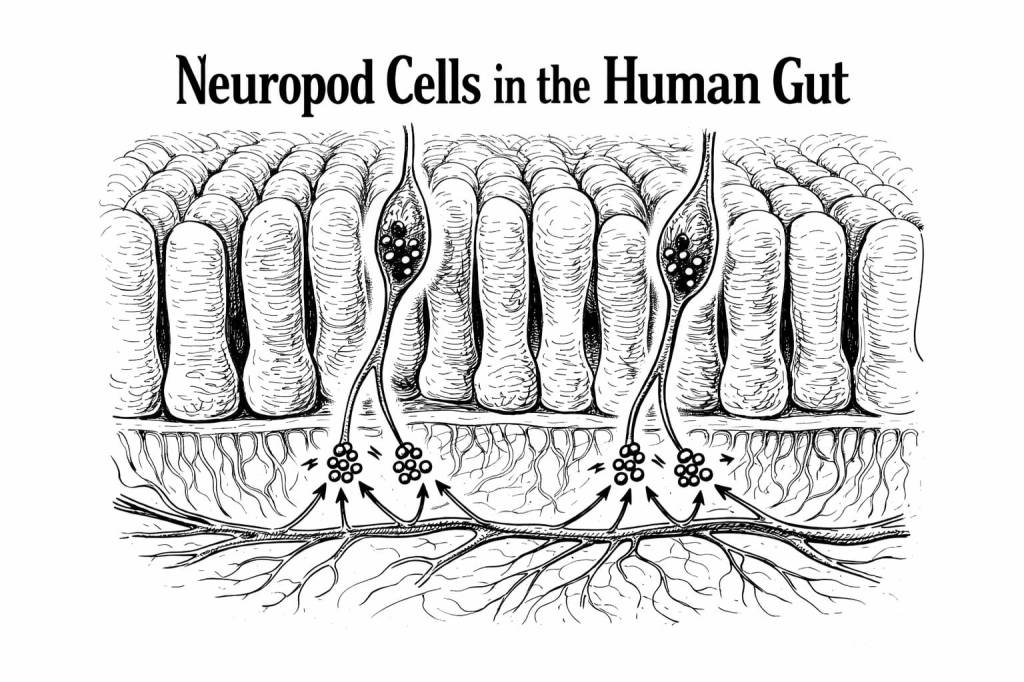
But this communication is not purely chemical. Within the gut wall lies a network of neuropod cells, remarkable sensory units discovered by Dr Maya Kaelberer and colleagues at Duke University. These cells are equipped with electrical synapses that can detect nutrients such as glucose, amino acids, and fatty acids, and then send rapid signals directly to the brain (within milliseconds), to shape perception, emotion, and appetite (Kaelberer et al., 2018).
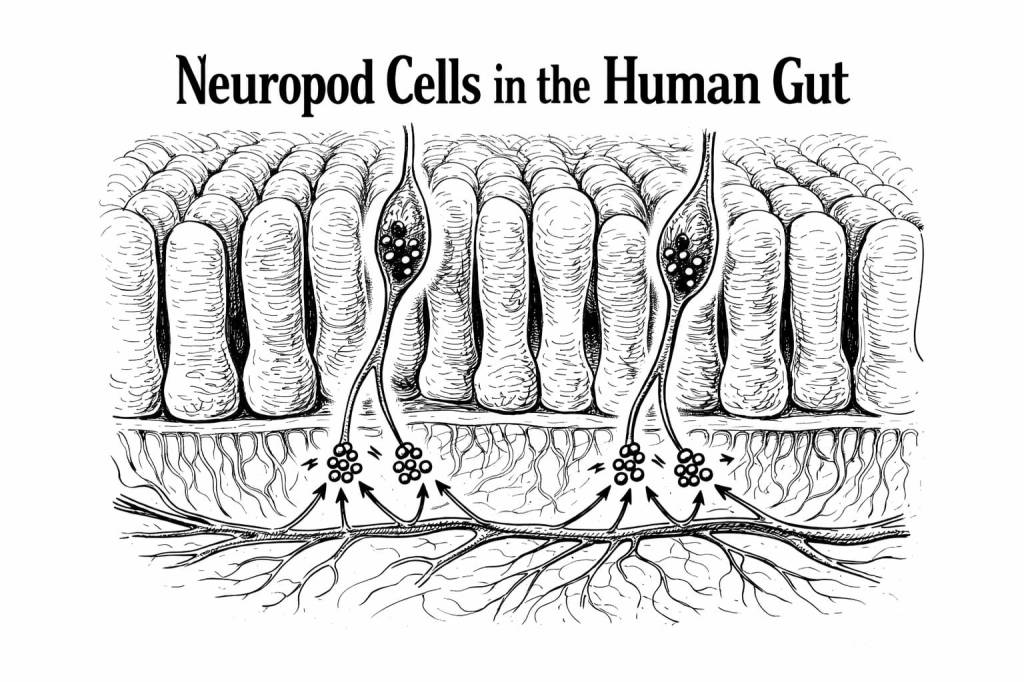
This discovery explains why the gut is sometimes referred to as the “second brain.” It does not merely digest; it perceives. The gut continuously samples the external world through food, drink, and bacteria and, informs the brain about what is safe, satisfying, or potentially harmful. It helps explain cravings, aversions, and the emotional resonance of eating. When you enjoy a morning coffee with a biscuit, the gut’s chemical sensors are already communicating with your midbrain reward circuits, producing the pleasurable surge that fuels alertness and comfort.
In NeuroAffective-CBT, this gut–brain dialogue embodies the biological foundation of interoceptive awareness, also known as, the ability to sense internal bodily states. When we practise mindfulness or direct calm, non-judgemental attention inward, we become more attuned to these subtle signals. Over time, this practice refines emotional regulation by aligning bodily feedback with cognitive understanding (Goldin and Gross, 2010; Mirea, 2024).
From the rectum to the oesophagus, this 9–10 metre canal is not only our largest internal organ but arguably our most socially connected one, continually interpreting the external world through what we ingest and how we feel. As we begin to appreciate this complexity, we can see that mental health is not confined to the brain. It is a networked experience, a dialogue between neurons, microbes, and meaning.
TED Takeaway: When your gut talks, your brain listens. Nourish that conversation!
Good Bacteria, Bad Mood: The Microbiome and Depression
When Emotional Health Depends on Microbial Harmony
The phrase “gut feeling” has never been more literal. In recent years, neuroscience has confirmed what intuition long suspected, that our mental health depends not only on the chemistry of the brain but also on the ecology of the gut. The bacteria, fungi, and viruses that inhabit our intestines do far more than digest food; they influence emotion, immunity, and even identity. When that internal ecosystem becomes imbalanced, mood often follows.
Research has shown that people suffering from depression or chronic anxiety tend to have less diverse gut microbiomes, alongside a higher concentration of bacterial species that produce inflammatory metabolites (Kelly et al., 2016; Foster et al., 2021). These molecules can cross the blood–brain barrier, altering neurotransmitter balance and disrupting neural circuits involved in mood regulation. In a striking series of animal experiments, transferring gut bacteria from a depressed mouse to a healthy one was enough to induce depressive behaviours in the recipient (Zheng et al., 2016).
Early human studies echo these findings. In small clinical trials, faecal microbiota transplants (FMT) from non-depressed donors temporarily improved depressive symptoms in treatment-resistant patients (Valles-Colomer et al., 2019). While the idea of “transplanting happiness” remains more metaphorical than practical, these results demonstrate a powerful biological truth: our emotional wellbeing is influenced by the microbial conversations happening below the diaphragm.
When the microbiome loses diversity, certain gut bacteria begin releasing pro-inflammatory cytokines, immune messengers that signal distress throughout the body. The brain interprets these signals as threat or fatigue, activating neural circuits associated with low mood, lethargy, and loss of pleasure. In this way, inflammation acts as a bridge between gut imbalance and emotional imbalance (Miller and Raison, 2016).
Conversely, cultivating a healthy and varied microbiome supports resilience. Factors that enhance microbial diversity include:
• A fibre-rich, plant-based diet with fermented foods and minimal ultra-processed ingredients.
• Regular aerobic exercise, which increases microbial species richness.
• Consistent sleep patterns, since gut flora follow circadian rhythms of their own.
The connection between gut health and depression is not just theoretical. The landmark SMILES trial (Jacka et al., 2017) demonstrated that a Mediterranean-style diet, rich in whole grains, legumes, vegetables, and olive oil, reduced depressive symptoms by about 30% within twelve weeks. Importantly, these improvements were independent of social support, confirming that what we eat can influence mood directly through biological pathways.
This evolving field, sometimes called nutritional psychiatry, reframes mental health as an ecosystem problem rather than a purely chemical one. As the NeuroAffective-CBT® model suggests, emotional regulation is an embodied skill, a dialogue between body, brain, and affect (Mirea, 2023). The gut microbiome, communicating through the vagus nerve and immune signalling, is an active participant in that dialogue.
When we eat poorly, we’re not just starving our bodies; we’re silencing billions of microscopic allies whose job is to keep our minds in balance. Rebuilding that internal community is therefore not just a digestive act, it is an act of self-care, a physiological form of emotional literacy.
TED Takeaway: A healthy mind begins in a healthy gut. Diversity in your diet builds diversity in your emotions. Feed the bacteria that help you feel alive.
Feeding the Mind from the Inside Out
How Nutrition Speaks the Language of Emotion
If the gut is a second brain, then every meal is a message. What we eat doesn’t just fill us, it informs us, shaping mood, motivation, and resilience through a constant biochemical dialogue between microbes and mind. In the NeuroAffective-CBT® model, this represents the living interface between body, brain, and affect: the nutritional conversation that regulates how we feel and function (Mirea, 2023).
When we eat well, the gut microbiome flourishes. Beneficial bacteria such as Lactobacillus and Bifidobacterium convert dietary fibre and complex carbohydrates into short-chain fatty acids like butyrate, which reduce inflammation and support the integrity of the gut lining (Cryan et al., 2019). These molecules also cross into the bloodstream, where they influence brain chemistry, increasing serotonin and BDNF (brain-derived neurotrophic factor), both critical for stable mood and cognitive flexibility.
By contrast, processed foods rich in refined sugar and saturated fats feed inflammatory microbes, producing cytokines that weaken the gut barrier and signal distress to the brain (Miller and Raison, 2016). The emotional fallout can manifest as irritability, fatigue, and a sense of mental fog – the psychological shadow of biological inflammation.
The Role of Prebiotics and Probiotics
Two categories of food play an especially important role in nurturing the gut–brain connection: prebiotics and probiotics.
Prebiotics are the fibres that feed beneficial bacteria, found abundantly in garlic, onions, oats, bananas, walnuts, and polyphenol-rich foods like olive oil, berries, and red grapes. Regular consumption of these foods maintains a diverse microbial population, strengthening the body’s immune and emotional defences (Gibson et al., 2017).
Probiotics, by contrast, are the bacteria themselves, living microorganisms that, when consumed in sufficient quantities, support the health of the microbiome. These are found in fermented foods such as yoghurt, kefir, sauerkraut, miso, tempeh, and kombucha. When ingested regularly, probiotics can influence the production of neurotransmitters like GABA, the calming chemical that reduces anxiety and promotes relaxation (Sarkar et al., 2016).
Because of their measurable effect on mental health, some clinicians now call these organisms psychobiotics, living agents that support psychological wellbeing through the gut–brain axis (Dinan et al., 2013).
Timing, Movement, and Mindfulness
Timing matters too. Probiotic capsules and fermented foods are most effective when taken on an empty stomach or before a light meal, allowing beneficial bacteria to pass through the stomach’s acidic environment without being destroyed (Appleton, 2018).
Movement also plays a part. Aerobic exercise, brisk walking, cycling, swimming, improves microbial diversity, enhances vagal tone, and increases BDNF, reinforcing both mental and emotional resilience (Biddle et al., 2019). Likewise, consistent sleep supports microbial rhythms that align with the circadian cycle, anchoring energy and emotional stability.
Finally, mindfulness serves as the behavioural amplifier of this entire system. Paying attention to what and how we eat, slowing down, tasting, and breathing, activates the parasympathetic nervous system via the vagus nerve, enhancing digestion and emotional regulation. Mindful eating isn’t a trend; it’s neurobiology in action (Goldin and Gross, 2010).
The Emotional Ecology of Eating
Each meal is both nourishment and feedback. The brain interprets the gut’s chemical and mechanical signals, fullness, acidity, nutrient quality, and translates them into emotion. When the body says safe, the mind feels calm. When the body says threat, the mind feels uneasy. Over time, the foods we choose either reinforce stability or erode it.
In this sense, food is not just nutrition; it’s participation in a living ecosystem, one that rewards diversity, balance, and attention. The microbiome is not a silent partner; it is a dynamic community that mirrors how we live. A chaotic diet creates inner noise. A mindful one restores harmony.
TED Takeaway: Care for your microbes as you would a garden: feed them, move with them, let them rest. They return the favour with energy, clarity, and emotional balance. Mindfulness is not a trend; it’s neurobiology in action.
Diet and Depression: What the SMILES Trial Taught Us
How Food Became a Form of Therapy
For decades, the relationship between food and mood has been treated as secondary, a lifestyle footnote rather than a therapeutic pathway. Yet emerging evidence now places diet at the centre of mental health. The food on your plate can influence neurotransmitters, inflammation, neuroplasticity, and ultimately, your emotional resilience.
The clearest demonstration of this came from Australia in 2017, when Professor Felice Jacka and her team published the landmark SMILES Trial (Supporting the Modification of lifestyle in Lowered Emotional States). The study asked a deceptively simple question:
“Could changing one’s diet treat depression as effectively as conventional therapies?”.
A New Kind of Antidepressant
The researchers recruited adults diagnosed with major depressive disorder and divided them into two groups. One group received regular social support sessions, conversation, connection, and empathy. The other met with a dietitian who guided them through a modified Mediterranean diet, rich in vegetables, fruits, legumes, whole grains, fish, and olive oil, while minimising processed foods, sugar, and refined carbohydrates (Jacka et al., 2017).
After twelve weeks, the results were striking. The diet group showed a 32% reduction in depressive symptoms, compared to only 8% in the social-support group. Roughly one in three participants in the dietary intervention achieved full remission from depression, without medication changes.
Follow-up research (Opie et al., 2018; Lai et al., 2013) replicated these findings: when we nourish the brain with anti-inflammatory foods and micronutrients that enhance serotonin, dopamine, and BDNF, mood stabilises and cognition sharpens. The Mediterranean diet wasn’t simply helping people feel better; it was changing their biology.
Why It Works: Inflammation and Neuroplasticity
The mechanism is now clearer. Diets high in refined sugar, processed fats, and artificial additives trigger systemic inflammation, increasing pro-inflammatory cytokines that interfere with neurotransmitter metabolism (Miller and Raison, 2016). Chronic inflammation dampens neuroplasticity, the brain’s ability to form and strengthen neural connections, especially in regions like the hippocampus and prefrontal cortex, both vital for motivation and emotional regulation.
In contrast, Mediterranean-style diets are anti-inflammatory. They deliver omega-3 fatty acids, polyphenols, antioxidants, folate, and B-vitamins, all of which support synaptic growth, mitochondrial health, and neurotransmitter balance (Marx et al., 2017). Within days, high-quality nutrition can raise levels of BDNF, a protein that acts as fertiliser for neurons, improving learning, memory, and emotional flexibility (André et al., 2008).
In NeuroAffective-CBT, this biological process mirrors the therapeutic one: both involve rewiring, re-establishing communication between disrupted neural circuits. When inflammation drops and BDNF rises, the emotional brain becomes more responsive to therapy, mindfulness, and behavioural change (Mirea, 2023). Diet doesn’t replace psychotherapy; it prepares the terrain for it.
Food as Behavioural Change
From a behavioural perspective, modifying diet is itself a neuroaffective intervention. Choosing whole foods over processed ones engages the prefrontal cortex, the brain’s executive centre, and strengthens self-regulation circuits. This is the same cognitive–emotional skill that therapy trains: recognising impulses and acting intentionally. Each meal becomes an opportunity to practise regulation, reward delay, and self-care.
Moreover, eating well reinforces a positive feedback loop. Balanced blood sugar and nutrient-rich foods stabilise the autonomic nervous system, calming the vagus nerve and reducing emotional reactivity. Over time, people report not only better mood but also a greater sense of clarity and motivation, biological calm translating into psychological coherence.
The SMILES trial and subsequent studies remind us that emotional healing can begin with something as ordinary as lunch. A colourful plate may be the most accessible form of neurochemistry we possess.
TED Takeaway: Changing what’s on your plate can change what’s on your mind. Food is the most consistent, self-administered antidepressant you’ll ever take.
Inflammation, Neuroplasticity, and the Healing Brain
How the Body’s Chemistry Shapes the Mind’s Resilience
For most of the twentieth century, depression was described as a chemical imbalance, a deficiency of serotonin, dopamine, or noradrenaline that could be corrected with medication. That model helped reduce stigma and offered effective treatments for many, but it left out something crucial: why those chemical imbalances occurred in the first place.
Over the past two decades, neuroscience has reframed this understanding. We now know that depression and anxiety are not simply deficits in neurotransmitters but disorders of connectivity and plasticity. In other words, the problem lies not only in the chemicals themselves, but in the wiring that allows brain cells to communicate (Duman and Duman, 2015; Serafini, 2012).
The Fire Within: How Inflammation Shapes Emotion
Inflammation is the body’s ancient alarm system; a protective mechanism designed to fight infection and heal injury. But when the immune system becomes overactive through chronic stress, poor diet, or environmental toxins, this inflammation becomes systemic. Pro-inflammatory cytokines like IL-6 and TNF-α flood the bloodstream and reach the brain, where they disrupt neurotransmission, reduce serotonin availability, and interfere with energy metabolism in neurons (Miller and Raison, 2016).
This inflammatory “fog” particularly affects the hippocampus and prefrontal cortex, regions crucial for motivation, memory, and self-reflection. Inflammation shrinks dendritic spines, weakens synapses, and slows the birth of new neurons, a process called neurogenesis (Kang et al., 2012). The result is a brain less capable of flexibility, learning, and emotional recovery.
But here lies the hopeful paradox: if the brain can become unwell through maladaptive plasticity, it can also heal through adaptive plasticity. The very circuits that fall silent under inflammation can reignite when nourished, exercised, and engaged through therapy.
Food as Neural Fertiliser
Anti-inflammatory diets, particularly Mediterranean-style nutrition, provide the building blocks for neuroplasticity. Omega-3 fatty acids, B-vitamins, folate, and antioxidants all contribute to the production of Brain-Derived Neurotrophic Factor (BDNF), a protein that promotes the growth and repair of synaptic connections (André et al., 2008).
In both humans and animals, increased BDNF correlates with reduced depressive symptoms and enhanced learning capacity (Duman and Duman, 2015). Even more striking, changes in BDNF can occur within days of improving diet, exercise, or sleep patterns (Serafini, 2012). Antidepressant medications, mindfulness training, and aerobic activity all elevate BDNF through similar pathways, demonstrating that biological and psychological interventions converge on the same neural mechanisms (Yang et al., 2016).
This overlap helps explain why the NeuroAffective-CBT model emphasises a multi-system approach: emotion, cognition, and physiology are not separate domains but parallel feedback loops. When diet reduces inflammation, therapy becomes more effective. When therapy enhances self-regulation, it reduces physiological stress. The brain heals through both bottom-up and top-down signals, food and thought working in tandem.
The Practice of Rewiring
In clinical terms, neuroplasticity means that the brain can literally change its structure in response to experience. New synapses form as we learn, and old, unused ones dissolve. This principle, “neurons that fire together wire together”, describes both learning and healing.
Every act of mindful eating, exercise, or reframed thought in therapy strengthens certain circuits and weakens others. Over time, these microscopic changes accumulate into a macroscopic shift in emotional stability. Healing is not a switch; it’s a training process, a gradual re-sculpting of the brain’s networks through repeated experience.
From Inflammation to Integration
Understanding depression as an inflammatory and connectivity disorder allows us to see recovery as a process of integration, not correction. The goal is not to “fix” a broken brain but to create the conditions, nutritional, psychological, and relational, in which it can heal itself.
When inflammation subsides, BDNF rises, and neuroplasticity reawakens, the brain regains its natural rhythm of adaptation. The world begins to look different not because it has changed, but because the neural machinery perceiving it has been renewed.
TED Takeaway: Depression isn’t just in your mind it’s in your wiring. Reduce inflammation, nourish your brain, and practise new ways of thinking: that’s how neurons learn hope.
Energy, Glucose, and the Emotional Roller-Coaster
How Blood Sugar Shapes Behaviour and Mood
Every emotion has a metabolic signature. The brain’s ability to focus, regulate mood, or recover from stress depends on a steady supply of energy, and that energy runs almost entirely on glucose. Yet, like a child on a sugar high, our modern diets deliver glucose in erratic bursts rather than balanced waves.
The result is what many of us recognise intuitively: the mid-morning energy crash, the irritability that accompanies hunger, or the brain fog after a sugary lunch. These are not signs of weak willpower but of metabolic turbulence – fluctuations in blood sugar that the brain interprets as emotional instability.
The Brain’s Hunger for Balance
Although the brain represents only about 2% of body weight, it consumes nearly 20% of all glucose available in the bloodstream (Mergenthaler et al., 2013). Because it cannot store much energy, even brief drops in blood sugar can trigger fatigue, distractibility, or irritability. Conversely, sharp glucose spikes from refined carbohydrates or sweetened drinks cause transient dopamine surges followed by cortisol rebounds, leading to the emotional equivalent of a sugar hangover (Ludwig, 2002).
These rapid fluctuations affect the prefrontal cortex – the region responsible for self-control, focus, and emotional regulation. When glucose levels fall too low, this part of the brain becomes less efficient, and impulsive, reactive behaviours take the lead (Gailliot and Baumeister, 2007). In NeuroAffective-CBT® terms, this is when cognitive regulation gives way to affective overwhelm, when physiology outpaces psychology.
The Glucose–Mood Connection
Clinical evidence supports this link. People with insulin resistance or poorly controlled blood sugar show higher rates of depression and anxiety, while those who stabilise glucose through diet and exercise experience improved mood and cognitive function (Luo et al., 2022). Chronic glucose variability increases oxidative stress and inflammatory cytokines, which impair both neuronal health and neurotransmitter balance, especially serotonin and dopamine, the “mood messengers” that govern motivation and reward (Treadway and Zald, 2011).
In practical terms, mood stability often mirrors glucose stability. A diet rich in whole grains, fibre, protein, and healthy fats slows digestion and moderates glucose absorption. This prevents extreme highs and lows, sustaining steady energy to the brain throughout the day. The difference may feel subtle, fewer cravings, clearer thinking, a calmer baseline, but over time, these micro-adjustments translate into significant emotional resilience.
How to Flatten the Curve
Small, mindful habits can smooth the emotional and metabolic roller-coaster:
• Start the day savoury. A protein-based breakfast (e.g., eggs, yoghurt, or nuts) reduces morning glucose spikes and keeps dopamine stable through the first stressors of the day.
• Eat vegetables before starch. Fibre and phytonutrients slow carbohydrate absorption, flattening post-meal glucose peaks (Jovanovic et al., 2009).
• Walk for ten minutes after meals. Even light physical movement enhances insulin sensitivity and improves glucose uptake, translating into a calmer nervous system.
• Avoid “naked carbs.” Pair carbohydrates with protein or fat to delay glucose release and prevent sharp insulin responses.
These strategies are not merely nutritional tricks, they are self-regulation tools. They train the body to maintain equilibrium, and the brain to interpret safety instead of scarcity.
From Sugar Spikes to Emotional Stability
When blood sugar stabilises, the body–brain–affect loop settles into coherence. The vagus nerve signals calm, the limbic system reduces alarm responses, and the prefrontal cortex resumes executive control. In this synchrony, the emotional brain becomes less volatile and more available for reflection, empathy, and learning, the core functions of psychological growth.
From a NeuroAffective-CBT® perspective, managing glucose is a form of embodied mindfulness: paying attention to the body’s energy patterns and adjusting behaviour to sustain internal balance. It’s not a diet; it’s emotional literacy in biochemical form.
TED Takeaway: Flat glucose curves make flat emotional seas. Balance your blood sugar to balance your behaviour, stability in biology creates stability in being.
The Body Remembers What the Mind Forgets
Integration as the Final Language of Healing
By now it is clear that mental health is not confined to the skull. The mind is not a separate entity floating above the body; it is a conversation within it — a continuous feedback loop between cells, organs, microbes, and meaning. Every thought has a heartbeat. Every emotion has a chemical echo.
In NeuroAffective-CBT®, we call this the body–brain–affect triangle, a living system of regulation in which physiology, cognition, and feeling inform one another. When that dialogue is coherent, we experience emotional balance and clarity. When it breaks down through exhaustion, poor diet, or chronic stress, the body begins to speak in symptoms the mind may not yet understand.
The Biology of Memory and Emotion
The body remembers what the mind forgets because experience is not stored in words but in networks: of neurons, hormones, and sensations. Emotional memories, joy, fear, loss, are distributed across the nervous system, woven into posture, breathing, digestion, and sleep. Chronic inflammation, unstable glucose, or poor gut health can reactivate these circuits, producing what feels like psychological distress but is, in fact, physiological dissonance.
Conversely, when we restore the biological foundations of safety, balanced nutrition, restorative sleep, consistent movement, the same networks become available for reprocessing through therapy and reflection. The emotional brain can only heal when the body feels safe enough to listen.
This is why the TED framework (Tired, Exercise, Diet), is more than a lifestyle checklist. It is a neurobiological protocol for emotional coherence. By regulating fatigue, movement, and nutrition, we restore the stability that allows higher cognition – empathy, creativity, and self-awareness, to flourish (Mirea, 2023).
From Self-Regulation to Self-Understanding
Healing begins with self-regulation but matures into self-understanding. Each meal, each breath, each night of sleep becomes a message to the nervous system: You are safe enough to grow. When inflammation recedes, BDNF rises, and neural connections strengthen, therapy deepens. Mindfulness becomes easier. The world feels less like a threat and more like an invitation.
In this light, diet is not only about nutrients; it is about relationship with one’s body, with the environment, and with others. Sharing food, preparing it mindfully, and consuming it with gratitude engage ancient neural pathways of belonging and calm. The microbiome thrives not just on fibre and polyphenols but on human connection itself.
The Integration of Knowing and Feeling
Modern neuroscience and ancient wisdom converge on the same insight: we cannot think our way out of a dysregulated body. Emotional regulation begins in the viscera, in the gut that senses, the heart that signals, the breath that synchronises. The task of psychotherapy, then, is not to escape biology but to integrate it, to build bridges between inner experience and outer awareness.
When the mind listens to the body, and the body trusts the mind, coherence emerges. This is the moment when therapy, nutrition, and neuroscience meet, not as separate disciplines, but as languages of the same truth: that to feel well, we must live in alignment with what our biology has always known.
TED Takeaway: The state of your gut is the tone of your thoughts. Heal one, and the other learns to sing again.
⚠️ Disclaimer – These articles are for educational purposes only and do not replace medical or psychological evaluation. Individuals should consult their GP or prescribing clinician before introducing any lifestyle interventions for treatment purpose, especially if taking in parallel other prescribed treatments, psychiatric or cardiovascular.
References
André, R.B., Lopes, M. and Fregni, F. (2008) ‘A systematic review and meta-analysis of clinical studies on major depression and BDNF levels: Implications for the role of neuroplasticity in depression’, International Journal of Neuropsychopharmacology, 11(8), pp. 1169–1180.
Appleton, J. (2018) ‘The gut–brain axis: influence of microbiota on mood and mental health’, Clinical Psychopharmacology and Neuroscience, 16(2), pp. 76–83.
Biddle, S.J.H., Mutrie, N. and Gorely, T. (2019) ‘Physical activity and mental health: Evidence is growing’, World Psychiatry, 18(2), pp. 123–124.
Craig, A.D. (2009) ‘How do you feel now? The anterior insula and human awareness’, Nature Reviews Neuroscience, 10(1), pp. 59–70.
Cryan, J.F., O’Riordan, K.J., Cowan, C.S.M., Sandhu, K.V., Bastiaanssen, T.F.S., Boehme, M., Codagnone, M.G., Fulling, C., Golubeva, A.V., Guzzetta, K.E., Jaggar, M., Long-Smith, C.M., Lyte, J.M., Martin, J.A., Moloney, G., Morelli, E., Morillas, E., O’Connor, R., Cruz-Pereira, J.S., Peterson, V.L., Rea, K., Ritz, N.L., Sherwin, E., Spichak, S., Teichman, E.M., van de Wouw, M., Ventura-Silva, A.P., Wallace-Fitzsimons, S.E., Hyland, N.P. and Dinan, T.G. (2019) ‘The microbiota–gut–brain axis’, Physiological Reviews, 99(4), pp. 1877–2013.
Damasio, A. (2021) Feeling and Knowing: Making Minds Conscious. New York: Pantheon Books.
Darwin, C. (1872) The Expression of the Emotions in Man and Animals. London: John Murray.
Dinan, T.G., Stanton, C. and Cryan, J.F. (2013) ‘Psychobiotics: A novel class of psychotropic’, Biological Psychiatry, 74(10), pp. 720–726.
Duman, C.H. and Duman, R.S. (2015) ‘Spine synapse remodeling in the pathophysiology and treatment of depression’, Neuroscience Letters, 601, pp. 20–29.
Foster, J.A. and Neufeld, K.-A.M. (2021) ‘Gut–brain axis: How the microbiome influences anxiety and depression’, Trends in Neurosciences, 44(9), pp. 762–776.
Gailliot, M.T. and Baumeister, R.F. (2007) ‘The physiology of willpower: Linking blood glucose to self-control’, Personality and Social Psychology Review, 11(4), pp. 303–327.
Gibson, G.R., Hutkins, R., Sanders, M.E., Prescott, S.L., Reimer, R.A., Salminen, S.J., Scott, K., Stanton, C., Swanson, K.S., Cani, P.D., Verbeke, K. and Reid, G. (2017) ‘The concept of prebiotics and their role in the microbiome–gut–brain axis’, Nutrients, 9(11), p. 1021.
Goldin, P.R. and Gross, J.J. (2010) ‘Effects of mindfulness-based stress reduction (MBSR) on emotion regulation in social anxiety disorder’, Emotion, 10(1), pp. 83–91.
Huberman, A. (2023) ‘The Science of Emotions and the Brain–Body Connection’, The Huberman Lab Podcast, Episode 85. Stanford University School of Medicine. Available at: https://www.hubermanlab.com/episode/the-science-of-emotions-and-the-brain-body-connection [Accessed 10 November 2025].
Jacka, F.N. et al. (2017) ‘A randomised controlled trial of dietary improvement for adults with major depression (the “SMILES” trial)’, BMC Medicine, 15(1), p. 23.
Jovanovic, A., Gerrard, J. and Taylor, R. (2009) ‘The effect of meal composition on postprandial glycaemia’, Clinical Nutrition, 28(6), pp. 659–663.
Kaelberer, M.M., Buchanan, K.L., Klein, M.E., Barth, B.B., Montoya, M.M., Shen, X. and Bohórquez, D.V. (2018) ‘A gut-brain neural circuit for nutrient sensory transduction’, Science, 361(6408), eaat5236.
Kang, H.J. et al. (2012) ‘Decreased expression of synapse-related genes and loss of synapses in major depressive disorder’, Nature Medicine, 18(9), pp. 1413–1417.
Kelly, J.R. et al. (2016) ‘Transferring the blues: Depression-associated gut microbiota induces neurobehavioural changes in the rat’, Journal of Psychiatric Research, 82, pp. 109–118.
Lai, J.S. et al. (2014) ‘A systematic review and meta-analysis of dietary patterns and depression in community-dwelling adults’, American Journal of Clinical Nutrition, 99(1), pp. 181–197.
Lu, S. et al. (2024) ‘The communication mechanism of the gut–brain axis and mental diseases’, Therapie. [Online] Available at: https://doi.org/10.xxxx/therapie2024 [Accessed 10 November 2025].
Ludwig, D.S. (2002) ‘The glycemic index: Physiological mechanisms relating to obesity, diabetes, and cardiovascular disease’, JAMA, 287(18), pp. 2414–2423.
Luo, Y., Xie, L., Jin, W. and Li, M. (2022) ‘Association between glycemic variability and depression in adults: A systematic review’, Frontiers in Psychiatry, 13, 832065.
Marx, W. et al. (2017) ‘Nutritional psychiatry: The present state of the evidence’, Proceedings of the Nutrition Society, 76(4), pp. 427–436.
Mergenthaler, P., Lindauer, U., Dienel, G.A. and Meisel, A. (2013) ‘Sugar for the brain: The role of glucose in physiological and pathological brain function’, Trends in Neurosciences, 36(10), pp. 587–597.
Miller, A.H. and Raison, C.L. (2016) ‘The role of inflammation in depression: From evolutionary imperative to modern treatment target’, Nature Reviews Immunology, 16(1), pp. 22–34.
Mirea, D. (2023) NeuroAffective-CBT®: “Tired, Exercise and Diet Your Way Out of Trouble: TED is Your Best Friend!” NeuroAffective-CBT®. Available at: https://neuroaffectivecbt.com/2023/07/18/teds-your-best-friend/ [Accessed 10 November 2025].
Mirea, D. (2024) If My Gut Could Talk to Me, What Would It Say? NeuroAffective-CBT®. Available at: https://neuroaffectivecbt.com/2024/03/22/if-my-gut-could-talk-to-me-what-would-it-say/ [Accessed 10 November 2025].
Opie, R.S., O’Neil, A., Jacka, F.N., Pizzinga, J. and Itsiopoulos, C. (2018) ‘A modified Mediterranean dietary intervention for adults with major depression: dietary protocol and feasibility data from the SMILES trial’, Nutritional Neuroscience, 21(7), pp. 487–501.
Panksepp, J. (1998) Affective Neuroscience: The Foundations of Human and Animal Emotions. New York: Oxford University Press.
Radjabzadeh, D. et al. (2022) ‘Gut microbiome-wide association study of depressive symptoms’, Nature Communications, 13, p. 7128.
Sarkar, A., Lehto, S.M., Harty, S., Dinan, T.G., Cryan, J.F. and Burnet, P.W.J. (2016) ‘Psychobiotics and the manipulation of bacteria–gut–brain signals’, Trends in Neurosciences, 39(11), pp. 763–781.
Serafini, G. (2012) ‘Neuroplasticity and major depression: The role of modern antidepressant drugs’, World Journal of Psychiatry, 2(3), pp. 49–57.
Time Magazine Editors (2025) ‘Your Gut Could Be Affecting Your Mood’, TIME Magazine. [Online] Available at: https://time.com/gut-brain-mood/ [Accessed 10 November 2025].
Treadway, M.T. and Zald, D.H. (2011) ‘Reconsidering anhedonia in depression: Lessons from translational neuroscience’, Neuroscience and Biobehavioral Reviews, 35(3), pp. 537–555.
Valles-Colomer, M. et al. (2019) ‘The neuroactive potential of the human gut microbiota in quality of life and depression’, Nature Microbiology, 4(4), pp. 623–632.
Wei, L. et al. (2022) ‘Enterochromaffin cells–gut microbiota crosstalk: implications for gastrointestinal serotonin homeostasis’, International Journal of Molecular Sciences, 23(13), p. 7180.
Yang, C.C. et al. (2016) ‘State and training effects of mindfulness meditation on brain networks reflect neuronal mechanisms of its antidepressant effect’, Neural Plasticity, 2016, p. 9504642.
Zheng, P. et al. (2016) ‘Gut microbiome remodeling induces depressive-like behaviors through a pathway mediated by the host’s metabolism’, Molecular Psychiatry, 21(6), pp. 786–796.
 neuroaffectivecbt.com