

Daniel Mirea (October, 2025)
NeuroAffective-CBT® | https://neuroaffectivecbt.com
Abstract
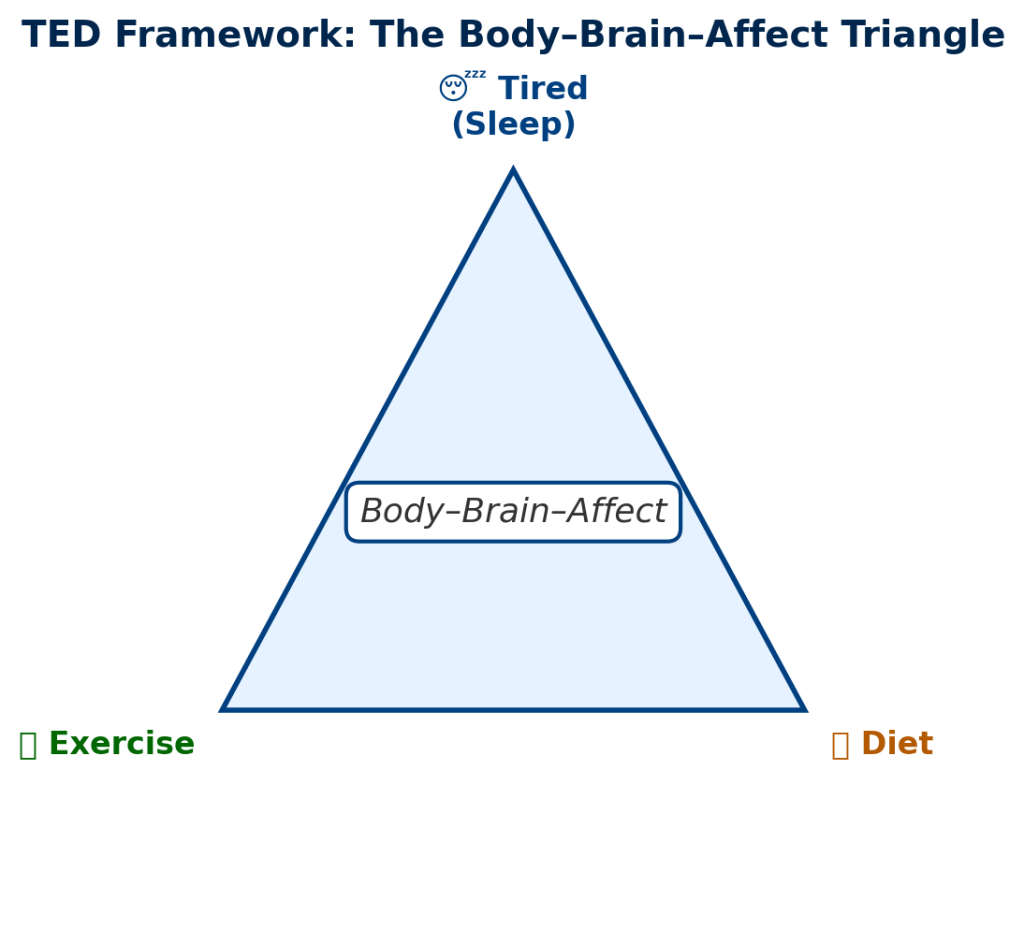
The TED (Tired–Exercise–Diet) model is not a peripheral wellness add-on but a formally articulated component of the NeuroAffective-CBT framework. Daniel Mirea introduced TED in NeuroAffective-CBT publications such as Tired, Exercise and Diet Your Way Out of Trouble, where it is presented as a core regulatory module linking body, brain, and affect within the broader NA-CBT schema (Mirea, 2023; Mirea, 2025).
Within the six-module NeuroAffective-CBT programme, TED provides a structured way of translating insights from neuroscience, nutritional psychiatry, psychophysiology, and behavioural science into clinically usable lifestyle interventions. By organising these domains—sleep, movement, and diet—under a single conceptual umbrella, TED offers clinicians and clients a flexible, evidence-informed scaffold for addressing biological factors that interact with emotional learning and self-regulation.
A central assumption of the TED model is that lifestyle-related physiological states meaningfully shape affective capacity, motivational tone, and cognitive flexibility. In clinical populations characterised by chronic internalised shame, self-loathing, affective instability, or low self-regulatory capacity, metabolic strain, sleep disruption, and sedentary behaviour frequently coexist with psychological distress. TED provides a framework for recognising and working with these interactions alongside, rather than instead of, psychotherapeutic processes.
If Part I of the TED series examined creatine as a bioenergetic substrate relevant to brain energy and mood regulation, Part II turns to a more prevalent and system-wide metabolic challenge: insulin resistance. The sections that follow explore how insulin dysregulation intersects with emotional and cognitive functioning, and how TED-aligned lifestyle levers may be used to address these dynamics within an integrated psychotherapeutic context.
Keywords: NeuroAffective-CBT, TED model, insulin resistance, psychometabolic health, affect regulation, depression, fatigue, gut–brain axis, lifestyle interventions, psychotherapy augmentation
Introducing TED in the NeuroAffective-CBT Framework
The TED (Tired–Exercise–Diet) model is not a peripheral wellness concept but a formally articulated component of the NeuroAffective-CBT framework. Daniel Mirea first introduced TED in NeuroAffective-CBT publications such as Tired, Exercise and Diet Your Way Out of Trouble, where it is presented as a core module linking body, brain, and affect within the NA-CBT schema (Mirea, 2023; Mirea, 2025).
Within the broader NeuroAffective-CBT programme, which comprises six interrelated modules, TED is embedded early in treatment to support psychotherapeutic work targeting chronic internalised shame, self-loathing, affect dysregulation, and self-regulatory vulnerabilities (Mirea, 2023). The underlying clinical rationale is that lifestyle-related physiological states meaningfully influence emotional stability, motivational capacity, and responsiveness to affect-focused and cognitive interventions. Consistent with findings from lifestyle psychiatry, modifying sleep, movement, and nutritional patterns may therefore enhance and stabilise psychotherapeutic gains (Firth et al., 2020; Lopresti, 2019).
TED integrates insights from multiple domains, including neuroscience (e.g., gut–brain signalling and reward pathways), nutritional psychiatry, psychophysiology (e.g., the effects of sleep deprivation and fatigue), and behavioural science (e.g., habit formation and conditioning). By framing sleep, movement, and diet within a single, coherent model, TED provides clinicians and clients with a flexible, evidence-informed scaffold for lifestyle-oriented intervention that can be integrated alongside standard psychotherapeutic techniques.
If Part I of the TED series examined creatine as a bioenergetic substrate relevant to brain energy availability and mood regulation (Candow et al., 2022; Allen et al., 2024), Part II turns to a more prevalent and system-wide metabolic challenge: insulin resistance. The sections that follow explore its links to emotional and cognitive functioning, and consider how TED-aligned lifestyle levers may be used to address psychometabolic constraints within an integrated NeuroAffective-CBT® framework.
Insulin Resistance & Mental Health: Why It Matters
Epidemiology & Hidden Burden
The World Health Organization estimates over one billion people globally live with diabetes or prediabetes, conditions rooted in chronic insulin resistance. Though early stages may lack dramatic physical symptoms, substantial evidence ties insulin resistance to mood disturbances: irritability, poor sleep, low motivation, brain fog, diminished self-confidence, depression, and anxiety.
Clinically, many mental health practitioners begin treatment for depression or anxiety without ordering metabolic labs, thereby potentially missing a root driver. Treating symptoms without addressing underlying insulin dysregulation may limit long-term efficacy.
Dietary Drivers & Dopamine Links
Modern diets, usually rich in refined sugars, starches, and processed carbohydrates, easily produce repeated glucose spikes. These not only tax metabolic systems but elicit strong dopamine responses, reinforcing cravings and behaviours analogous to substance addiction (Smith & Robbins, 2020). Sugar “addiction” is increasingly framed as a real phenomenon, with parallels to addictive substances in neurobiology and behaviour (Kempton et al., 2024).
Excess glucose that is not immediately utilised is stored as fat, contributing to chronic inflammation, glycation (a form of molecular “aging”), and metabolic stress. Over time, these processes damage organs, accelerate aging, and intersect with psychiatric vulnerability.
Mechanistic Cascade: From Glucose Spikes to Neural Dysregulation
When glucose surges, the pancreas secretes insulin to clear it from the bloodstream into liver, muscle, and fat tissue. In insulin resistance, muscle and liver cells become less responsive, so insulin must work harder. Over time, insulin’s compensatory drive fails, and fat accumulation accelerates, especially visceral adiposity. Because skeletal muscle has high metabolic demand, individuals who train or have greater lean mass may buffer this process somewhat, but they are not immune.
In insulin resistance, cells degrade signalling pathways. One key culprit is diacylglycerol (DAG): metabolic overflow in muscle and liver leads to DAG accumulation, which impairs insulin receptor signalling (Schulman et al., 2019). Imagine an insulin “key” (insulin molecule) trying to unlock a blocked “car door” (GLUT4 transporter) but the signal pathway is jammed by DAG sludge.
From a TED viewpoint, knowingly or unknowingly, many people live in this metabolic state: they feel fatigue or fogginess after meals, gain “stubborn” fat, crave sweets, and feel stuck. Their cells are refusing insulin’s “key”, causing chronic internal stress that can manifest in mood, cognition, and energy dysregulation.
Prevalence & Clinical Relevance
In a striking study of 18 to 44-year-olds, 44.8 % were estimated to have insulin resistance; notably, half of them were not obese, demonstrating the “thin-outside, fat-inside” phenotype. That means many lean individuals may silently carry metabolic dysfunction. Importantly, several studies suggest insulin resistance is a stronger predictor of cardiovascular disease than LDL cholesterol (Reaven, 2011; Wang et al., 2022).
As insulin resistance worsens, elevated glycation, oxidative stress, inflammatory markers, and microvascular dysfunction set in. In the brain, these intersect with neuroinflammation, microglial activation, and compromised mitochondrial function, pathways implicated in depression and cognitive decline (Morris et al., 2017; Louie et al., 2023).
Intervention Levers: What TED Can Do (and What the Research Suggests)
Below is a revised structure of actionable insights, rooted in emerging metabolic neuroscience, that align well with the TED domains.
1. Postprandial Movement: The Manual “Tesla Door” Activation
A 10 to 20 minute walk after meals activates AMPK signalling. Adenosine monophosphate-activated protein kinase – an enzyme that helps your body use energy more efficiently and draw sugar from the blood into muscles, thus allowing glucose to enter muscle cells independently of insulin. In this metaphor, walking acts as a manual opener of the automatic Tesla door, granting access when the remote control (or the insulin) fails. This simple, low-risk strategy is well supported by metabolic research (Hawley & Holloszy, 2009; Richter & Hargreaves, 2013).
2. Carbohydrate Timing & Contextual Use
Use fast-digesting carbohydrates selectively (e.g. white rice or ripe bananas) during periods of high energy demand, such as intra-workout or immediately post-exercise, when insulin sensitivity is highest. This ensures glucose is directed into active muscle tissue rather than exacerbating systemic dysregulation. In other words, this refers to rare, strategic use in small amounts, only when the body can efficiently utilise glucose for fuel.
Two good examples of fast-digesting carbohydrates, often called high-glycaemic index carbs, are:
- White rice – breaks down quickly into glucose, providing a rapid spike in blood sugar and energy.
- Bananas (ripe) – contain simple sugars like glucose and fructose that are quickly absorbed, making them ideal before or during exercise.
Other common examples include white bread, honey, dextrose, sports drinks, or small amounts of fruit juice. This guidance, however, does not apply to individuals on a strict weight-loss programme. In such cases, the goal is to reduce overall glucose exposure and promote fat metabolism, meaning fast-digesting carbohydrates are best avoided.
Emerging evidence suggests that consuming a small amount of vinegar, around one teaspoon diluted in water, before a high-carbohydrate or sweet meal can help moderate postprandial (after-meal) glucose spikes by slowing gastric emptying and improving insulin sensitivity (Johnston et al., 2004; Mitrou et al., 2010). This simple intervention, often highlighted by metabolic educators such as “Jesse the Glucose Goddess”, aligns with the TED model’s focus on practical, low-cost strategies to stabilise energy and mood through metabolic regulation.
3. Rate-limiting Absorption: Protein + Soluble Fibre
By combining carbs with protein and soluble fibre (e.g. psyllium, chia, pectin), you slow the influx of glucose, turning a firehose into a gentle stream. This helps prevent peaks and DAG formation. This method is well supported in glycaemic control literature (Wolever et al., 2008; Jenkins et al., 2018).
Example: Oatmeal Power Bowl
Carbohydrate: Rolled oats (complex carbs that digest steadily)
Protein: Greek yoghurt or a scoop of whey protein mixed in
Soluble fibre: Chia seeds or ground flaxseeds (both rich in soluble fibre)
Healthy fats (optional): A few almonds or a teaspoon of nut butter
Extras: Add sliced banana or berries for natural sweetness
Alternative savoury example
- Carbohydrate: Quinoa or sweet potato
- Protein: Grilled salmon, chicken, or tofu
- Soluble fibre: Steamed vegetables (broccoli, carrots) + half an avocado or lentils
TED perspective: this combo reduces post-meal glucose peaks, supports satiety, and keeps insulin responses smooth, exactly what TED aims for.
4. Sludge Clearance & Mitochondrial Support
- Trimethylglycine (TMG): May enhance methylation, support mitochondrial function, and assist in DAG clearance pathways (Ueland et al., 2019).
- Cinnamon: Contains insulin mimetic compounds; small trials suggest improved glycaemic control and insulin sensitivity when used judiciously (Khan et al., 2003).
- Carnosine: Serves as a buffer and antiglycation agent, intercepting reactive sugar moieties before they damage tissues (Hipkiss, 2009).
5. Master Reset: Intermittent Fasting / Time-Restricted Eating
Caloric restriction or “fasting” regimes although not always recommended if one suffers from high-blood pressure (e.g. 16:8, 24-h fasts) can however flip metabolic switches: lower insulin, upregulate autophagy (cellular cleanup), and reduce DAG accumulation. Animal and human studies show fasting improves insulin sensitivity, clears metabolic “sludge,” and supports mitochondrial health (Longo & Panda, 2016; de Cabo & Mattson, 2019).
6. Synergy of TED: Sleep, Exercise, Diet & Metabolic Hygiene
- Sleep deprivation impairs insulin sensitivity and raises cortisol, further dysregulating glucose control (Spiegel et al., 1999).
- Resistance and aerobic exercise enhance insulin receptivity and mitochondrial density (Hawley & Lessard, 2008).
- Diet quality (minimally processed foods, low glycaemic load) is central to preventing glucose surges.
7. Gut–Brain Signalling & Cravings
Emerging research identifies neuropod cells in the gut lining that respond to nutrients (e.g. glucose, amino acids) and send electrical signals to the brain, influencing cravings, reward, and hedonic experience (Kaelberer et al., 2020). This offers a mechanistic bridge: diet choices influence not only metabolism but “what feels good” and how the brain interprets internal states.
Implications for Clinical Practice & Research
From a clinical standpoint, incorporating metabolic screening into the psychological assessment process may help identify psychometabolic contributors to fatigue, irritability, mood instability, and depressive symptoms that might otherwise be attributed solely to psychosocial factors. Measures such as fasting insulin, HbA1c, lipid profiles, and inflammatory markers can provide valuable contextual data when affective symptoms appear treatment-resistant, cyclical, or disproportionate to identifiable stressors. Recognising insulin resistance as a contributor to emotional and cognitive dysregulation also carries implications for clinician training and interdisciplinary collaboration within mental health care.
Within treatment, TED-aligned behavioural strategies—such as post-meal movement, carbohydrate pacing, fibre pairing, time-restricted eating, and structured exercise—may be introduced early as adjunctive supports to psychotherapy. When individualised, ethically applied, and appropriately monitored, these interventions may help stabilise metabolic and neuroenergetic conditions that facilitate emotional regulation, motivation, and engagement with affect-focused and cognitive interventions.
From a research perspective, controlled clinical trials are needed to determine whether improving insulin sensitivity enhances outcomes in depression and anxiety, how metabolic change interacts with established psychotherapeutic approaches, and whether emerging mechanisms such as gut–brain signalling via neuropod cells mediate changes in craving, reward processing, and motivation. Addressing these questions is essential for establishing the clinical relevance and mechanistic validity of TED-informed metabolic interventions.
Summary & Outlook
Insulin resistance extends beyond a purely metabolic condition and likely contributes to mood dysregulation, fatigue, cravings, and cognitive impairment through its effects on cellular energy availability, inflammatory signalling, and reward-related neurocircuitry. Within the TED framework, these psychological manifestations are understood as downstream consequences of impaired metabolic regulation that constrains affect tolerance and emotional learning.
Rather than advocating rigid dietary prescriptions, this article frames lifestyle-based metabolic regulation as a clinically meaningful adjunct to psychotherapy. By improving insulin sensitivity and stabilising metabolic flux, interventions such as movement, meal pacing, fibre intake, and strategically applied fasting may help restore the physiological conditions necessary for sustained therapeutic engagement and neuroplastic change.
At a mechanistic level, pathways involving the gut–brain axis, intracellular signalling disruptions such as diacylglycerol accumulation, and mitochondrial dysfunction provide a coherent bridge between metabolic state and mental health. Together, these processes illustrate how metabolic inputs shape not only physical health, but also motivation, affective stability, and cognitive clarity.
Future research should evaluate TED-driven metabolic interventions in clinical populations using controlled designs and objective biomarker endpoints—including measures of insulin sensitivity, inflammatory markers, and neuroimaging indices such as magnetic resonance spectroscopy—to clarify causal pathways and clinical utility.
Biochemical Terms with Plain-Language Clarifications
AMPK adenosine monophosphate-activated protein kinase (an enzyme that acts as the body’s “energy switch,” helping cells burn fuel efficiently and move sugar from the bloodstream into muscles)
GLUT4 glucose transporter type 4 – a “doorway” protein that opens to let glucose enter muscle and fat cells when activated by insulin or exercise
DAG diacylglycerol – a fat-like molecule that builds up inside cells and “jams” insulin signals, making it harder for the body to use glucose properly
Autophagy – a natural “cellular recycling” process where old or damaged cell parts are broken down and reused to keep cells healthy
Glycation – a chemical process where excess sugar sticks to proteins and tissues, accelerating ageing and inflammation)
Mitochondria – tiny “power stations” inside cells that turn food into usable energy and are essential for brain and muscle function)
Neuropod cells – specialised sensory cells in the gut lining that communicate directly with the brain via electrical signals, influencing hunger, cravings, and mood
Carnosine – a naturally occurring compound found in muscle and brain tissue that helps protect cells from sugar-related damage and oxidative stress
TMG (Trimethylglycine) – a compound derived from beets that supports liver and mitochondrial function, helping cells process fats and sugars more effectively
⚠️ Disclaimer
This article is not a substitute for professional medical or psychological assessment and care. Regular health checks and blood tests with your GP or family physician are essential, including from adolescence onward given rising rates of metabolic conditions (e.g., pre-diabetes, diabetes). Where appropriate, seek guidance from qualified professionals such as a GP, psychiatrist, registered nurse or nutritionist, or indeed a NeuroAffective-CBT® therapist, who can interpret your health data and support sustainable lifestyle changes. Supplements and behavioural strategies discussed here cannot and should not replace prescribed psychiatric or medical treatments; they function as potential adjuncts within a supervised care plan. Used responsibly, TED-aligned interventions may enhance wellbeing and resilience, but responses vary and should always be monitored by a healthcare professional.
Series context: next article will target Omega-3 (fatty acid): TED Series, Part III: “Omega-3 Fatty Acids and Emotional Stabilisation”
References
Allen, P.J., D’Anci, K.E. & Kanarek, R.B., 2024. Creatine supplementation in depression: bioenergetic mechanisms and clinical prospects. Neuroscience & Biobehavioral Reviews, 158, 105308. https://doi.org/10.1016/j.neubiorev.2024.105308
Candow, D.G., Forbes, S.C., Chiang, E., Farthing, J.P. & Johnson, P., 2022. Creatine supplementation and aging: physiological responses, safety, and potential benefits. Nutrients, 14(6), 1218. https://doi.org/10.3390/nu14061218
de Cabo, R. & Mattson, M.P., 2019. Effects of intermittent fasting on health, aging, and disease. New England Journal of Medicine, 381(26), 2541–2551. https://doi.org/10.1056/NEJMra1905136
Firth, J. et al., 2020. A meta-review of lifestyle psychiatry: the role of exercise, smoking, diet and sleep in mental disorders. World Psychiatry, 19(3), 360–380. https://doi.org/10.1002/wps.20773
Hawley, J.A. & Holloszy, J.O., 2009. Exercise: it’s the real thing! Nutrition Reviews, 67(Suppl 2), S172–S178. https://doi.org/10.1111/j.1753-4887.2009.00170.x
Hawley, J.A. & Lessard, S.J., 2008. Exercise training-induced improvements in insulin action. Acta Physiologica, 192(1), 127–135. https://doi.org/10.1111/j.1748-1716.2007.01783.x
Hipkiss, A.R., 2009. Carnosine and its possible roles in nutrition and health. Advances in Food and Nutrition Research, 57, 87–154. https://doi.org/10.1016/S1043-4526(09)57003-1
Jenkins, D.J.A. et al., 2018. Effects of high-fibre foods on glycaemic control. Lancet Diabetes & Endocrinology, 6(10), 794–807. https://doi.org/10.1016/S2213-8587(18)30135-0
Johnston, C.S., Kim, C.M. & Buller, A.J., 2004. Vinegar improves insulin sensitivity to a high-carbohydrate meal in subjects with insulin resistance or type 2 diabetes. Diabetes Care, 27(1), pp.281–282.
https://doi.org/10.2337/diacare.27.1.281Kaelberer, M.M. et al., 2020. Gut neuropod cells: sensory transducers that couple the gut to the brain. Cell, 182(4), 947–949. https://doi.org/10.1016/j.cell.2020.07.035
Khan, A. et al., 2003. Cinnamon improves glucose and lipids of people with type 2 diabetes. Diabetes Care, 26(12), 3215–3218. https://doi.org/10.2337/diacare.26.12.3215
Kempton, M.J., Fusar-Poli, P. & Allen, P., 2024. Neurobiology of food reward and addiction. Trends in Neurosciences, 47(2), 112–126. https://doi.org/10.1016/j.tins.2023.11.003
Longo, V.D. & Panda, S., 2016. Fasting, circadian rhythms, and time-restricted feeding in healthy lifespan. Cell Metabolism, 23(6), 1048–1059. https://doi.org/10.1016/j.cmet.2016.05.001
Lopresti, A.L., 2019. A review of lifestyle factors that contribute to important pathways in depression: diet, sleep and exercise. Journal of Affective Disorders, 256, 38–44. https://doi.org/10.1016/j.jad.2019.05.066
Louie, A.M., Ramos-Loyo, J. & Ketter, T.A., 2023. Insulin resistance and depression: shared pathways and implications. Frontiers in Psychiatry, 14, 1123657. https://doi.org/10.3389/fpsyt.2023.1123657
Mirea, D., 2023. Tired, Exercise and Diet Your Way Out of Trouble (T.E.D.) model. NeuroAffective-CBT®. Available at: https://www.researchgate.net/publication/382274002_Tired_Exercise_and_Diet_Your_Way_Out_of_Trouble_T_E_D_model_by_Mirea [Accessed 17 Oct 2025].
Mirea, D., 2025. Why your brain makes you crave certain foods (and how “TED” can help you rewire it…). NeuroAffective-CBT®, 17 September. Available at: https://neuroaffectivecbt.com/2025/09/17/why-your-brain-makes-you-crave-certain-foods/ [Accessed 17 Oct 2025].
Mitrou, P., Petsiou, E., Papakonstantinou, E., Maratou, E., Lambadiari, V., Dimitriadis, P. & Raptis, S.A., 2010. Vinegar consumption increases insulin-stimulated glucose uptake by the forearm muscle in humans with type 2 diabetes. European Journal of Clinical Nutrition, 64(8), pp.871–877. https://doi.org/10.1038/ejcn.2010.102
Morris, G., Berk, M., Carvalho, A.F. et al., 2017. The role of mitochondria in mood disorders. Bipolar Disorders, 19(7), 577–596. https://doi.org/10.1111/bdi.12534
Reaven, G.M., 2011. Insulin resistance: the link between obesity and cardiovascular disease. Medical Clinics of North America, 95(5), 875–892. https://doi.org/10.1016/j.mcna.2011.06.002
Richter, E.A. & Hargreaves, M., 2013. Exercise, GLUT4, and skeletal muscle glucose uptake. Physiological Reviews, 93(3), 993–1017. https://doi.org/10.1152/physrev.00038.2012
Schulman, G.I. et al., 2019. Diacylglycerol activation of PKCε mediates hepatic insulin resistance. Physiological Reviews, 99(2), 511–536. https://doi.org/10.1152/physrev.00061.2017
Smith, D.G. & Robbins, T.W., 2020. The neurobiological basis of obesity and binge eating. Physiology & Behavior, 222, 112978. https://doi.org/10.1016/j.physbeh.2020.112978
Spiegel, K., Leproult, R. & Van Cauter, E., 1999. Impact of sleep debt on metabolic and endocrine function. Lancet, 354(9188), 1435–1439. https://doi.org/10.1016/S0140-6736(99)01376-8
 neuroaffectivecbt.com