

One of the problems we encounter in the field of evidence-based, applied psychology, is the firm and long-established reliance on the medical-disease model. In a nutshell, this means that we must diagnose first, and then treat. This is both a blessing and a curse, since indeed we have excellent disorder-focused approaches and CBT protocols, which treat specific psychiatric disorders with some predictable outcomes. On the other hand, not everything we observe in our clinics is diagnosable. Certain emotional problems or psychological conditions do not fall within the strict remit of a psychiatric disorder, as listed under DSM- 5 or ICD- 11. In fact, if we look at the history of such diagnostic manuals, those were firstly published in the 1950’s and subsequently suffered several changes and revisions, every single version introducing new psychiatric conditions and assessment processes.
This might suggest that our understanding of certain psychiatric manifestations has evolved. Or perhaps the reliability of research methods has improved, or maybe clinicians are better aided by better scales and measures. Or is it simply the fact that humans’ needs evolve all the time and cultural values and lifestyles are constantly shifting? Perhaps it is, more than likely, a combination of all of the above. Whatever the case may be, I personally subscribe to the concept that we understand much better than ever, that emotional and mental health conditions are a lot more complex than what we currently find summarised in one or two diagnostic manuals. On the contrary, we are able to identify and clinically observe a lot more ‘variants’ to existing conditions, variants that ultimately fall in-between the cracks.
Within this context, indeed Relationship-OCD or R-OCD is ‘a thing’, a psychopathology without a category, much like clinical perfectionism, or the emotional problems resulting from attachment-disorders or shame-based disorders and so on, the only commonality within these syndromes is the sharing of characteristics from both the anxiety and mood disorders spectrum.
Sounds complicated? It doesn’t need to be… R-OCD could be understood as a type of anxiety, a close relative to obsessive-compulsive disorder where people experience intrusive thoughts and co-respondent compulsive behaviours related to their relationship with their partner. Such condition can create long ruminative episodes and repetitive thoughts that centre on doubts or fears about the relationship. The R-OCD vicitm may experience uncertainty about whether their partner really loves them, or whether the relationship will last. These thoughts can then lead to hypervigilance and reassurance-seeking or behaviours that are designed to obtain reassurance.
In NA-CBT, the pendulum formulation suggests that this intensively felt core-affect, experienced as guilt or shame (or another similar emotion we don’t yet have a label for), leads to specific behavioural and thinking patterns (in no particular order), that could be organised in three types of reinforcing trends, as indicated in the examples further below. These patterns can create a great deal of anxiety for the person experiencing R-OCD symptoms, and of course it would place a considerable amount of stress on the relationship itself. Behavioural strategies are compulsive and paired with justifying beliefs, for example ‘I deserve to suffer, I am a terrible person’.
As such, R-OCD is successfully maintained over years by several vicious traps. An early red flag, could be not succeeding to deal with compliments in a boundaried and appropriate manner. If, for example a young lady already in a loving relationship, comes across someone kind and complimentary, with or without desirable attributes, she may find herself obsessing over the unwanted thought that, ‘I should leave my partner’. This leads to more obsessive thoughts such as ‘Oh my God, I’m interested in this guy when I am already in a relationship’, and this leads to a lot of feelings of fear, shame, and guilt and inevitably a lot of uncertainty about the future of the relationship. As already explained this emotional state, further leads to specific urges, actions or compulsions like hypervigilance, safety-seeking, and constant reassurance, for example doing a lot of research on the topic or asking Google how others are coping. A series of unsuccessful neutralising, or suppressing unwanted thoughts about the new person, or wanting to leave the partner, thoughts about dishonesty, and needing to share these feelings (which are in fact thoughts) with the partner. Should such action take place of course it would very likely lead to a range of difficulties and discussions, which in a way confirms the initial intrusions that one should leave her partner and maybe his best friend is a better option after all, because he is not as difficult and as jealous. This leads to more feelings of distress, more thoughts, more compulsions, and more arguments, perpetuating a problem that seems to have no end in sight.
The Pendulum-Formulation in NA-CBT, can be particularly helpful because it makes the anxious person aware of embedded and automated habits that are often deeply buried underneath layers of thoughts, justifications, excuses, and co-respondent behaviours. This type of formula proposes that R-OCD individuals are driven to extreme overcompensation, avoidance, and other covert self-sabotaging strategies by an inexplicable core-affect of shame and guilt, what we sometimes call a ‘gut feeling’ or an instinct.
Examples of Overcompensation:
- Googling, reading forums, reading psychology websites, magazines.
- Asking boyfriend for reassurance that the relationships is going well, and they are still in love.
- Checking pictures to make sure one feels the same, observing how the body reacts (positive or negative arousal).
- Speaking to medical and/or mental health professionals.
- Being very early at work, always on time, not to be seen as useless or bad. This action happens because the anxious individual is often seeking external validation since internal validation is not accepted or acceptable (e.g., I cannot trust my thoughts and feelings since I am bad person but at least at work, I can do a decent job.. sometimes.. at least according to my colleagues.. in any case, this is something I can control)
- Working very hard at work or revising, or for a school test after a period of procrastination (this is an example of a pendulum – the relationship between overcompensation and procrastination).
- Weighing myself or measuring my waist – am I good enough, am I attractive enough, almost always the answer is ‘No’ (this is yet another example of a pendulum – the relationship between overcompensation and surrendering).
- Constant body and mind scanning for symptoms, signs of things going wrong with the mind or body.
- Increased listening to podcasts / YouTube videos about similar issues – trying to convince oneself that either there is or there is not a problem (depending on the context).
- Obsessively watching TV-programmes or YouTube videos about relationship problems.
- Over-reading medical and scientific documents, even when/if most of the research does not make sense.
- Writing manifestations, desires, or things one wants over and over again (often filling pages).
- Obsessing over thoughts of shame and guilt and trying to reassure oneself.
- Making mental lists and mental notes about the reasons they actually love their partners.
- Over-analysing and constant reviewing of the content of thoughts and past memories.
Examples of Avoidance:
- Isolating, staying away from the possibility of meeting the other person.
- Staying away from partner because of feelings of guilt.
- Pretending one feels unwell to the point of believing that one is unwell and to support that, one might even take several screening tests, like covid tests, etc.
- Avoiding people, not getting back to them.
- Avoiding using spare time more productively.
- Avoiding TV or movies that might trigger fear, shame, guilt, or self-disgust. Also avoiding movies about breakups and illness.
Examples of Surrendering:
Surrendering into the core-emotion that suggests ‘I am fundamentally really bad’. Surrendering strategies may be understood as self-sabotaging since they appear well intended but in fact, such behaviours are often subconscious admissions of guilt and being a bad person. Depending on the context, those are over-exercised and therefore over-compensatory in nature, once again highlighting the pendulum effect of these strategies.
Examples:
- Praying to God or praying on angel numbers – for a list of things that I want to happen (list grows, but things get taken off, if they come true).
- Taking pictures of oneself – either where one looks skinny or checking the skin to track acne or chalazion. Emailing everything to oneself to make sure it doesn’t get lost.
- When one is upset or sad or angry (i.e., after a fight) – not eating. Again, emailing everything to oneself to make sure it doesn’t get lost.
- Self-talk: Since I am so bad let me show you how bad you really are… I deserve to be ill and/or alone… I deserve to be sad and depressed… I deserve the worst… writing a message in my head during landing on a plane to send to family in case plane crashes.
- Urges to tell partner about the so-called ‘infidelity’ or about the thoughts of ‘infidelity’.
- Only doing web-research on the incognito browser or deleting internet history (which is once again, a subconscious admission of guilt).
- Screenshotting, taking and saving pictures to confirm and remember things that prove how bad the individual, yet another subconscious admission of ‘guilt’.
- Neutralising and suppression of thoughts to the point of exhaustion… Scrolling on phone watching reels or TikTok’s to numb racing thoughts and ‘stop’ the brain from working so hard.
- Keeping a diary/ calendar of being bad, or crazy or mental (in victim’s language).
- Writing symptoms into calendar – to convince oneself of being mad or ill.
- Surrender into a depressive state, where one is completely convinced about their level of guilt and responsibility for the break up. Characterised by low motivation and low mood.
In conclusion…
NeuroAffective-CBT proposes that just like the pendulum of a traditional clock, people oscillate or swing between maladaptive coping mechanisms without being aware of these complex behaviours and in doing so, they reinforce deeply rooted negative views about themselves.
SHAME & GUILT (Core-Affect)
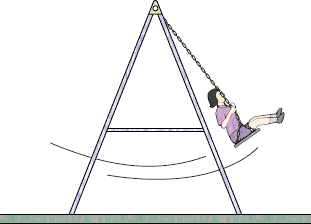
Overcompensating – Surrendering – Avoiding
Visualise for a moment, how the core-affect of shame or guilt is positioned at the centre of the clock’s face, and it represents the very central mechanism behind it. This centre mechanism would not turn the clock if it wasn’t for the oscillating movements – in other words the affect of shame or guilt is reinforced by compensatory, avoidant and surrendering strategies that are very well rehearsed over the years. The relationship that such self-sabotaging mechanisms have with each other, through the swinging-effect action or the oscillating-effect, also perpetuate the psychologically painful and hidden affect of shame or guilt.

In the case of R-OCD, the pendulum’s consistent oscillating-effect is like a chain-reaction exercised time and time again which can be exemplified in how the person often overcompensates in order to surrender in order to avoid. For instance, spending too much time online researching, leads to taking screenshots and making notes about the newly discovered evidence of ‘being bad or guilty’; only to then finally surrender into a depressive state, where one is completely convinced about their level of guilt and responsibility. This becomes the perfect excuse for procrastinating from essential tasks that could demonstrate the exact opposite.
Such dynamics have to be sensitively explored over time with compassion, no judgement but a clear intention to change. A supportive behavioural plan usually involves modifying or eliminating completely these reinforcing mechanisms from a victim’s repertoire. Working toward an authentic living which involves meeting one’s true needs and values is the new agenda.
Proof reading and editing by Ana Ghetu
***
Disclaimer: this site and article are not intended as a self-help manual; the intention with all NA-CBT articles is to help and to develop knowledge. All case studies described are a combination of facts and very little fiction from different sources including personal clinical experiences. More similar work and great resources for inspiration, can be found on TedX -Treating Perfectionism, Brene Brown, Roz Shafran, Christine Padesky, Donald Meichenbaum’s notes on resilience, and others.
This particular article follows anonymised cases who received NeuroAffective-CBT for R-OCD… this is part of a series of free handouts offered to students on doctoral or advanced training programs in Integrative-CBT; certain details have been changed in order to maintain anonymity; the article includes specific questions at various crucial points ‘[in square brackets]’ raised by the author which are meant to trigger further enquiry and insights into the treatment.
For further training opportunities in Clinical Perfectionism as part of your NA-CBT or Integrative-CBT certification, click on this link: Treating the Perfectionist: CBT for Perfectionism Workshop – with Daniel Mirea, BABCP Accredited Psychotherapist – The UK College of Hypnosis and Hypnotherapy – Hypnotherapy Training Courses (ukhypnosis.com)
Further recommended reading:
 neuroaffectivecbt.com