Most people would consider having high standards a good thing but at times this is just part of the plot or in other words, part of a complex trap called ‘perfectionism‘. Striving for excellence might indicate that you have a solid work ethic, strength and ambition. But if and when achieving success (in any domain) is consistently associated with one’s value, self-worth and esteem, we risk falling into the trap of perfectionism.
High standards could indeed propel one towards the peak level of their potential. This is very common with professional athletes or musicians for example, who train long and hard to reach excellence in their respective sport or art. Clinical perfectionism could however develop when the individual believes that his/ her worth, value and appreciation by others, uniquely depends on achieving success all of the time and never failing a task. In parallel with that, standards are set so high that they often cannot be met or are met with a great deal of difficulty. Perfectionists tend to believe that anything short of perfection cannot and should not be tolerated, and that even minor mistakes or imperfections will lead to one conclusion only: that they are not worthy or good enough individuals.
Generally speaking, we often think that it is important to try to do the best that we can in one or more areas of life. However, most people also believe that making mistakes from time to time is reasonable and inevitable. Making a mistake does not mean they have failed entirely, and this will ‘define’ them and ‘follow’ them forever. Perfectionism positions itself within this spectrum. Adults and adolescents1 with perfectionism tend to believe that they should never make mistakes and that making a mistake means they are a failure across the board, they are unworthy individuals, consistently disappointing others. The prospect of making mistakes, makes perfectionists hypervigilant and therefore, perfectionists experience constant states of hyperarousal, shame and defeat.
[..] 1 adolescence – starts around 12 years old with the upper age limit considered to be around 24 years old, this is the period of time where the brain is most plastic, according to neurobiology and developmental research.
When exploring an individual’s early years, it is easy to understand the origins of such attitudes to self and others. Perfectionism is encouraged in many families. Sometimes parents consciously or unconsciously set extremely high and rigid standards. Their own approach to parenting is often based on personal childhood experiences but not always. It is too easy for a parent to fall in this trap given how much more competitive the world is. Failure is not something our society tolerates.
Demanding parents would require top marks in school, medals in sports and flawless ballet recitals. Mistakes could be harshly punished. The punishment may not necessarily be physical, it may be, and often is an emotional, it is nonetheless severe and abusive. This often involves neglect, public humiliation, downgrading accomplishments, name calling, yelling, shaming, the silent treatment, and/or indeed sometimes even physical aggression. The principal message conveyed to the child via words or behaviours is very clear: ‘failure is not acceptable and it will not be tolerated’. It is natural for children to have a strong need to impress adults and main caregivers in particular. This ‘need’ is a natural surviving instrument and therefore parents’ unhealthy expectations and demands are viewed as the norm which gives rise to fear of failure and perfectionist attitudes (within children). Reinforcing behaviours and assumptions about how to navigate through a competitive world would soon follow. Those will become embedded and programmed in one’s bio-psycho-social system and as such, adolescents could struggle with symptoms of depression and low self-esteem and/or anxiety for years before treatment is sought and the correct diagnosis is identified.
This is in fact, exactly what makes perfectionism difficult to identify and treat. It has roots in an emotionally abusive and demanding environment, and it crosses borders into the depression and anxiety spectrum, chronic low self-esteem, OCD, eating disorders, even some personality disorders. Unfortunately, a range of mental health pathologies rely on psychological rigidity and unrealistic self-imposed standards.
For the typical perfectionist adolescent or adult, trying to be perfect is a daily effort and it does not stop when leaving the school or the office. Martina is a well-regarded and respected nurse manager who would consistently take additional responsibilities when on duty. She does not like to delegate, because ‘no one can deal with certain tasks as well as she does’. She is the ideal employee and therefore managers reward her by assigning more and more complex cases. This would lead to stress and burn out almost on a daily basis. When she gets tired, she would make mistakes which would not be tolerated since it confirms her worst fears that she is a failure, she is an embarrassment to her patients and colleagues.
Problems do not stop here. When she leaves work and arrives home, her equally high and rigid standards would continue to be applied and diligently enforced. With very clear daily instructions and (hour by hour) rules in place her expectations from her husband and their children to deliver everything on time and at a high standard (e.g. washing up, homework, etc.) are relentless and exhausting for all involved. This would lead to frequent arguments and further feelings of worthlessness, shame, embarrassment and failure.
If investigated carefully, subtle differences between the two case scenarios (i.e. the work situation vs. the home situation) may be observed. Although all behavioural responses and associated assumptions (i.e. beliefs) have a perpetuating role (or a role of maintenance which is, to reinforce the not good enough, failure or shame schemas), such elaborated cognitive strategies may be better understood as justifications or facilitating beliefs about why having high standards is important to the individual.
The diagram further below explains the reinforcing mechanism. For example, at work it is all about keeping everyone happy (in order to be appreciated and valued) which involves (in the NA-CBT formulation) a series of Compensatory, Avoidant or Surrendering strategies (like not allowing ‘weaker’ workers to work on certain tasks). At home it is all about ensuring that her children are successful, and parents are appreciated, respected and valued for their efforts. This is also backed up by a series of compensatory, avoidant or surrendering strategies (excessive organising and list making, not compromising on the timing, etc.).
The Pendulum-Effect Formulation
(NA-CBT by D Mirea)
Core Emotion: Shame & implicit Deeply-Rooted Beliefs:
Not good enough, inadequate and failure averse
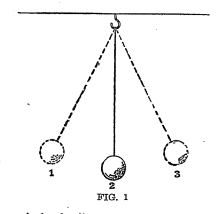
OVERCOMPENSATION – AVOIDANCE – CAPITULATION
Overcompensation
The heart of the problem: ‘I am not ready yet, this is not good enough!’ or ‘Whatever I decide to do, it has to be done properly!’ and… of course... ‘Compromise or change is never a good idea!’
Overcompensation reflects your inability to internally say to yourself: ‘this will actually do’ or ‘this is good enough as it is’. To stop constantly shifting the goalposts or to refrain from aiming higher and higher and at the same time believing that it is not just realistic but also very-very important – to reach such high standards. Double checking or triple checking one’s work or several times, proofreading an email several times before sending it are examples of how working hours are extended and draining often leading to burn out.
The need ‘to control everything’ or ‘take control’ is yet another compensatory mechanism that facilitates perfectionism. Facilitating beliefs or justifications such as: ‘no one can do this as well as I can’ or ‘If I don’t do this, nobody else will…’ would inevitably lead to burn out, stress and eventually some type of failure – a sentiment that the perfectionist would like to avoid at all costs.
Such attitudes or mindsets, apply of course to all areas of life whether personal or work or the local golf club and therefore the language, behaviours and beliefs vary… having strong and rigid views or rules… being tough and correcting people or children when they make mistakes… commenting when other people are not being appropriate and directing them to more appropriate behaviours… arguing a point over and over again… not knowing when to stop, etc.
Other examples of Overcompensation:
- Failure is not an option! I must work really hard and impress everyone!
- Exaggerated focus on character flaws or imperfections (I have a strong northern accent nobody understands me)
- Exaggerated focus on under-developed skills (My maths is not the best, I have to be very careful)
- Being in control all the time is important! Control or controlling all the details of a given context or a situation one finds him/herself in, is important!
- Working long hours – often not being able to stop…
- Working weekends – again… often not knowing when/how to stop
- Thinking about work and/or unfinished projects or tasks (most of the time when not at work)
- Never late at work, hating oneself and very apologetic when this rarely happens
- When at work (or at university if studying), sending incredibly detailed and thorough presentations to colleagues, teachers, business partners or the manager, for example or detailed essays or large files, even when not necessarily required.
- Micro-management (at work or on various project when one is in a leading position) – rather strict control over staff’s work with particular attention to details that might not always matter.
- Strict control over the personal calendar and manifesting a lot of rigidity, even frustration, towards colleagues or other people who might disrupt calendar events
- Always looking at what’s next when a task is finished, basically saying to oneself – this is just the beginning, I have so much more to do…
- In conversations, trying to show that ‘I’m not stupid’ and ‘I can be good enough’
- My appearance is important – can’t let myself or others down by looking bad, etc.
And accompanying justification (this is the domain of psychological rigidity – the tyranny of ‘musts’ and ‘shoulds’):
‘I have so many flaws, my colleagues or firends will pick up on it and therefore I must work really hard and impress everyone!
‘I must pay attention to all details all of the time!’
‘If I do this very well, then I’m worthy of sitting down with the bigger boys in the company’.
‘If I don’t control or manage my calendar and my time properly, then people will disrupt my tasks and so I will not achieve what I want to, during the day. This will have a knock-on effect for the rest of the week. My week will be difficult and unbearable…’
‘I have double check and triple check (so I don’t make a mistake – implicit knowledge and not necessarily verbalised)’.
‘I cannot afford to… cannot deal with… or can’t tolerate making a mistake’.
‘If I make a mistake then, people will think that I’m a failure and not competent’.
Solutions (or the domain of psychological flexibility):
- Impress people at work by all means, but remind yourself that you can do this, because you can… and because you are pretty good at this, not because you have to! What’s the worst that can happen anyway?
- Just to submit the work – less checking, deal with potential mistakes later or allow others to correct those – it would make them feel valuable to the project, included… more part of the project.
- I can make my point in an educated way without needing to impress anyone or covering up for my core belief (which is that I’m not good enough).
- I don’t impose my views or philosophy on them as it can piss them off. This would be like micro-managing their thinking. This would make them feel inadequate.
- Sometimes, it’s good to start off with an honest statement (such as, ‘I can see why you’re thinking that way, why in some situations that would be a lot of sense, but have you also considered the alternative…’)
- Remember: It is all to do with the tone and the manner in the way I can explain things.
Avoidance
Procrastinating: ‘I can work on this later, when I am ready and when I am better prepared!’
Since your worth, your value and even personal image depends on constantly reaching a specific standard, the process of completing a project becomes very important (i.e. an essay that you wrote for school or a project you have to complete at work). Therefore, preparation and feeling ready or ‘right’ to get started on it can be especially important. Procrastination and putting plans off are almost always the answer.
Other types of avoidance include indecisiveness or avoiding tasks the perfectionist fears is outside their sphere of competence in spite of all the evidence. A psychotherapist is literally afraid to open up a therapy practice in spite of being overly qualified and therefore, keeps getting more and more training and more qualifications. A writer keeps proofreading and editing his new book too many times before he ‘feels it’s ready’ to submit for publishing, ends up with too many versions of the same book.
Getting somebody else to attend in my place! Because I fear underperforming at the next meeting or social event – since I am usually an embarrassment. Even though the evidence is lacking, feeling like a failure and a social embarrassment would be the implicit knowledge that a deeply-rooted belief (DRB)2 generates which would justify an avoidant action, or not going to the event. Another example would be, not asking for help! Avoiding asking for help despite the costs; because this would make one look weak, not competent and a failure – implicit knowledge that justifies avoidant behaviours and satisfies the DRB.
[..] 2 Deeply-rooted beliefs (DRBs) – a term coined by Mirea D (2023) in reference to felt-senses or gut-feelings which victims of shame cannot expressed until later in adulthood. DRBs are reminders of early experiences of neglect or emotional depravation, initially DRBs help an individual navigate through a difficult childhood but later they become self-sabotaging and operate like self-fulfilling prophecies. DRBs lead to defences and life strategies that will dictate an individual’s actions and decisions on a daily basis but especially in a critical situations.
Other examples of Avoidance:
- Avoiding social events (because those are a waste of time – implicit knowledge)
- Avoiding intimate relationships or spending time with family that is counter-productive
- Don’t be vulnerable, stay away from people (or potential partners) that could make one feel vulnerable
- Avoiding people that are not driven or ambitious enough or career oriented
- Doing other things or tasks that are not relevant
- Messaging key people to explain the delay
- Moving tasks to the following day
- Always telling myself that tomorrow is not so busy (not at all the case in reality)
- Constantly feeling that one is likely to fail certain tasks – which leads to avoid the tasks
And accompanying justification (the domain of psychological rigidity – more ‘musts‘, ‘should‘ and ‘Ifs‘):
- ‘Stop wasting time’
- ‘Don’t leave for tomorrow what you can do today’
- I can sort it out the next day, my diary is more relaxed’ or ‘If I message this colleague and explain the delay he will understand’ or ‘If I rest now, I will do a better job after’
Once again, a lot of if – then rules, musts and should:
- If I don’t engage with… then I don’t face rejection.
- If someone says NO to me, it means they aren’t interested in me or what I have to offer.
- If I fail, then people won’t like me (people don’t like a failure)
- If I don’t speak to them about it or approach them then I won’t get rejected. I’m shielding myself from them saying no.
- If I rest now, then I’ll do a better job.
- I’ll sort it out the next day.
Solutions (the domain of psychological flexibility):
- Do it because you can… not because you have to!
- Not getting things 100% perfect does not make me a failure. People will appreciate my projects even when they are a work in progress.
- What I perceive as a failure is not what others may see as a failure!
- People will appreciate the success of making it happen rather than the few people that said NO.
- It’s not the ‘NO’ that matter in the week; it’s a longer process, and it’s the end result that matters…
- Don’t focus on the ‘NOs’ or the rejections but view it as a chance to improve and move on.
- If I complete the task now, I’ll feel much better about it.
- If I send it now, I’ll feel much better about it.
- If you don’t ask, you don’t get!
Capitulation or Surrendering
Sabotaging Self-Confidence… Giving Into Shame and Worthlessness…
I should be amazing all the time... I am the worst for not performing well… If I am failing at something, it is the worst thing ever, that makes me a failure and a looser across the board, I clearly deserve to be invisible, ashamed… Not tolerating mistakes inevitably leads to intensive and long episodes of rumination, like a very unpleasant series of cognitive video reels, packed internal self-critical and self-blaming messages, ideas, and random conclusions, evidence that one is underperforming.
Not celebrating one’s success is also part of the surrendering repertoire! When achieving a goal (even at the required standard) this soon becomes a ‘box ticking exercise’ rather than a celebration. And over time celebrations (or celebrating achievements) would become completely absent from one’s life repertoire.
Giving up in shame or giving up too soon and often saying to oneself ‘since I am so bad, what does it matter anyway… let me show you how bad I really am’.
‘This is hopeless’… or other hopelessness thoughts – Measuring one’s performance against others that are on a much higher level (in their perception – in reality, these specific ‘others’ may not be better off).
Surrendering is not the same as avoidance, it is much more about giving up something already started and thus giving into the schema that suggests you are a failure and worthless. Surrendering could also involve ‘drinking to unwind’ – important to point out, this is not an effective relaxation exercise but part of the giving up process (a secondary problem such as binge drinking would develop in some cases); acting out of character, not being able to accept or assume a fault, frequent episodes of anger directed towards the self or (incapable) others, etc.
Other examples of Surrendering (‘covert’ self-sabotaging strategies):
- Lack of tolerance towards making any mistakes
- Lack of tolerance towards own mistakes but also no tolerance for colleagues or other people (could be family members) who are not meeting standards… Often not patient enough to explain or teach them how to improve
-
Drinking to self-medicate and overcome stress (unable to unwind and self-regulate)
-
Blaming other people because for failures or current outcomes
-
Always measuring my performance against others
-
Lack of assertiveness most times – and not telling people how one really feels or what one really thinks
- Fear of being rejected or not liked
-
Fear of being found out (the so-called ‘imposter syndrome’)
And accompanying justification (the domain of psychological rigidity -even more ‘musts‘, ‘should‘ and ‘Ifs‘):
- I should be amazing all of the time…
- I am the worst for not performing well…
- If I am failing at something, it is the worst thing ever
- I should drink because it will make me feel better, I’ve had a bad week, so it will help.
- I need to do it, if I want to be on par with other successful individuals, or else I’m ever going to make it.
- I have to measure my performance against others because if I don’t, I’ll end up being inferior.
- I shouldn’t accept the blame because then I’ll be a failure (and everyone will know what I am really like)
- Since I am so bad, let me show you how bad I can really be (acting out of character)
Solutions (the domain of psychological flexibility):
- Drinking is to be fun and social. It is not an efficient self-regulatory tool. Drinking won’t fix the problem and will lead to more procrastination and more self-blame.
- Self-regulation happens through breathing and better attention focus. Orientate my attention from the crisis such as drinking – remind yourself of the solutions.
- Comparing myself with others is pointless. I always compare upwards not downwards.
- There’s nothing wrong with taking responsibility and assuming that I misunderstood or got things wrong. This feeds into my need to control and micro-management.
In conclusion…
Most perfectionists feel exhausted after repeated and very long episodes of intensive worry and fears of failing and not reaching the ‘required’ and self-imposed standards. Therefore, at some point, one throws in the towel and retires into a depressive state, a state of shame and guilt. We could easily imagine how it might initially work out, to quit a project very recently started, at first working on it very-very slowly, in order not to miss all important details, and then eventually, giving it all up in exhaustion, due to burn out. Changing is often viewed by the perfectionist as the road less travelled, full of risks and obstacles.
Treating yourself with NeuroAffective-CBT (NA-CBT)
This method was developed by Daniel Mirea in response to a growing subclinical population of undiagnosed affective disorders that fall under the umbrella of shame and self-disgust. Since the treatment of such phenomenon crosses the boundaries of a clear diagnostic criteria, the therapeutic approach has to be both comprehensive and strategic. The general view is that self-help in general and especially self-help manuals can only go so far without the expert guidance and compassion of a CBT psychotherapist.
NA-CBT relies on a clearly prescribed toolkit that aims to disrupt all mechanisms that predispose, perpetuate and precipitate fears of failing, the shame and disappointment with the self, all at the core of perfectionism.
There is a difference between the healthy and helpful pursuit of excellence and the unhealthy and unhelpful striving for perfection (though at times there is a very fine line). Experiencing negative consequences of setting such demanding standards yet continuing to go for them despite the huge costs would point towards clinical perfectionism. An initial step is recognizing that there is a problem which needs to be addressed. Understanding the nature of the problem, the costs and benefits that perfectionism brings to one’s life and also understanding how one has firstly developed and then kept falling in the trap of perfectionism over years, is just the first part of the changing process.
—————————–
* Training in Clinical Perfectionism with interventions such as NA-CBT or Integrative-CBT, are detailed here.
Disclaimer: this is not a self-help manual; the intention with all NA-CBT articles is to offer guidance and to develop knowledge. All case studies described are a combination of facts and very little fiction from different sources but mostly personal clinical experiences. More similar work and great resources for inspiration, can be found on TedX -Treating Perfectionism, Brene Brown, Roz Shafran, Christine Padesky, Donald Meichenbaum’s notes on resilience, and others.
This article follows various anonymised cases who received NeuroAffective-CBT for clinical perfectionism, certain details have been changed in order to maintain anonymity; if it resonates with you or someone you personally know, please do not be surprised or make any assumptions, these types of struggles are much more common than you can imagine. Real life situations and case studies are required for authenticity and shared learning. The article also includes specific questions at various crucial points raised by the author which are meant to trigger further enquiry and insights. Finally, please consider that self-teaching cannot replace live therapy or advanced training programs in the above methods which are to be found within the field of Integrative-CBT.
Proof reading and editing by Ana Ghetu



 neuroaffectivecbt.com